Utah Gun Laws: A 2026 Guide to Carrying, Ownership, and Public Safety
Utah Gun Laws: A 2026 Guide to Carrying, Ownership, and Public Safety
Key Takeaways
-
Utah is a constitutional carry state: carrying a concealed firearm without a permit is legal in Utah for most eligible adults 21 and older, but the state still regulates a concealed carry permit system.
-
Utah law separates lawful firearm owners from prohibited persons. A Category I violation is a second degree felony, and a Category II violation is a third degree felony for firearm possession.
-
Concealed firearms are restricted in certain places, including secure airport zones, correctional facilities, federal buildings, and certain churches that notify the state.
-
The Utah Constitution protects the right to keep and bear arms for lawful purposes, but the Utah State Legislature can regulate carrying a firearm to promote public safety and reduce gun violence.
-
Gun laws change frequently. Verify current Utah law, check Utah Code updates, and consult a qualified attorney before carrying or purchasing a firearm.
Introduction to Utah Gun Laws
Utah gun laws are generally considered gun-friendly, especially when compared with many other states. The state recognizes broad rights to bear arms, allows permitless concealed carry for many adults, and does not require a state permit to buy ordinary rifles, shotguns, or handguns.
At the same time, utah law is not a free-for-all. State law regulates who may own firearms, where people may carry firearms, and what happens when firearms are used in an angry and threatening manner, in domestic violence, or in other unlawful violence.
This guide explains the main rules for buying, selling, owning, and carrying a firearm in Utah as of June 2026. It covers lawful possession, prohibited persons, concealed carry, sensitive locations, crime guns, gun violence policy, and practical compliance tips.
This article is informational only and is not legal advice. Statutes, agency rules, and court decisions can change after June 2026.
Who May Own or Possess Firearms in Utah
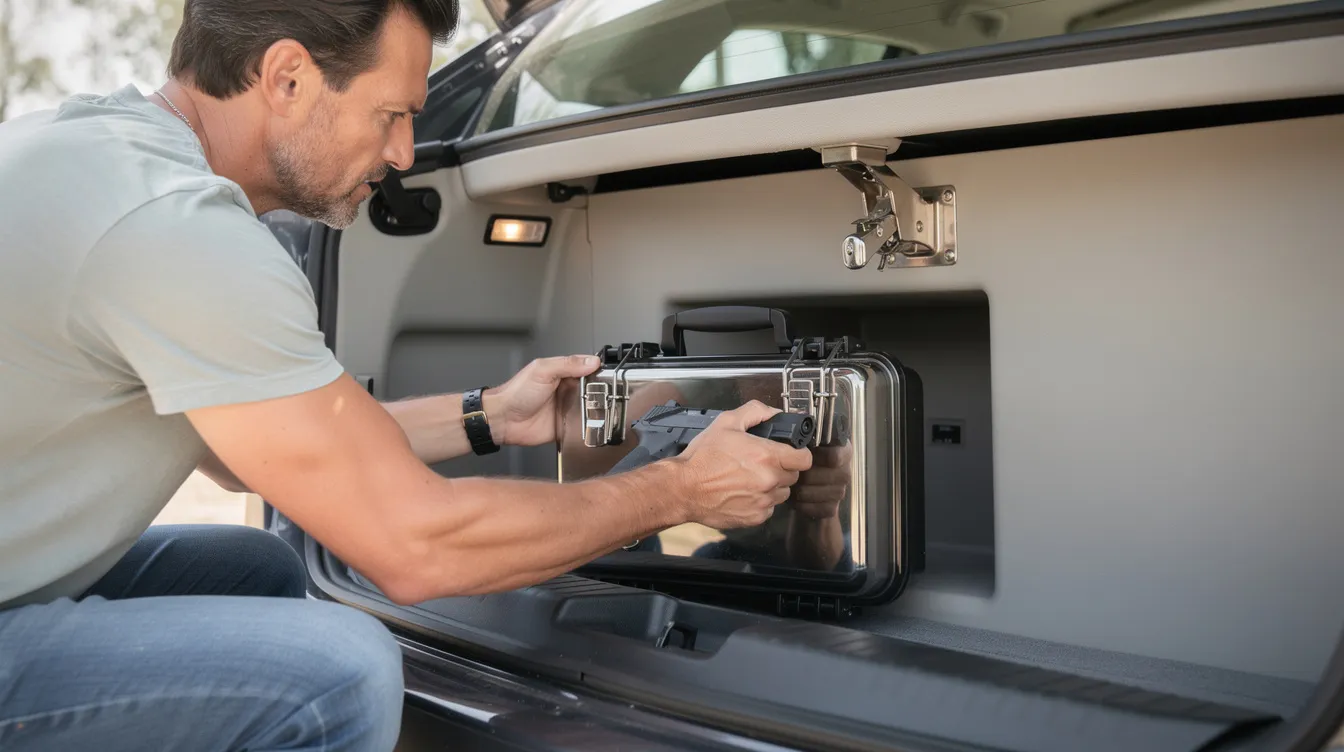
Utah allows firearm possession for those 18 and older, subject to important exceptions. The key question is whether the person is legally eligible under both Utah law and federal law.
Utah law historically uses the concept of restricted persons, often discussed as Category I and Category II restricted persons. These categories include people with certain felony convictions, violent felony records, serious drug offenses, some domestic violence records, dishonorable discharges from the armed forces, and certain mental health adjudications.
Under Utah Code § 76-10-503, Category I restricted persons cannot possess firearms in Utah. A Category I restricted person faces a second degree felony for firearm possession. Put another way, a Category I violation is a second degree felony.
Category II restricted persons face serious consequences too. A Category II restricted person faces a third degree felony for firearm possession, and a Category II violation is a third degree felony.
Here are common examples:
|
Situation |
Possible consequence |
|---|---|
|
Person with a qualifying violent felony possesses a handgun |
Category I restricted person; second degree felony |
|
Person with a less severe disqualifying felony possesses a rifle |
Category II restricted person; third degree felony |
|
Person subject to certain domestic violence protections possesses a firearm |
Possible state and federal prosecution |
|
Person found mentally incompetent by a court possesses a gun |
Possible prohibited-person violation |
Federal prohibited persons include individuals convicted of certain misdemeanor domestic violence offenses, people subject to qualifying protective orders, unlawful user categories tied to a controlled substance or other controlled substances, and people adjudicated as mentally defective under federal standards. Felons and mentally incompetent individuals cannot obtain permits.
Mental health findings matter. A person who is found mentally incompetent, unable to stand trial, or subject to certain involuntary commitment orders may lose lawful possession rights under applicable state and federal law.
Age also matters. Individuals must be 21 to purchase handguns and 18 to purchase rifles or shotguns from licensed dealers. Utah law prohibits transferring firearms to minors, although there are exceptions for supervised hunting, training, target practice, a muzzle loading rifle in lawful sporting use, or other limited situations.
Buying, Selling, and Transferring Firearms in Utah
Buying a firearm in Utah depends on who is selling it. Purchases through licensed dealers are treated differently from private sales.
A criminal history background check is required for all sales through licensed dealers. Dealer sales go through the federal NICS process or Utah’s point-of-contact system, and buyers must meet federal law and state law eligibility rules.
No state permit is needed to purchase rifles, shotguns, or handguns in Utah. However, the age rules still apply: individuals must be 21 to purchase handguns and 18 to purchase rifles or shotguns from a licensed dealer.
A valid Utah concealed firearm permit exempts buyers from background checks in some dealer-purchase contexts because Utah permits can qualify as an alternative under federal background-check rules. Buyers should confirm the current rule with the dealer and Utah Bureau of Criminal Identification before relying on that exemption.
Private sales are more flexible. Private sales of firearms do not require background checks under Utah law. Private sales of firearms are legal for those over 18, as long as the buyer and seller are Utah residents, the buyer is not prohibited, and the transaction does not violate federal law.
The safest practical rule: never sell or transfer a gun if you know or reasonably suspect the buyer is a prohibited person.
Knowingly selling to prohibited persons can lead to felony charges. Straw purchases are also illegal. Buying a gun for someone who cannot lawfully buy it, or buying a gun to avoid a background check, can trigger federal and state charges for trafficking crime guns.
National Firearms Act items are different. A fully automatic weapon, short-barreled rifle, short-barreled shotgun, or silencer requires federal approval, registration, and tax-stamp compliance. Utah does not erase federal law restrictions on these dangerous weapons.
Open Carry and Concealed Carry in Utah
Open carry means the firearm is visible. Concealed carry means the firearm is hidden or not readily observable. A firearm may be considered concealed if it is covered, hidden, or carried in a way that the public would not reasonably see it.
Carrying a concealed firearm without a permit is legal in Utah. Residents 21 and older can carry loaded firearms without a permit if they are not prohibited persons and are otherwise in lawful possession. That includes a loaded handgun in many public places where firearms are not specifically restricted.
Utah became a constitutional carry state in 2021, and that framework continues into mid-2026 unless the state legislature changes it. The state enacted permitless carry, and Utah lawmakers have continued to debate further limitations and public safety refinements in the past few years.
A person may openly carry in Utah if the person is legally allowed to possess the firearm and is not in a prohibited location. Openly carrying on a public street is not automatically illegal, but displaying a weapon in a threatening manner or using it outside lawful self defense can be a crime.
Carrying a firearm while under the influence is a class B misdemeanor. That includes impairment by alcohol, a controlled substance, or other controlled substances. Negligently discharging a firearm can be a class B misdemeanor, and penalties can rise if someone is injured or property is damaged.
Eighteen-to-20-year-olds have more rules. Applicants aged 18 to 20 can obtain a provisional permit, and 18-year-olds can obtain a provisional concealed carry permit. An 18-year-old may carry under the rule pertaining to provisional permits, but these permits come with more restrictions than a full adult state permit.
Local regulation is limited. Utah generally preempts a political subdivision from making its own stricter gun laws. That means local officials ability to regulate guns is narrow, though cities may still regulate firearm discharge in some settings.
Utah Concealed Carry Permit System
Even with constitutional carry, many Utah residents still apply for a concealed carry permit. The reason is simple: a permit can help with reciprocity, school access, and proof that the person passed a formal review.
Utah issues optional concealed firearm permits for residents and non-residents. Utah issues concealed carry permits to applicants 21 and older, and permits are issued within 60 days if qualifications are met.
The Bureau of Criminal Identification, often called BCI, administers the permit process through the Utah Department of Public Safety. Applicants generally complete a state-approved firearm familiarity course, submit fingerprints, pay the fee, and pass a background review.
A concealed carry permit issued by Utah may be useful even though carrying a concealed firearm without a permit is legal in Utah. Many individuals obtain a Utah concealed firearm permit for school access, and many states recognize a Utah concealed firearm permit for reciprocity.
A standard permit can be denied, suspended, or revoked for disqualifying conduct. Common disqualifiers include:
-
A felony offense
-
A violent felony
-
An offense involving domestic violence
-
An offense involving moral turpitude
-
Drug offenses involving a controlled substance
-
Patterns of unlawful violence or threats
-
Certain juvenile or expunged records, depending on the rule
-
Mental health findings, including being found mentally incompetent
Utah previously offered, and as of mid-2026 still recognizes, a provisional concealed carry permit for certain applicants ages 18 to 20. That permit is not the same rank as a standard adult permit because it has further limitations.
If BCI denies or revokes a permit, permit holders typically have appeal rights within defined deadlines. Check current BCI instructions before calculating appeal time.
Concealed Carry Restrictions and Sensitive Locations
Permitless carry does not mean carry everywhere. Some places remain off-limits even for permit holders and even for people with a valid permit.
Firearms are prohibited in certain areas like secured airport zones and correctional facilities. Other sensitive locations can include federal buildings, courthouses, secure areas of government buildings, jails, and facilities with controlled screening.
Church rules are especially important in Utah. Carrying concealed firearms is prohibited in certain churches. Churches must notify the state to prohibit firearms, and Utah law allows religious organizations to give annual notice that dangerous weapons are not allowed in their houses of worship or certain church-owned properties.
Private property owners can also set rules. If a private residence, business, or venue gives notice that firearms are not allowed, ignoring that notice can create trespass problems.
Public school rules are more nuanced. Permit holders can carry firearms on public school premises in many circumstances under Utah law. Many individuals obtain a Utah concealed firearm permit for school access because permit status can matter around K-12 school property.
At the same time, school employees and visitors should watch legislative updates. Utah has seen debate over a bill incentivizing school employees to receive firearm training and a law requiring schools to coordinate safety planning. These measures are often framed as ways to prevent gun violence, but the details can change quickly.
College campuses also require attention. Public university rules have changed in recent sessions, and private or church-owned schools may impose stricter rules.

Concealed Firearms Reciprocity With Other States
Reciprocity matters when Utah permit holders travel. A Utah permit does not automatically control what happens in another state.
Utah recognizes firearm carry permits from all states. Utah recognizes concealed carry permits from all U.S. states, subject to the carrier being eligible under Utah law. Utah also recognizes a concealed carry permit issued by another U.S. state or qualifying political subdivision.
As of December 2022, 36 states recognize the Utah permit. As of late 2025 and early 2026, roughly three dozen states recognize the Utah concealed carry permit, though some require Utah residency or impose different rules for non residents.
Before crossing state lines, check official reciprocity resources from the Utah Department of Public Safety. Even when another state honors a Utah permit, you must obey that state’s gun laws, not Utah’s.
One caution: some summaries state that permitless carry does not apply to non-residents in Utah. Because this issue is often discussed differently across sources, non residents should verify the current applicable state rule before carrying without a permit.
Firearm-Related Crimes and Penalties in Utah
Utah strongly protects lawful gun ownership, but it imposes strict penalties for misuse. The law targets crime guns, unlawful assaults, trafficking, and possession by prohibited persons.
Common firearm-related offenses include:
-
Carrying a firearm with intent to unlawfully assault another person
-
Exhibiting a firearm in an angry and threatening manner
-
Threatening two or more persons with a weapon
-
Firing toward a person, vehicle, or occupied structure
-
Participating in a fight involving dangerous weapons
-
Possessing a firearm after losing lawful possession rights
A class B misdemeanor can apply to negligent discharge or carrying while under the influence. Class A misdemeanor charges can apply to more serious threatening displays. Felony charges may apply when shots are fired into buildings, a loaded firearm is used in a serious assault, or a firearm is connected to a violent felony.
Utah law also restricts how guns may be handled in public. For example, raising a loaded rifle from a firing position during a confrontation may be treated very differently from safe hunting conduct. Context matters.
Enhanced penalties can apply when firearms are connected to domestic violence, drug trafficking, gang activity, or other serious crimes. These rules are central to Utah’s efforts to address gun violence while preserving lawful self defense.
Domestic violence protections are especially important. An offense involving domestic violence may create both state and federal firearm disabilities. Federal prosecution can also accompany state prosecution when crime guns cross state lines, when trafficking is alleged, or when a prohibited person possesses a firearm.
Utah does not currently have a broad red-flag law like some states, and the state repealed or declined some proposed restrictions in prior debates. Still, Utah lawmakers continue to discuss limiting access for dangerous individuals, reducing gun suicide, and improving ways to improve data collection on firearm deaths and injuries.
Utah’s Constitutional Right to Keep and Bear Arms
The Utah Constitution provides strong protection for the right to keep and bear arms. Article I, Section 6 protects the individual right of the people to keep and bear arms for security, defense of self, family, others, property, the state, and other lawful purposes.
You can read the state constitutional language on the Utah Legislature website.
That right is broad, but it is not unlimited. The same constitutional provision allows the Legislature to define the lawful use of arms. That is why Utah can protect gun ownership while still regulating prohibited persons, concealed weapon rules, school carry, and sensitive locations.
The Second Amendment also applies. Utah courts may consider both the U.S. Constitution and the Utah Constitution when reviewing firearm restrictions.
Some Utah counties have adopted Second Amendment sanctuary-style resolutions. These statements reflect local views, but they do not override Utah Code, federal law, or binding court orders.
The central policy debate is balance. Supporters of broad carry rights emphasize self-defense and lawful use. Public safety advocates emphasize domestic violence, gun suicide, youth access, and gun violence prevention. One commonly cited national concern is that 18-year-olds are responsible for 17% of U.S. gun homicides, which is why age-based carry rules remain controversial.
Practical Safety and Compliance Tips for Utah Gun Owners
Understanding gun laws is only the starting point. Responsible firearm handling, storage, and training matter just as much.
Here are practical steps for Utah gun owners:
-
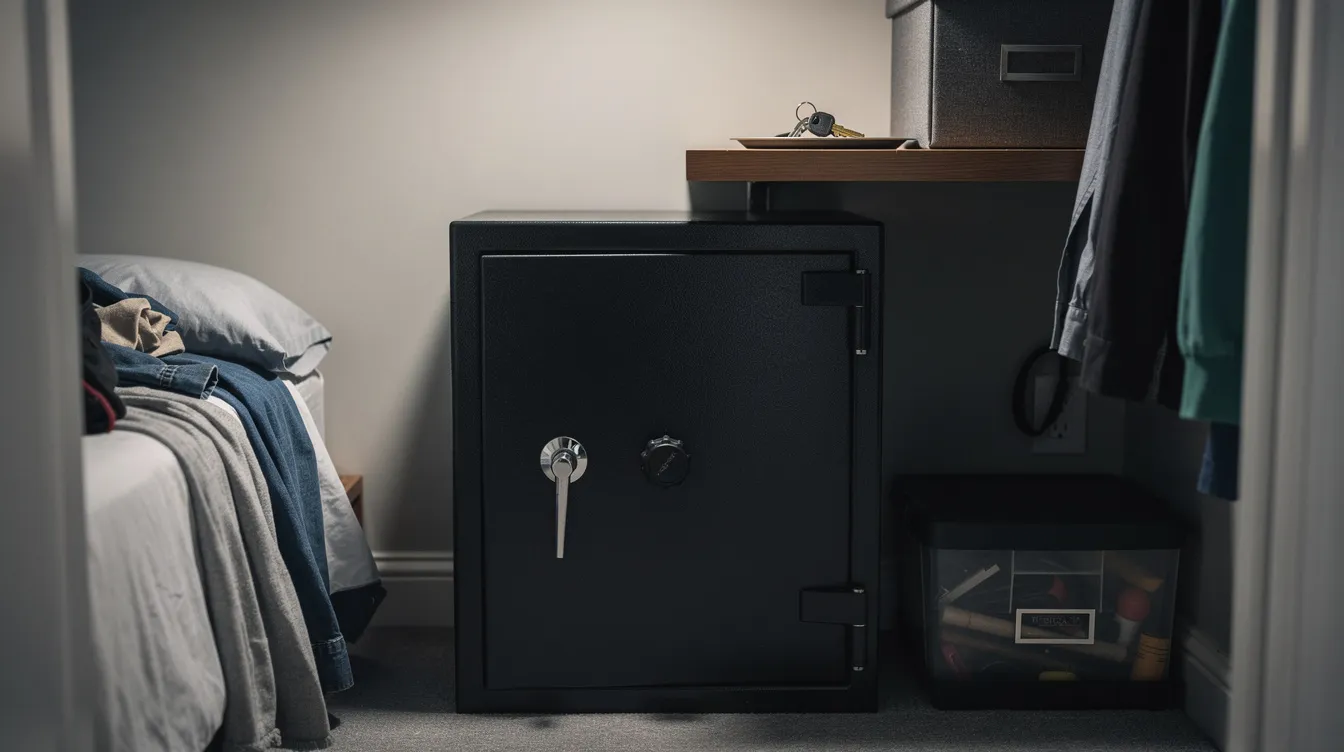
Use locked safes, lock boxes, or cable locks at home.
-
Store ammunition separately when appropriate, especially around children or at-risk family members.
-
Do not handle firearms while impaired by alcohol or drugs.
-
Take a reputable safety course even if the law does not require it.
-
Review Utah Code and BCI updates at least once a year.
-
Ask a qualified Utah attorney about prior convictions, protective orders, or restoration of rights.
Safe storage is not only about compliance. It can reduce accidental shootings, theft, and gun suicide. If someone in the home is in crisis, consider voluntary off-site storage with a trusted lawful person, a gun shop that offers safe-keeping, or another legal option.
If you travel with firearms, check each state before you go. A loaded firearm that is lawful in Utah may be illegal in another state. A loaded handgun in a vehicle may be treated differently from a loaded rifle, and a hunting firearm may be regulated differently from a defensive firearm.
FAQ
Do I need a concealed carry permit to carry a handgun in Utah in 2026?
Most adults 21 or older who are not prohibited persons may carry a concealed firearm in Utah without a permit. Carrying a concealed firearm without a permit is legal in Utah, but a concealed carry permit is still useful for reciprocity, school access, and proof of lawful status.
Can I carry a firearm in a Utah church or other house of worship?
Sometimes, but not always. Some churches in Utah, including The Church of Jesus Christ of Latter-day Saints, file notices with the state to prohibit firearms in houses of worship and certain related properties. If proper notice applies, carrying there can be illegal even with a permit.
Are there magazine capacity limits or assault weapon bans in Utah?
As of mid-2026, Utah does not impose a statewide assault weapon ban or general magazine capacity limit. Federal restrictions still apply to machine guns, NFA firearms, and a fully automatic weapon that lacks required federal approval.
Can my past criminal record stop me from owning or carrying a gun in Utah?
Yes. Felony convictions, many domestic violence offenses, certain drug crimes, protective orders, and mental health adjudications can make someone a prohibited or restricted person under Utah law and federal law. Expungement or rights restoration may be needed before attempting to possess a firearm.
What should I do if I’m stopped by police while carrying a firearm in Utah?
Keep your hands visible, follow instructions, avoid sudden movements, and calmly disclose the firearm if asked or when it is clearly appropriate for safety. Utah does not generally require automatic self-reporting in every situation, but cooperation can help avoid misunderstandings.
Meta tags
title
Understanding Utah Gun Laws: Essential Information for Gun Owners
65/70
description
Navigate Utah’s gun laws with confidence. This guide provides essential information for gun owners to stay informed and compliant. Read more to learn!
150/156