U.S. Virgin Islands Gun Laws: Comprehensive Guide for Residents and Visitors
Key Takeaways
-
The U.S. Virgin Islands is a U.S. territory where the second amendment applies, but u.s virgin islands gun laws are strict, highly regulated, and enforced through local statutes.
-
A Virgin Islands Firearms License is required to possess or purchase any firearm, and all civilian licenses are handled through the virgin islands police department.
-
Possessing an unlicensed firearm can lead to 10 years imprisonment, with serious fines and added penalties for ammunition, public carry, or sensitive-location violations.
-
Each permit applies only to a specific firearm, and each gun permit in the Virgin Islands is valid for three years unless current law or a later bill changes the renewal term.
-
The licensing process has drawn federal scrutiny: DOJ sued Virgin Islands over restrictive firearm laws, and the DOJ claims laws violate the Second Amendment rights of law abiding citizens.
Introduction to U.S. Virgin Islands Gun Laws
The virgin islands are a U.S. territory in the Caribbean, but their firearm rules do not work like the rules in many mainland states. Federal law applies, yet the territory also has its own firearm code under the Virgin Islands Code, especially Title 23.
Gun laws in the U.S. Virgin Islands are considered strict and highly regulated. In practice, that means residents, visitors, and even people familiar with mainland carry rules must slow down and verify the local law before they buy, possess, transport, or carry firearms.
This article is a starting point for understanding virgin islands firearm laws. It is written for residents, prospective gun owners, and travelers, but it is not legal advice. If your situation involves an arrest, a denial, a disputed permit, or travel with arms, speak with a qualified local attorney.
The territory has been subject to legal scrutiny regarding its restrictive gun laws. The DOJ’s 2024-era scrutiny later became a federal justice lawsuit challenging the virgin islands police department over delays and conditions in the licensing system, arguing that some practices conflict with second amendment rights and recent supreme court guidance.
Legal Framework: How Federal and Local Law Interact
The U.S. Virgin Islands is an unincorporated U.S. territory. Congress can regulate firearms there, the local Legislature can pass territorial provisions, and the police department enforces the licensing rules on the ground.
The second amendment creates a constitutional baseline for the right to keep and bear arms. Key cases include District of Columbia v. Heller, McDonald v. Chicago, and New York State Rifle & Pistol Association v. Bruen. The pistol association case, often called Bruen, is especially important because it limited discretionary “proper cause” systems for public carry.
Local law is mainly found in Title 23 of the Virgin Islands Code, which covers licensing, possession, purchase, registration, transfers, and related rules. Criminal penalties also appear in Title 14. You can review the territorial firearm chapter through the Virgin Islands Code on Justia.
Federal gun law still applies. The feds regulate interstate transfers, prohibited persons, and dealer compliance through agencies such as ATF. For example, someone barred under federal law because of a felony conviction, certain domestic violence orders, or qualifying mental health adjudications cannot lawfully possess guns in the territory.
The tension is this: the territory says its strict system helps protect public safety, while federal officials and some applicants say the system can become unconstitutional when law abiding residents face vague standards, slow processing, and burdens not clearly required by statute.
Who Can Own a Firearm in the U.S. Virgin Islands
Lawful gun ownership in the Virgin Islands is limited to people who satisfy both federal and territorial eligibility criteria. The rules apply to handguns and long guns, but public carrying of different firearm types is treated very differently.
Typical eligibility requirements include:
-
Applicants must be at least 21 years old for handgun-related licensing and carry.
-
Applicants usually need U.S. citizenship or lawful immigration status.
-
Residents generally must show legal residence in the territory for resident licenses.
-
The applicant must be able to pass a background check and meet local documentation rules.
-
A person seeking a license must not fall into a prohibited category under federal or territorial law.
Major disqualifiers include felony convictions, certain domestic violence misdemeanors, active qualifying protection orders, substance abuse issues, and certain mental health adjudications. These concerns can involve records from courts, medical systems, or mental health offices when legally relevant.
The VIPD has historically reviewed whether an applicant has good moral character. That phrase appears simple, but it has become one of the issues raised by federal officials because vague character standards can give too much discretion to police decision-makers.
Nonresidents have very limited options. The U.S. Virgin Islands does not recognize out-of-state concealed carry permits, and visitors should not bring guns without confirming a specific exemption, license, or temporary authorization with VIPD before travel.
Types of Firearm Licenses and Permits
The Virgin Islands issues several categories of firearm licenses, and each license has a specific purpose. The U.S. Virgin Islands recognizes six types of firearm licenses, commonly understood to cover different uses such as home protection, business protection, target or sporting purposes, and carry-related authorization.
A key rule is that licenses are firearm-specific. Each permit applies only to a specific firearm, usually identified by make, model, caliber, and serial number. A valid license for one pistol does not automatically authorize possession of another pistol.
Here is the practical distinction:
|
License or permit concept |
What it generally allows |
What it does not automatically allow |
|---|---|---|
|
Home possession license |
Keeping the listed firearm at a residence |
Public carry |
|
Business protection license |
Possession connected to a qualifying business |
General carry outside approved purposes |
|
Target or sporting license |
Use for approved range or sports purposes |
Everyday self defense carry |
|
Carry license |
Carry firearms under stated conditions |
Carry in prohibited places |
|
Concealed handgun authorization |
Carry a handgun concealed if approved |
Carry long guns in public |
|
Dealer, security, or occupational license |
Work-related firearm access |
Personal carry beyond the license terms |
Gun permits are valid for three years. Each gun permit in the Virgin Islands is valid for three years, and renewal must be handled before expiration to avoid unlawful possession. Some legislative activity has discussed longer terms or training changes, so owners should verify current VIPD guidance and any new bill or amendment before relying on older information.
A license to possess a firearm at home does not automatically authorize concealed carry or open carry. That distinction is one of the most common traps for people who are used to mainland rules.
The Licensing Process: Steps, Documents, and Timelines
The licensing process in the Virgin Islands is detailed, document-heavy, and often slow. Gun permit applications are delayed unreasonably in the Virgin Islands, according to allegations made in the federal DOJ challenge.
A typical application process includes:
-
Obtain the correct VIPD firearm license application form.
-
Identify the firearm type and intended lawful purpose.
-
Provide government-issued ID and proof of Virgin Islands residency if applying as a resident.
-
Submit passport-style photos.
-
Provide fingerprints; applicants must pass a background check and be fingerprinted.
-
Submit character references or supporting affidavits when required.
-
Pay the applicable processing and licensing fees.
-
Wait for local and federal background review.
-
Receive approval, denial, or a request for more information.
The licensing process in the U.S. Virgin Islands is subject to rigorous background checks. These checks can include local police records, federal databases, criminal history, court records, and other eligibility screens.
Some applicants have also been asked for proof of safe storage, including a gun safe or installation details. Safe storage is smart practice, but the justice lawsuit challenges whether some conditions imposed by VIPD go beyond what the law permits or what the second amendment allows.
The DOJ claims extended waits can operate like a denial. If a law abiding applicant cannot obtain a decision for months or longer, the person may be left unable to possess a firearm for self defense despite being eligible.
Applicants may be able to challenge denials or excessive delays, but that usually requires knowledge of both local statute and federal constitutional rights. In disputed cases, legal assistance can be important.
Carrying Firearms: Concealed and Open Carry Rules
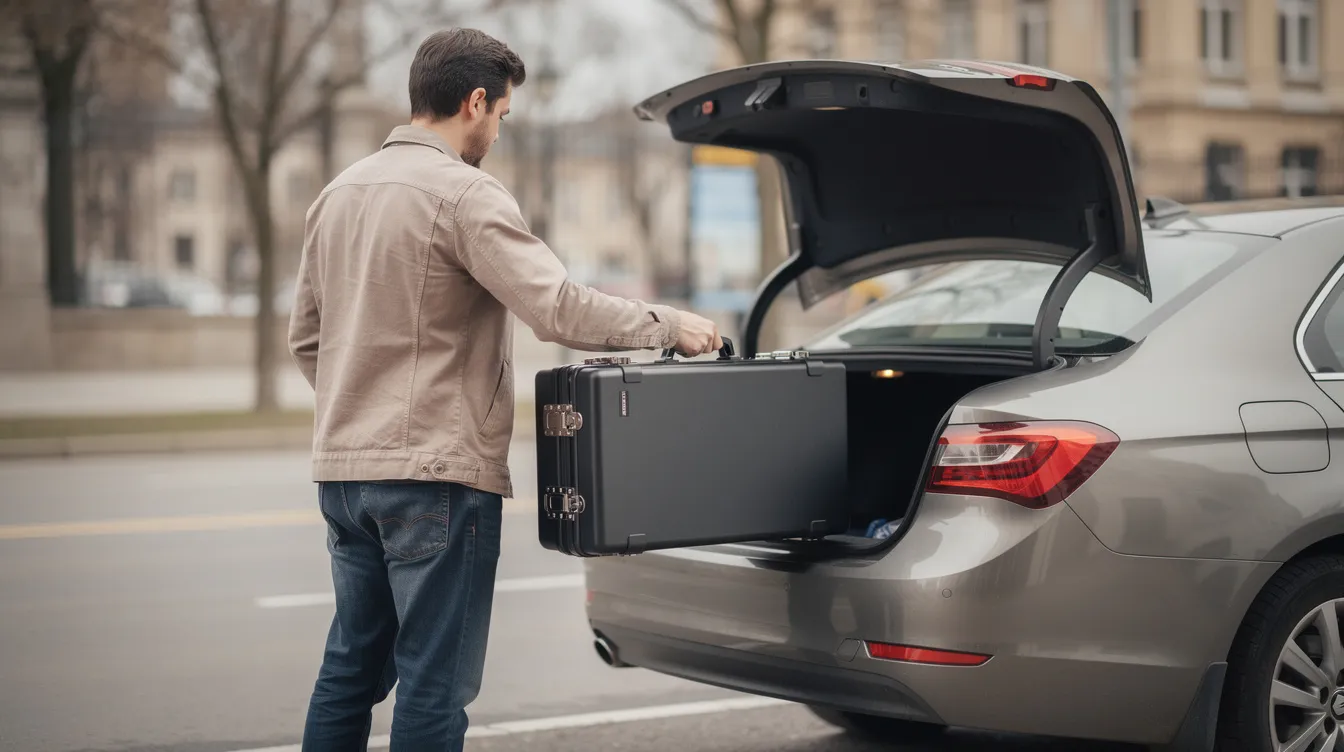
Carrying a handgun in public, whether concealed or openly, is tightly regulated in the Virgin Islands. A specific carry license is required, and carrying without that local license can lead to arrest.
Unlicensed carry is a criminal offense. Possession of an unlicensed firearm can trigger mandatory imprisonment, substantial fine exposure, confiscation, and collateral consequences. This is especially serious for loaded handguns in public.
There is also a major difference between possession and carry:
-
A possession license may allow you to possess the listed firearm at home or another approved place.
-
A business license may allow limited possession tied to work or property protection.
-
A carry license is needed to carry firearms in public.
-
A concealed carry authorization is a separate and more specific approval.
In the past, carry licenses were often tied to “good cause,” “need,” or fear of death or serious injury. After Bruen, those standards are more vulnerable because recent supreme court guidance favors objective criteria over discretionary judgments.
Carrying long guns in public is strictly prohibited in the U.S. Virgin Islands. Even if someone lawfully owns long guns, that does not mean they can walk through public areas with a rifle or shotgun.
Sensitive places also matter. Firearms are prohibited in government buildings and schools in the U.S. Virgin Islands. Restrictions may also apply in or near childcare facilities, hospitals, public parks, public beaches, polling places, voting locations, arenas, stadiums, sports venues, penal institutions, and other grounds where local rules prohibit weapons.
Private property can add another layer. A posted “no guns” sign, a hotel policy, or an event rule can restrict access even for licensed individuals. When in doubt, do not assume permission.
Law Enforcement, LEOSA, and Out-of-Jurisdiction Officers
The federal Law Enforcement Officers Safety Act, known as LEOSA, protects qualified active and retired law enforcement officers who meet the statute’s requirements. In general, LEOSA can allow qualified officers to carry concealed firearms across jurisdictions, including the Virgin Islands.
That said, real-world enforcement can be complicated. Some visiting officers have reported inconsistent responses from local police, including statements that firearms are “not allowed” for visitors. Those comments may not reflect LEOSA correctly, but a misunderstanding at the airport or port can still create a serious problem.
Officers traveling under LEOSA should:
-
Carry agency identification and required qualification documents.
-
Speak with their agency legal counsel before travel.
-
Consider carrying printed copies of the federal LEOSA statute.
-
Contact VIPD or a local attorney before arrival if there is any uncertainty.
-
Avoid alcohol or drug use while armed.
LEOSA does not override every local restriction. Officers still need to respect sensitive-place rules, prohibited weapon rules, private property restrictions, and bans in government buildings or similar controlled locations.
Criminal Penalties and Enforcement Practices
The Virgin Islands imposes strict penalties for firearm offenses. The goal is partly to address violent crime and illegal guns, but the same rules can apply to tourists or residents who misunderstand local law.
Possessing an unlicensed firearm can lead to 10 years imprisonment. Territorial law also allows steep fines, and penalties can increase if the gun is used in a violent crime, found with ammunition, or possessed in a prohibited location.
Ammunition is not a minor issue. Unlicensed ammunition possession can lead to separate charges, and each round or each unlicensed firearm may increase exposure depending on the facts and charging decisions.
Enforcement is often aggressive when firearms are found in vehicles, public areas, or near schools. Federal prosecutors have also publicized cases involving illegal possession and long sentences in the territory, reinforcing that these cases are not treated casually.
The safest approach is simple:
-
Do not possess a firearm without a valid local license.
-
Do not carry unless your license specifically authorizes carry.
-
Do not transport firearms casually.
-
Do not assume a mainland permit is recognized.
-
Follow every instruction from the virgin islands police department unless counsel advises otherwise.
Visiting the Virgin Islands with a Firearm
Visitors should not assume mainland rules apply. A permit that works in Florida, Texas, Georgia, New York, or another state does not automatically work in the territory.
All firearms brought into the U.S. Virgin Islands must be declared at the port of entry. That includes arrivals by air and sea. A failure to declare can create immediate legal concerns even before questions about local licensing are resolved.
Airlines, TSA, and local law each impose separate requirements. For air travel, firearms usually must be unloaded, locked in a hard-sided case, declared at check-in, and transported according to airline and TSA rules. Ammunition has its own packaging and quantity restrictions.
But TSA compliance is not the same as territorial legality. The U.S. Virgin Islands does not recognize out-of-state concealed carry permits. A traveler with a state carry permit typically cannot legally carry a handgun for personal protection in the Virgin Islands without a local license.
For most tourists, the best option is to leave guns at home. The risk of accidental violation is high, and the penalties are severe. Those who must travel with a gun for work, such as armored car staff, security contractors, or specialized personnel, should coordinate with an employer, legal counsel, and VIPD well before travel.
Recent Legal Challenges and Evolving Second Amendment Rights
DOJ sued Virgin Islands over restrictive firearm laws, focusing on the way the territory and VIPD process firearm applications. The lawsuit alleges that delays, discretionary standards, and extra conditions may burden law abiding citizens who seek to keep or bear arms.
The DOJ claims laws violate the Second Amendment rights of applicants by making the process too slow, too discretionary, or too burdensome. The complaint criticizes issues such as proof of good moral character, mandatory safe-related conditions, and extended processing times that leave applicants unable to obtain a license for self defense.
The case leans heavily on Heller and Bruen. Those decisions recognize an individual right to keep and bear arms and limit how far governments can go when licensing ordinary law abiding residents.
If the DOJ case succeeds or settles, the response could reshape the licensing process. Possible changes include:
-
More objective approval criteria.
-
Shorter and enforceable deadlines.
-
Less reliance on vague character judgments.
-
Clearer rules for renewal.
-
Better guidance for nonresidents and visitors.
-
More transparent appeal procedures.
The outcome could also influence how the governor, Legislature, VIPD, and courts address future firearm policy. Anyone following this area should check official gov pages, VIPD updates, and court filings rather than relying on a bot summary, a social media comment, or an outdated page.
Practical Compliance Tips for Gun Owners in the Virgin Islands
Compliance is easier when you treat every firearm rule as specific, local, and document-driven. The Virgin Islands does not reward casual assumptions.
Here are practical steps to reduce risk:
-
Keep a copy of your current VIPD license with you whenever you possess or transport the licensed firearm.
-
Carry government ID along with your license.
-
Confirm that the license matches the firearm’s make, model, and serial number.
-
Renew early because gun permits are valid for three years and processing delays can occur.
-
Store firearms in a locked safe or strongbox when not in use.
-
Keep purchase records, serial numbers, photos, and transfer documents in a secure file.
-
Report loss or theft promptly to VIPD.
-
Review Title 23 and VIPD guidance periodically because forms, fees, and rules can change.
-
Avoid carrying in schools, government buildings, medical facilities, and other sensitive areas.
-
If a self defense incident occurs, call for help, preserve evidence, and speak with an attorney before giving detailed statements.
Using a gun to protect yourself or another person will trigger police review and may trigger prosecutorial review. Even a justified defensive use can involve interviews, evidence collection, and legal risk. Understanding local self-defense law before an emergency is far better than learning it afterward.
Frequently Asked Questions
Do my state concealed carry permits work in the U.S. Virgin Islands?
No. The Virgin Islands does not broadly honor mainland concealed carry permits. Carrying based only on an out-of-state license is typically illegal.
Anyone who wants to carry in the territory usually must obtain a local carry license from VIPD unless a narrow federal exception applies, such as LEOSA for qualified law enforcement officers.
Can I buy a firearm in the Virgin Islands as a visitor?
Usually, no. Firearm purchases are generally limited to people with a valid Virgin Islands Firearms License and the required local eligibility.
Federal ATF rules also restrict direct handgun sales to nonresidents. For casual visitors, a lawful local purchase is effectively unavailable.
Are there magazine capacity or specific weapon bans in the Virgin Islands?
The Virgin Islands Code includes definitions and restrictions involving automatic weapons, assault rifles, and certain prohibited weapon types. Magazine rules can be tied to weapon definitions, so owners should check current law and VIPD guidance before importing accessories.
As a conservative practice, do not bring high-capacity magazines, restricted semi-automatic rifles, or unusual accessories into the territory without written legal confirmation.
How does crime in the Virgin Islands affect gun laws and enforcement?
Concerns about violent crime and illegal firearms have pushed lawmakers and VIPD toward strict controls and aggressive enforcement. ATF trace data has also shown many recovered crime guns are pistols, often originating outside the territory.
This enforcement environment does not eliminate constitutional rights, but it does explain why the territory treats unlicensed possession and unlawful carry so seriously.
What should I do if I am arrested with a firearm in the Virgin Islands?
Exercise the right to remain silent, request a local attorney immediately, and do not explain the situation without counsel present.
Penalties can be severe, and local procedures may differ from mainland expectations. Early legal help is critical for protecting constitutional rights, amendment rights, and any defenses available under federal or territorial law.
Meta tags
title
Understanding U.S. Virgin Islands Gun Laws: Key Facts and Insights
66/70
description
Explore the essential facts and insights on U.S. Virgin Islands gun laws. Stay informed about regulations and rights—read the full article for clarity.
151/156