Vermont Gun Laws: An Overview for 2026
Vermont Gun Laws: An Overview for 2026
Key Takeaways
-
Vermont allows permitless open and concealed carry for adults who are not prohibited from possessing firearms, but the Vermont legislature enacted several gun control measures starting in 2018 addressing gun violence and public safety.
-
Vermont law now requires universal background checks on most gun sales, sets the minimum age to purchase a firearm at 21, and imposes a 72-hour waiting period after firearm purchase.
-
High capacity magazines are restricted, ghost guns must carry serial numbers, and the state’s extreme risk law allows courts to temporarily remove firearms from dangerous individuals.
-
Individuals with certain violent felony convictions, domestic violence histories, or those subject to domestic violence restraining orders cannot possess firearms under state or federal law.
-
Laws change frequently. Check current Vermont statutes or consult an attorney or law enforcement officers for up-to-date details.
Introduction to Vermont Gun Laws
Vermont has long been known as a state with minimal gun regulation, but a series of gun control measures passed between 2018 and 2024 significantly reshaped the landscape. Vermont does not require a state permit to possess firearms, Vermont law does not require registration of firearms, and there is no concealed carry permit requirement. However, federal law and Vermont state law now affect gun sales, storage, and who may lawfully possess guns. This article covers current vermont gun laws as of mid-2026 in plain language-not legal advice.
State Constitutional Right and Basic Framework
Vermont’s Constitution guarantees the right to bear arms. Chapter I, Article 16 protects citizens’ right to bear arms for self defense and defense of the state, declaring that standing armies are dangerous and the military must remain in strict subordination to civil power. The Vermont Supreme Court affirmed the right to carry weapons in 1903, and courts have continued to allow reasonable regulations alongside this right.
Vermont does not distinguish between open and concealed carry. Open carry is legal in Vermont without a license, and no permit is required to carry concealed firearms. These constitutional carry protections coexist with modern statutes covering background checks, the extreme risk law, and secure storage requirements. Vermont has no formal Castle Doctrine or Stand Your Ground statute but has no duty to retreat in self defense situations.
Who May Own or Possess Firearms in Vermont
Adults not prohibited under state or federal law may possess firearms without a state permit or license. Vermont state law bars possession by those convicted of a violent felony under 13 V.S.A. § 4017, which includes offenses like aggravated assault and aggravated human trafficking. Individuals under domestic violence restraining orders cannot possess firearms in Vermont, and a final order or abuse order that includes a firearm surrender clause bars both owning and carrying guns.
Other prohibited categories under federal law include fugitives, persons adjudicated mentally incompetent, unlawful users of a regulated drug, and those convicted of human trafficking or similar offenses-even if not explicitly listed in relevant statutes.
Minimum Age, Purchases, and Gun Sales Rules
The minimum age to purchase a firearm in Vermont is 21 for most commercial sales, with exceptions for military, law enforcement officers, or supervised hunting. Federal law sets baselines-21 for handgun sales from dealers, 18 for long gun purchases-and Vermont’s rules raising the minimum age interact with those federal standards. No permit is required to purchase firearms in Vermont.
Vermont enforces strict rules concerning firearm sales and transfers. Most dealer gun sales and many private transfers require background checks through NICS. It is illegal to sell firearms to minors without parental consent. Private transfers between a close family member may be exempt, but non-exempt private sales must go through a licensed firearm dealer.
Carrying Firearms: Open, Concealed, and Restricted Places
Permitless carry applies to both residents and non-residents in Vermont. No permit is required to carry concealed in Vermont, and the state treats open carry identically.
Key restrictions include:
-
Carrying firearms is prohibited in schools and courthouses, as well as on any school bus and school building
-
Firearms are restricted on school property and at polling places under certain circumstances
-
It is unlawful to carry a loaded long gun in a vehicle on a public highway, with exceptions for authorized law enforcement
-
Federal facilities (post offices, federal buildings) follow federal law restrictions
-
Carrying with intent to injure or threaten is criminal regardless of carry method-prosecutors prove intent through behavior such as brandishing a deadly weapon or dangerous weapon
Always check signage and employer policies before carrying on private property.
Preemption and Local Regulation
Vermont’s statewide preemption law prevents cities, towns, and any incorporated village from creating local rules on firearm possession, carrying, or gun sales. A municipal charter cannot override this, and no local government may impose inconsistent provisions regarding prohibiting high capacity magazines or prohibiting ghost guns. Municipalities retain limited powers conferred under 24 V.S.A. § 2291(8), such as discharge ordinances and zoning for shooting ranges. Recent legislative debates about expanding local control have not changed the core preemption through any other enactment as of 2026-Vermonters follow one uniform set of state gun laws.
Background Checks, Waiting Periods, and the Charleston Loophole
Vermont’s gun control laws include universal background checks. All firearm purchases from a licensed firearm dealer require NICS checks, and most private sales must also go through an FFL. The charleston loophole-where dealers could proceed after three business days without a NICS denial-has been addressed by Vermont law requiring dealers to wait for satisfactory completion of the check or seven business days, whichever comes first.
Vermont has a 72-hour waiting period for handgun purchases and other dealer-facilitated transfers. These measures aim to prevent prohibited persons, including some domestic violence offenders and those prohibiting people subject to court orders, from quickly obtaining firearms.
High Capacity Magazines and Specific Weapon Types
Vermont prohibits high capacity magazines and defaced firearms. The law prohibiting high capacity magazines limits capacity to 10 rounds for a long gun and 15 rounds for a handgun. Magazines lawfully possessed before April 11, 2018 are grandfathered. Vermont prohibits the sale of zip guns and other improvised firearms.
Machine guns are lawful only if registered under federal law (National Firearms Act). Antiques and replicas not firing modern ammunition are generally exempt under both state and federal gun control law. Vermont has also addressed bump fire stocks in line with federal regulations.
Ghost Guns, Serialization, and Homemade Firearms
Ghost guns-privately made firearms lacking serial numbers-are targeted by recent Vermont legislation prohibiting ghost guns from sale or transfer without serialization. Any gun control bill addressing these weapons requires marking through a licensed manufacturer or dealer. Federal ATF rules have also tightened definitions, and Vermont residents must comply with both state and federal standards. Penalties for violations include fines and possible jail time under 13 V.S.A. Chapter 85.
Extreme Risk Law and Domestic Violence Protections
Vermont’s extreme risk protection order (ERPO) law-often called a red flag law-allows courts to temporarily remove firearms from individuals posing significant risk. The attorney general, state’s attorneys, or a family member may petition for an ERPO. Temporary ex parte orders last up to 14 days; a final order may extend to six months.
ERPOs complement but do not replace a relief from abuse order. Courts can order surrender of firearms, and a final abuse order with firearms restrictions makes possessing firearms illegal under both state and federal law. This comprehensive suicide prevention package also helps protect domestic violence victims. Safe storage at law enforcement facilities or with a trusted third party is available for surrendered guns.

Safe Storage, Negligent Storage, and Child Access
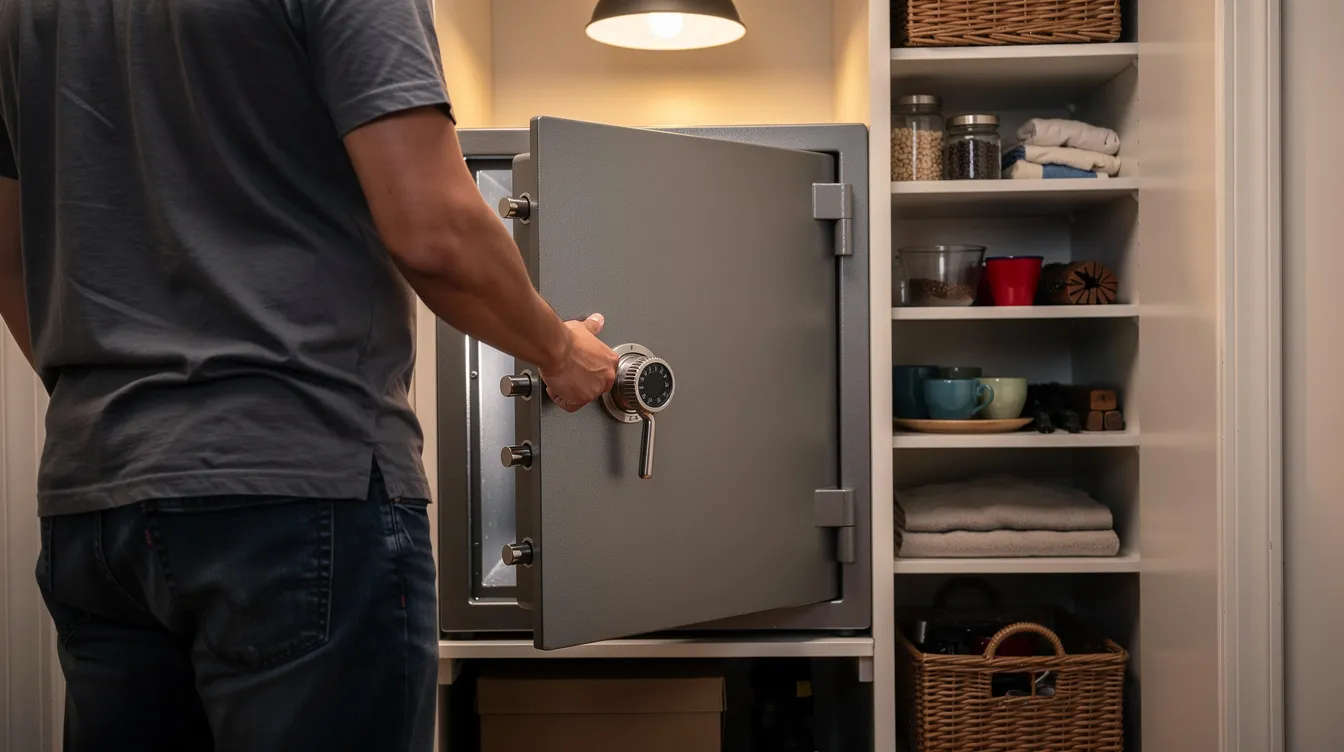
Vermont has secure storage laws to prevent minors’ access to firearms, effective July 1, 2023. The legislature enacted rules included requiring secure storage-locked containers, gun safes, or tamper-resistant devices. Exceptions exist for break-ins or forcible entry.
Negligent firearm storage can lead to five years in prison and negligent storage fines up to $5,000. For example, a child taking an unsecured gun to a school building could trigger criminal charges against the gun owner. Practical steps: use locking devices, store ammunition separately, and educate every family member about firearm safety.
Enforcement, Penalties, and Working with Law Enforcement Officers
|
Violation |
Penalty |
|---|---|
|
Illegal possession near schools (first offense) |
Up to one year in jail, fines up to $1,000 |
|
Second offense near schools |
Up to three years in prison, fines up to $5,000 |
|
Unlawful possession by violent felon |
Up to two years, $1,000 fine |
|
ERPO or abuse order violation |
Up to one year, $1,000 fine |
|
Waiting period violation |
Up to one year, $500 fine |
Local police, sheriffs, and state police enforce state gun laws. Federal agencies like ATF become involved when federal gun laws are violated. Dealers must keep records of handgun sales accessible to law enforcement officers investigating gun violence. If you believe someone is illegally armed-such as in violation of a domestic violence order-contact law enforcement or a victim advocate. Vermont does not directly regulate hunting enforcement through these criminal statutes but coordinates with wildlife agencies.
Sport Shooting Ranges and Hunting-Related Rules
Established sport shooting ranges enjoy legal protections from nuisance lawsuits if they comply with permits and noise conditions. The only state rules that municipalities may enforce relate to discharge ordinances and zoning. Taking wild animals from motor vehicles or within specified distances of public highways is prohibited, intersecting with rules against loaded long guns in vehicles. Law enforcement training at ranges after dark may require prior notice to nearby property owners. These innovative policies reflect Vermont’s balance of second amendment traditions with public safety.
Staying Informed and Getting Legal Help
Check the Vermont Statutes Annotated regularly-gun laws can change each session. Anyone facing criminal charges, planning complex transfers, or involved in domestic violence or extreme risk law proceedings should consult a qualified Vermont attorney. Free resources through legal aid and domestic violence advocacy organizations can help when safety concerns intersect with firearms. Understanding both rights and responsibilities is essential to lawful, safe gun ownership as the only state with this particular blend of constitutional carry and modern regulation.
FAQ: Vermont Gun Laws
Do I need a permit to carry a concealed handgun in Vermont?
No. Vermont does not require a state permit for open carry or concealed carry by adults legally allowed to possess firearms. However, other states may not recognize Vermont’s system, so check reciprocity rules before traveling. Violent felons and those under qualifying abuse orders cannot carry regardless.
Can I keep a gun in my car in Vermont?
Handguns may generally be kept in vehicles by lawful owners. Loaded rifles and shotguns are restricted on public highways. Secure any firearm in a vehicle to prevent theft, and note that school zones and federal property may impose additional restrictions on purchase firearms or possession in vehicles.
Are there special rules for non-residents bringing guns into Vermont?
Non-residents who can legally possess firearms under federal law may carry in Vermont under the same rules as residents. They must comply with Vermont’s magazine limits, prohibited locations, and transfer laws. Check your home state’s export rules and federal transportation laws when passing through states with stricter gun control laws.
What should I do if someone is storing guns unsafely around children?
If safe, talk to the gun owner about Vermont’s negligent storage law. If there is immediate risk-such as a young child handling a loaded gun-contact law enforcement or child protective services. Many police departments and health providers offer free gun lock programs.
How often do Vermont’s gun laws change?
Major reforms began in 2018 with the Vermont legislature passing background checks, age limits, and magazine restrictions. Additional changes followed through 2023. New bills related to gun control or gun rights are introduced frequently, so check for updates at least annually or before major firearm purchases.
What are the penalties for a second offense of illegal firearm possession near schools in Vermont?
A second offense of illegal firearm possession near schools in Vermont can result in up to three years in prison, a fine of up to $5,000, or both. This reflects the state’s strong stance on prohibiting firearms in sensitive areas to protect public safety.
Does Vermont impose harsher penalties for repeat firearm offenses near schools?
Yes. While a first offense may lead to up to one year in jail and fines up to $1,000, a second or subsequent offense near schools carries much stricter penalties, including up to three years imprisonment and fines reaching $5,000.
Meta tags
title
Understanding Vermont Gun Laws: Key Regulations and Rights Explained
68/70
description
Explore Vermont’s gun laws, including key regulations and rights. Stay informed and understand your responsibilities and privileges. Read more now.
147/156