New Jersey Gun Laws: Comprehensive 2026 Overview
New Jersey Gun Laws: Comprehensive 2026 Overview
New Jersey has some of the strictest gun laws in the United States. Whether you already own firearms in the Garden State, plan to move here, or are just passing through, understanding these regulations is essential to staying on the right side of the law. This guide walks through everything from purchase permits and carry rules to assault firearm bans and ghost gun prohibitions, all current as of mid-2026.

Key Takeaways
-
This is a 2026-focused overview of new jersey gun laws and is not a substitute for individualized legal advice from a qualified attorney.
-
New Jersey has some of the strongest gun laws in the country, with a permit required for most gun purchases and universal background checks mandatory for all firearm transactions.
-
Assault firearms, large-capacity magazines (over 10 rounds), and ghost guns are heavily restricted or outright banned under new jersey law.
-
Law enforcement officers and certain qualified retired officers have specific exemptions, but most residents face tight controls on purchasing, carrying, and transporting firearms.
-
New Jersey emphasizes gun violence prevention through red flag laws, childproof handgun rules, strict ammunition restrictions, and severe penalties for unlawful possession.
Overview of New Jersey Gun Laws
New Jersey regulates firearms primarily through statutory law under Title 2C of the New Jersey Code of Criminal Justice, not through a constitutional guarantee. Unlike states such as Texas or Tennessee, New Jersey does not have an explicit right to keep and bear arms written into its state constitution.
State statutes, administrative regulations from the Attorney General and jersey state police, and court decisions collectively shape the state’s firearm policy. The 2022 U.S. Supreme Court ruling in NYSRPA v. Bruen forced significant changes to how the state handles carry permits. In response, the legislature enacted Chapter 131 of 2022 (P.L. 2022, c. 131), overhauling the permit to carry framework.
The core goals of jersey law regarding firearms include:
-
Reducing gun violence and firearm deaths through layered regulation
-
Controlling who may own and carry firearms
-
Supporting law enforcement agency efforts to trace crime guns
-
Restricting access to assault firearms, ghost guns, and high-capacity magazines
Every section below uses plain English with concrete dates, statute references, and practical examples rather than generic statements.
Who May Own Firearms in New Jersey
Firearm ownership in New Jersey starts with meeting basic eligibility requirements. You must be at least 18 years old to purchase a rifle or shotgun in New Jersey and at least 21 years old to purchase a handgun.
Beyond age, several categories disqualify a person from firearm ownership:
|
Disqualifying Factor |
Statute Basis |
|---|---|
|
Felony conviction |
N.J.S.A. 2C:58-3 |
|
Certain domestic violence offenses |
N.J.S.A. 2C:58-3 |
|
Active restraining order |
N.J.S.A. 2C:58-3 |
|
Involuntary mental health commitment |
N.J.S.A. 2C:58-3 |
|
Federal terror watchlist entry |
N.J.S.A. 2C:58-3 |
|
Hate crime conviction |
N.J.S.A. 2C:58-3 |
New Jersey prohibits possession of firearms for individuals involuntarily committed for mental health issues, and a conviction for a hate crime also prohibits gun possession in New Jersey.
Universal background checks are mandatory for all firearm purchases in New Jersey. Whether you are buying from a licensed dealer or completing most types of private sale, the transaction must include a background check through the state’s system. The new jersey state police and local police departments share the duty of vetting applicants and enforcing these rules.
Non-residents face additional hurdles. Processing timelines are longer (45 days instead of 30), and federal law applies alongside state law requirements. If you are a non-resident attempting to purchase firearms in New Jersey, expect stricter scrutiny from the licensing authority.
Permits to Purchase and Own Firearms
New Jersey is firmly a permit required state for acquiring most firearms. The permit system is built around two key documents: the firearms purchaser identification card (FPIC) and the Permit to Purchase a Handgun (PPH).
Firearms Purchaser Identification Card (FPIC)
The FPIC is needed to purchase rifles, shotguns, and ammunition. It functions as a lifetime card issued by your local police department or, in some cases, the state police. You cannot legally purchase firearms in these categories-long guns and ammo-without one.
A Firearm Purchaser Identification Card is required for rifles and shotguns, and a separate permit is needed to purchase handguns in New Jersey.
Permit to Purchase a Handgun (PPH)
A Permit to Purchase a Handgun is required from local police for each handgun purchase. Each permit covers only one handgun, and handgun purchase permits expire after 90 days but can be extended for an additional 90 days. New Jersey limits handgun purchases to one per 30 days under P.L. 2022, c. 131, meaning you can buy only one handgun within any 30-day period.
Application Process
The steps to get both a permit and an FPIC involve:
-
Completing forms STS-33 and SP-66 (prescribed by the Superintendent)
-
Submitting fingerprints
-
Providing references
-
Paying applicable fees
-
Passing a background check required by both state and federal law
-
Completing a firearms safety and storage instruction course (for first-time applicants, per Chapter 131)
Permits must be issued within 30 days according to NJ law for residents. Non-residents get a 45-day window. In practice, some municipalities exceed these timelines.
Private transfers generally must go through a licensed dealer to run background checks. Limited exceptions exist for transfers among immediate family members and transfers involving law enforcement officers.

Municipal Procedures and Common Issues
Municipalities may not legally add extra application requirements beyond what state law mandates. Chapter 131 explicitly prohibits local departments from demanding additional photos, notarized letters, or non-statutory forms beyond STS-33 and SP-66. Courts have struck down these local overreaches.
Here are the standard fees as specifically set by statute:
|
Item |
Fee |
|---|---|
|
FPIC application |
$5 |
|
Handgun purchase permit |
$2 per permit |
|
Fingerprint/background check |
Varies (typically $50–$75) |
Each Firearm Purchaser Identification Card application fee is $5, though fingerprint and background check fees add to the total cost.
Practical tips for applicants:
-
Keep copies of all paperwork and submission receipts
-
Track your application date so you can follow up if the 30-day window passes
-
If denied, you have the right to appeal through the superior court
-
If your municipality tries to impose extra requirements, cite P.L. 2022, c. 131 and request compliance with state law
Permits to Carry and Transport Firearms
After the 2022 Bruen decision, New Jersey shifted from a “may-issue” to a “shall-issue” system for public carry permits. Previously, applicants had to demonstrate “justifiable need,” a subjective standard that kept permit numbers extremely low. As of 2013, there were only 1,212 active handgun carry permits statewide. New Jersey now has a shall-issue permit system for handguns, and the number of permit holders has grown substantially since 2023.
New Jersey requires a permit to carry a handgun, and the state now operates as a shall-issue state for concealed carry permits. The modern process includes:
-
Application to the chief law enforcement officer of your municipality or, where no local police exist, the state police
-
Fingerprinting and a thorough background check
-
Proof of completed firearms training (use-of-force, safe handling, marksmanship)
-
Liability insurance of at least $300,000 per incident
-
No disqualifying factors under N.J.S.A. 2C:58-4
Permits are generally issued within 30 days if the applicant is qualified, though carry permits can take longer in practice. Carry permits expire every two years and must be renewed under the same criteria.
Open carry of firearms is prohibited in New Jersey. Even with a valid permit, you must carry concealed. The statute treats incidental exposure (e.g., a shifting holster) as de minimis, but deliberate open display will get you arrested.
Vehicle Transport Rules
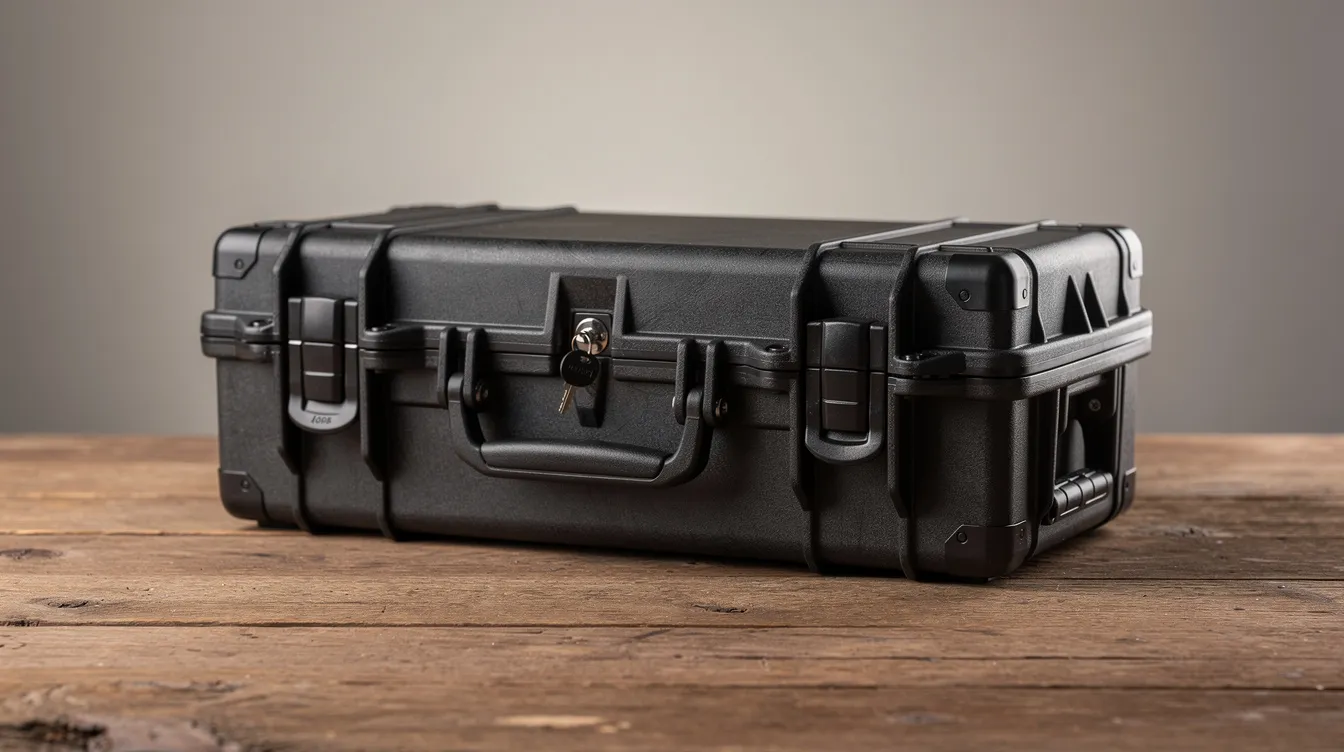
Firearm transport laws require handguns to be unloaded and stored in a locked case. Even if you don’t hold a carry permit, you can transport firearms in your vehicle under specific conditions:
-
Firearms must be unloaded
-
Stored in a locked container or the trunk
-
Ammunition stored separately
-
Travel must be direct between exempted locations (home, range, gunsmith, hunting area)
Violations of carry or transport rules can result in felony-level charges, loss of gun rights, and prison time.
Carrying in Exempted and Sensitive Locations
Even without a full carry permit, you may possess firearms in certain exempted locations:
-
Your home
-
Your place of business
-
Your own land (within statutory limits)
Members of registered rifle and pistol clubs can transport firearms to and from ranges for target practice. Non-members are limited to authorized ranges only.
For hunting and fishing, you may carry firearms consistent with New Jersey Fish and Wildlife regulations if you hold a valid hunting or valid permit and a fishing license where applicable. The firearm must match the activity (e.g., shotguns for certain game, semi automatic rifle where permitted by season rules).
Concealed carry is prohibited in sensitive places such as schools and government buildings. Under N.J.S.A. 2C:58-4.6, even permit holders cannot carry in:
-
Schools and school grounds
-
Courthouses
-
Government buildings
-
Polling places
-
Hospitals and healthcare facilities
-
Places of worship (unless property owner consents)
-
Any private property with posted prohibition
Violations in sensitive places are typically third-degree or fourth-degree crimes.
Interstate Transportation and Airports
The federal Firearm Owners Protection Act (FOPA) theoretically protects travelers passing through New Jersey with unloaded firearms locked and inaccessible. In practice, Third Circuit court decisions have limited FOPA protections at New Jersey airports, especially Newark Liberty International Airport.
If your flight is canceled or delayed and you retrieve checked luggage containing firearms, you may be subject to new jersey possession laws despite having valid out-of-state permits. Several travelers have faced arrest in exactly this scenario.
Research current Port Authority and TSA guidance before traveling through New Jersey with firearms. This article is not a substitute for individualized legal advice.
Assault Firearms, Magazines, and Banned Devices
New Jersey has long restricted assault firearms, high-capacity magazines, and certain accessories as part of its gun violence prevention strategy. The state’s definition of an assault weapon is broader than many people expect.
Under N.J.S.A. 2C:39-1(w), an “assault firearm” includes:
-
Specifically listed makes and models (e.g., AR-15, AK variants)
-
Any firearm “substantially identical” to listed models
-
A semi automatic rifle with a detachable magazine and at least two restricted features (pistol grip, folding stock, threaded barrel designed to accept a flash suppressor, bayonet mount, grenade launcher)
-
Semi-automatic shotguns with fixed magazine capacity exceeding six rounds or certain tactical features
A semiautomatic rifle with a fixed magazine over 10 rounds is classified as an assault firearm. Assault firearms must be registered if acquired before May 1, 1990. Civilians cannot newly acquire such firearm models-only those lawfully possessed and registered before that date may be retained under strict conditions.
Magazine Capacity Limits
Possession of magazines over 10 rounds is illegal in New Jersey, reduced from 15 rounds by P.L. 2018, c. 39. There was a one-year compliance window after 2018 to surrender, modify, or transfer non-compliant magazines. Anyone caught with a magazine exceeding 10 rounds now faces a fourth-degree crime (up to 18 months imprisonment).
Banned Devices
Bump stocks were made illegal in New Jersey in January 2018. Suppressors, short-barreled rifles, and machine gun conversion devices are also prohibited for civilian possession regardless of federal NFA approval. A machine gun requires special licensing that is effectively unavailable to civilians.
P.L. 2025, Chapter 255 (approved January 12, 2026) fine-tuned the definition of assault firearms, including an adjustment related to bump stock classifications. The State Commission of Investigation has also recommended criminalizing drop-in auto sears and selector switches.
Law Enforcement and Professional Exemptions
Active duty law enforcement officers may possess assault firearms and high-capacity magazines for duty use and, with agency approval, for off-duty personal use. The chief law enforcement officer of the relevant law enforcement agency typically authorizes these exemptions.
Qualified retired officers may carry firearms under the federal Law Enforcement Officers Safety Act (LEOSA), but New Jersey imposes its own qualification requirements. Retired officers must meet NJ-specific standards even when carrying under federal authority.
Federal firearms licensees (FFLs) may possess otherwise restricted firearms and magazines as part of their business, subject to detailed recordkeeping and security rules. Civilians who claim false law-enforcement exemptions or misuse LE-only markings face additional criminal liability.
Ghost Guns, Serialization, and Tracking
New Jersey has enacted some of the boldest ghost gun prohibitions in the country. Ghost guns are unserialized, privately made firearms assembled from kits or partially finished receivers that are extremely difficult for authorities to trace.
Under N.J.S.A. 2C:39-9k, the manufacture, sale, transfer, or possession of ghost guns is illegal. This includes possession of any combination of parts from which an assault firearm may be readily assembled. New Jersey has regulations targeting untraceable and undetectable firearms called “ghost guns,” and the state aggressively prosecutes violations.
Every legal firearm procured via a dealer or under a permit must carry a serial number and be recorded. Dealers must maintain detailed records and report multiple sales. Assault firearms that are lawfully owned must be registered with new jersey state police under P.L. 1990, c. 32.
Enforcement Trends
Ghost gun recoveries increased over 600% between 2019 and 2023, according to state enforcement data. Joint operations with federal agencies have targeted ghost gun trafficking networks, with multiple defendants convicted in 2024 receiving multi-year prison terms.
Ghost gun offenses are currently classified as second-degree crimes in many cases, carrying 5 to 10 years in prison. Pending legislation (S-1558) proposes elevating some offenses to first-degree crimes with 10 to 20 years imprisonment.

Special Regulations and Gun Violence Prevention Measures
New Jersey’s approach to gun violence prevention goes beyond permits and bans. The state uses layered policies including red flag laws, ammunition restrictions, and safe storage expectations.
Extreme Risk Protective Order (Red Flag Law)
Under N.J.S.A. 2C:58-20, family members and law enforcement officers can petition a court to temporarily remove firearms from individuals who pose a risk of harm. These temporary orders remain in effect until a full hearing, at which point they can be extended.
Childproof Handgun Law
Gun storage laws in New Jersey require firearms to be secure to prevent access by children. Additionally, dealers are required to offer at least one smart-gun handgun model once the Attorney General certifies that such firearm is commercially available. As of 2026, no model has been fully certified, so this requirement remains dormant.
Ammunition Restrictions
Hollow-point ammunition is restricted for use in carry guns in New Jersey. Hollow-point ammunition cannot be carried outside specific locations. You can possess hollow-point rounds at home, at the range, and while hunting, but carrying them in public-even with a valid permit-violates state law. Ammunition purchases also require a valid FPIC.
Community Initiatives
New Jersey promotes community-based gun violence prevention programs, data-driven policing strategies, and partnerships between prosecutors and local agencies to reduce gun violence across the state. Groups like the national rifle association and gun safety organizations operate in the state, though New Jersey’s regulatory framework reflects a prevention-first philosophy regardless of any lobbying activity.
Recordkeeping, Reporting, and Straw Purchases
Dealers must maintain detailed sales records, run a background check on every buyer, and report multiple handgun sales to the relevant law enforcement agency. All dealer purchases are documented and retained for inspection.
The state aggressively pursues straw purchases-situations where a person with a clean record buys firearms on behalf of a prohibited person. This practice undermines the entire permit system and is treated as a serious crime.
Mandatory reporting of lost or stolen firearms must occur within 36 hours. Failure to report can lead to a disorderly persons offense or worse. Violations in this area result in criminal charges and permanent loss of the right to own or carry firearms in New Jersey.
Penalties, Enforcement, and Your Rights
New Jersey treats unlawful firearm possession and misuse as serious offenses. Most are graded as indictable crimes (the state’s equivalent of felonies).
|
Offense |
Degree |
Prison Range |
|---|---|---|
|
Possession of handgun without permit |
Second degree |
5–10 years |
|
Possession of illegal assault firearm |
Second degree |
5–10 years |
|
Rifle/shotgun without FPIC |
Third degree |
3–5 years |
|
Magazine over 10 rounds |
Fourth degree |
Up to 18 months |
|
Carry permit violations (alcohol, improper holster, etc.) |
Fourth degree |
Up to 18 months |
Many second-degree weapon offenses invoke the Graves Act (N.J.S.A. 2C:43-6), which imposes mandatory minimum parole ineligibility. A convicted person must serve at least half their sentence or 42 months, whichever is greater, before becoming parole-eligible.
State police and local police actively enforce gun laws during traffic stops, weapons checks, and follow-up investigations of suspicious gun purchases. If you are stopped by law enforcement while carrying or transporting firearms, you have a duty to disclose your permit and the presence of firearms.
Your Basic Rights During Police Encounters:
-
You have the right to remain silent beyond providing identification and required disclosures
-
You have the right to counsel
-
Do not interfere with lawful searches and seizures
-
Remain calm and cooperative
This article provides general information only. Anyone facing investigation or charges should consult a qualified New Jersey firearms attorney.
New Jersey has some of the lowest rates of firearm deaths in the country, and proponents of these laws point to strict enforcement and comprehensive regulation as contributing factors. Whether you agree with the regulatory approach or not, understanding these rules is the only way to ensure legal compliance.

Frequently Asked Questions
Do I need a permit just to own a gun at home in New Jersey?
New Jersey does not require a separate “ownership” license. However, you generally must have the proper FPIC or handgun purchase permit to buy and lawfully acquire the firearm in the first place. Possessing an unregistered or unlawfully obtained handgun in your home is still a crime, even if you never take it outside. For example, a legally purchased shotgun with a valid FPIC is legal to keep at home, but an illegally obtained pistol with no paperwork is a second-degree crime regardless of where you store it.
Can I carry a firearm in my car while traveling through New Jersey?
Without a New Jersey carry permit, firearms must be unloaded, locked in the trunk or a secure container, with ammunition stored separately. Travel must be “direct” between lawful locations such as home, range, gunsmith, or hunting area. Unnecessary detours-stopping for groceries, visiting a friend-can create legal problems. Having an out-of-state carry permit does not automatically authorize loaded carry in a vehicle in New Jersey. Yes new jersey enforces these transport rules strictly, and violations can result in felony charges.
Are out-of-state gun permits or licenses recognized in New Jersey?
New Jersey does not have broad reciprocity and generally does not recognize carry permits issued by other states. Visitors must comply with new jersey gun laws regardless of their home state’s rules. Even if your home state allows permitless or constitutional carry, those protections evaporate at the New Jersey border. Check new jersey state police guidance and current statutes before entering the state with firearms.
What should I do if I want to move into New Jersey with my existing firearms?
Review whether your firearms are legal in New Jersey before you cross the state line. Pay close attention to the assault firearm definitions, magazine limits (nothing over 10 rounds), and banned accessories. You may need to permanently modify or replace large-capacity magazines and possibly surrender prohibited models. Guns that are legal in most of the country may be illegal here. Apply for an FPIC and any needed handgun permits promptly once you establish residency if you plan to make future gun purchases in the state.
How often do New Jersey gun laws change, and how can I stay updated?
Meta tags
title
0/70
description
0/156
New Jersey Gun Laws: Comprehensive 2026 Overview
New Jersey has some of the strictest gun laws in the United States. Whether you already own firearms in the Garden State, plan to move here, or are just passing through, understanding these regulations is essential to staying on the right side of the law. This guide walks through everything from purchase permits and carry rules to assault firearm bans and ghost gun prohibitions, all current as of mid-2026.
Key Takeaways
-
This is a 2026-focused overview of new jersey gun laws and is not a substitute for individualized legal advice from a qualified attorney.
-
New Jersey has some of the strongest gun laws in the country, with a permit required for most gun purchases and universal background checks mandatory for all firearm transactions.
-
Assault firearms, large-capacity magazines (over 10 rounds), and ghost guns are heavily restricted or outright banned under new jersey law.
-
Law enforcement officers and certain qualified retired officers have specific exemptions, but most residents face tight controls on purchasing, carrying, and transporting firearms.
-
New Jersey emphasizes gun violence prevention through red flag laws, childproof handgun rules, strict ammunition restrictions, and severe penalties for unlawful possession.
Overview of New Jersey Gun Laws
New Jersey regulates firearms primarily through statutory law under Title 2C of the New Jersey Code of Criminal Justice, not through a constitutional guarantee. Unlike states such as Texas or Tennessee, New Jersey does not have an explicit right to keep and bear arms written into its state constitution.
State statutes, administrative regulations from the Attorney General and jersey state police, and court decisions collectively shape the state’s firearm policy. The 2022 U.S. Supreme Court ruling in NYSRPA v. Bruen forced significant changes to how the state handles carry permits. In response, the legislature enacted Chapter 131 of 2022 (P.L. 2022, c. 131), overhauling the permit to carry framework.
The core goals of jersey law regarding firearms include:
-
Reducing gun violence and firearm deaths through layered regulation
-
Controlling who may own and carry firearms
-
Supporting law enforcement agency efforts to trace crime guns
-
Restricting access to assault firearms, ghost guns, and high-capacity magazines
Every section below uses plain English with concrete dates, statute references, and practical examples rather than generic statements.
Who May Own Firearms in New Jersey
Firearm ownership in New Jersey starts with meeting basic eligibility requirements. You must be at least 18 years old to purchase a rifle or shotgun in New Jersey and at least 21 years old to purchase a handgun.
Beyond age, several categories disqualify a person from firearm ownership:
|
Disqualifying Factor |
Statute Basis |
|---|---|
|
Felony conviction |
N.J.S.A. 2C:58-3 |
|
Certain domestic violence offenses |
N.J.S.A. 2C:58-3 |
|
Active restraining order |
N.J.S.A. 2C:58-3 |
|
Involuntary mental health commitment |
N.J.S.A. 2C:58-3 |
|
Federal terror watchlist entry |
N.J.S.A. 2C:58-3 |
|
Hate crime conviction |
N.J.S.A. 2C:58-3 |
New Jersey prohibits possession of firearms for individuals involuntarily committed for mental health issues, and a conviction for a hate crime also prohibits gun possession in New Jersey.
Universal background checks are mandatory for all firearm purchases in New Jersey. Whether you are buying from a licensed dealer or completing most types of private sale, the transaction must include a background check through the state’s system. The new jersey state police and local police departments share the duty of vetting applicants and enforcing these rules.
Non-residents face additional hurdles. Processing timelines are longer (45 days instead of 30), and federal law applies alongside state law requirements. If you are a non-resident attempting to purchase firearms in New Jersey, expect stricter scrutiny from the licensing authority.
Permits to Purchase and Own Firearms
New Jersey is firmly a permit required state for acquiring most firearms. The permit system is built around two key documents: the firearms purchaser identification card (FPIC) and the Permit to Purchase a Handgun (PPH).
Firearms Purchaser Identification Card (FPIC)
The FPIC is needed to purchase rifles, shotguns, and ammunition. It functions as a lifetime card issued by your local police department or, in some cases, the state police. You cannot legally purchase firearms in these categories-long guns and ammo-without one.
A Firearm Purchaser Identification Card is required for rifles and shotguns, and a separate permit is needed to purchase handguns in New Jersey.
Permit to Purchase a Handgun (PPH)
A Permit to Purchase a Handgun is required from local police for each handgun purchase. Each permit covers only one handgun, and handgun purchase permits expire after 90 days but can be extended for an additional 90 days. New Jersey limits handgun purchases to one per 30 days under P.L. 2022, c. 131, meaning you can buy only one handgun within any 30-day period.
Application Process
The steps to get both a permit and an FPIC involve:
-
Completing forms STS-33 and SP-66 (prescribed by the Superintendent)
-
Submitting fingerprints
-
Providing references
-
Paying applicable fees
-
Passing a background check required by both state and federal law
-
Completing a firearms safety and storage instruction course (for first-time applicants, per Chapter 131)
Permits must be issued within 30 days according to NJ law for residents. Non-residents get a 45-day window. In practice, some municipalities exceed these timelines.
Private transfers generally must go through a licensed dealer to run background checks. Limited exceptions exist for transfers among immediate family members and transfers involving law enforcement officers.
Municipal Procedures and Common Issues
Municipalities may not legally add extra application requirements beyond what state law mandates. Chapter 131 explicitly prohibits local departments from demanding additional photos, notarized letters, or non-statutory forms beyond STS-33 and SP-66. Courts have struck down these local overreaches.
Here are the standard fees as specifically set by statute:
|
Item |
Fee |
|---|---|
|
FPIC application |
$5 |
|
Handgun purchase permit |
$2 per permit |
|
Fingerprint/background check |
Varies (typically $50–$75) |
Each Firearm Purchaser Identification Card application fee is $5, though fingerprint and background check fees add to the total cost.
Practical tips for applicants:
-
Keep copies of all paperwork and submission receipts
-
Track your application date so you can follow up if the 30-day window passes
-
If denied, you have the right to appeal through the superior court
-
If your municipality tries to impose extra requirements, cite P.L. 2022, c. 131 and request compliance with state law
Permits to Carry and Transport Firearms
After the 2022 Bruen decision, New Jersey shifted from a “may-issue” to a “shall-issue” system for public carry permits. Previously, applicants had to demonstrate “justifiable need,” a subjective standard that kept permit numbers extremely low. As of 2013, there were only 1,212 active handgun carry permits statewide. New Jersey now has a shall-issue permit system for handguns, and the number of permit holders has grown substantially since 2023.
New Jersey requires a permit to carry a handgun, and the state now operates as a shall-issue state for concealed carry permits. The modern process includes:
-
Application to the chief law enforcement officer of your municipality or, where no local police exist, the state police
-
Fingerprinting and a thorough background check
-
Proof of completed firearms training (use-of-force, safe handling, marksmanship)
-
Liability insurance of at least $300,000 per incident
-
No disqualifying factors under N.J.S.A. 2C:58-4
Permits are generally issued within 30 days if the applicant is qualified, though carry permits can take longer in practice. Carry permits expire every two years and must be renewed under the same criteria.
Open carry of firearms is prohibited in New Jersey. Even with a valid permit, you must carry concealed. The statute treats incidental exposure (e.g., a shifting holster) as de minimis, but deliberate open display will get you arrested.
Vehicle Transport Rules
Firearm transport laws require handguns to be unloaded and stored in a locked case. Even if you don’t hold a carry permit, you can transport firearms in your vehicle under specific conditions:
-
Firearms must be unloaded
-
Stored in a locked container or the trunk
-
Ammunition stored separately
-
Travel must be direct between exempted locations (home, range, gunsmith, hunting area)
Violations of carry or transport rules can result in felony-level charges, loss of gun rights, and prison time.
Carrying in Exempted and Sensitive Locations
Even without a full carry permit, you may possess firearms in certain exempted locations:
-
Your home
-
Your place of business
-
Your own land (within statutory limits)
Members of registered rifle and pistol clubs can transport firearms to and from ranges for target practice. Non-members are limited to authorized ranges only.
For hunting and fishing, you may carry firearms consistent with New Jersey Fish and Wildlife regulations if you hold a valid hunting or valid permit and a fishing license where applicable. The firearm must match the activity (e.g., shotguns for certain game, semi automatic rifle where permitted by season rules).
Concealed carry is prohibited in sensitive places such as schools and government buildings. Under N.J.S.A. 2C:58-4.6, even permit holders cannot carry in:
-
Schools and school grounds
-
Courthouses
-
Government buildings
-
Polling places
-
Hospitals and healthcare facilities
-
Places of worship (unless property owner consents)
-
Any private property with posted prohibition
Violations in sensitive places are typically third-degree or fourth-degree crimes.
Interstate Transportation and Airports
The federal Firearm Owners Protection Act (FOPA) theoretically protects travelers passing through New Jersey with unloaded firearms locked and inaccessible. In practice, Third Circuit court decisions have limited FOPA protections at New Jersey airports, especially Newark Liberty International Airport.
If your flight is canceled or delayed and you retrieve checked luggage containing firearms, you may be subject to new jersey possession laws despite having valid out-of-state permits. Several travelers have faced arrest in exactly this scenario.
Research current Port Authority and TSA guidance before traveling through New Jersey with firearms. This article is not a substitute for individualized legal advice.
Assault Firearms, Magazines, and Banned Devices
New Jersey has long restricted assault firearms, high-capacity magazines, and certain accessories as part of its gun violence prevention strategy. The state’s definition of an assault weapon is broader than many people expect.
Under N.J.S.A. 2C:39-1(w), an “assault firearm” includes:
-
Specifically listed makes and models (e.g., AR-15, AK variants)
-
Any firearm “substantially identical” to listed models
-
A semi automatic rifle with a detachable magazine and at least two restricted features (pistol grip, folding stock, threaded barrel designed to accept a flash suppressor, bayonet mount, grenade launcher)
-
Semi-automatic shotguns with fixed magazine capacity exceeding six rounds or certain tactical features
A semiautomatic rifle with a fixed magazine over 10 rounds is classified as an assault firearm. Assault firearms must be registered if acquired before May 1, 1990. Civilians cannot newly acquire such firearm models-only those lawfully possessed and registered before that date may be retained under strict conditions.
Magazine Capacity Limits
Possession of magazines over 10 rounds is illegal in New Jersey, reduced from 15 rounds by P.L. 2018, c. 39. There was a one-year compliance window after 2018 to surrender, modify, or transfer non-compliant magazines. Anyone caught with a magazine exceeding 10 rounds now faces a fourth-degree crime (up to 18 months imprisonment).
Banned Devices
Bump stocks were made illegal in New Jersey in January 2018. Suppressors, short-barreled rifles, and machine gun conversion devices are also prohibited for civilian possession regardless of federal NFA approval. A machine gun requires special licensing that is effectively unavailable to civilians.
P.L. 2025, Chapter 255 (approved January 12, 2026) fine-tuned the definition of assault firearms, including an adjustment related to bump stock classifications. The State Commission of Investigation has also recommended criminalizing drop-in auto sears and selector switches.
Law Enforcement and Professional Exemptions
Active duty law enforcement officers may possess assault firearms and high-capacity magazines for duty use and, with agency approval, for off-duty personal use. The chief law enforcement officer of the relevant law enforcement agency typically authorizes these exemptions.
Qualified retired officers may carry firearms under the federal Law Enforcement Officers Safety Act (LEOSA), but New Jersey imposes its own qualification requirements. Retired officers must meet NJ-specific standards even when carrying under federal authority.
Federal firearms licensees (FFLs) may possess otherwise restricted firearms and magazines as part of their business, subject to detailed recordkeeping and security rules. Civilians who claim false law-enforcement exemptions or misuse LE-only markings face additional criminal liability.
Ghost Guns, Serialization, and Tracking
New Jersey has enacted some of the boldest ghost gun prohibitions in the country. Ghost guns are unserialized, privately made firearms assembled from kits or partially finished receivers that are extremely difficult for authorities to trace.
Under N.J.S.A. 2C:39-9k, the manufacture, sale, transfer, or possession of ghost guns is illegal. This includes possession of any combination of parts from which an assault firearm may be readily assembled. New Jersey has regulations targeting untraceable and undetectable firearms called “ghost guns,” and the state aggressively prosecutes violations.
Every legal firearm procured via a dealer or under a permit must carry a serial number and be recorded. Dealers must maintain detailed records and report multiple sales. Assault firearms that are lawfully owned must be registered with new jersey state police under P.L. 1990, c. 32.
Enforcement Trends
Ghost gun recoveries increased over 600% between 2019 and 2023, according to state enforcement data. Joint operations with federal agencies have targeted ghost gun trafficking networks, with multiple defendants convicted in 2024 receiving multi-year prison terms.
Ghost gun offenses are currently classified as second-degree crimes in many cases, carrying 5 to 10 years in prison. Pending legislation (S-1558) proposes elevating some offenses to first-degree crimes with 10 to 20 years imprisonment.
Special Regulations and Gun Violence Prevention Measures
New Jersey’s approach to gun violence prevention goes beyond permits and bans. The state uses layered policies including red flag laws, ammunition restrictions, and safe storage expectations.
Extreme Risk Protective Order (Red Flag Law)
Under N.J.S.A. 2C:58-20, family members and law enforcement officers can petition a court to temporarily remove firearms from individuals who pose a risk of harm. These temporary orders remain in effect until a full hearing, at which point they can be extended.
Childproof Handgun Law
Gun storage laws in New Jersey require firearms to be secure to prevent access by children. Additionally, dealers are required to offer at least one smart-gun handgun model once the Attorney General certifies that such firearm is commercially available. As of 2026, no model has been fully certified, so this requirement remains dormant.
Ammunition Restrictions
Hollow-point ammunition is restricted for use in carry guns in New Jersey. Hollow-point ammunition cannot be carried outside specific locations. You can possess hollow-point rounds at home, at the range, and while hunting, but carrying them in public-even with a valid permit-violates state law. Ammunition purchases also require a valid FPIC.
Community Initiatives
New Jersey promotes community-based gun violence prevention programs, data-driven policing strategies, and partnerships between prosecutors and local agencies to reduce gun violence across the state. Groups like the national rifle association and gun safety organizations operate in the state, though New Jersey’s regulatory framework reflects a prevention-first philosophy regardless of any lobbying activity.
Recordkeeping, Reporting, and Straw Purchases
Dealers must maintain detailed sales records, run a background check on every buyer, and report multiple handgun sales to the relevant law enforcement agency. All dealer purchases are documented and retained for inspection.
The state aggressively pursues straw purchases-situations where a person with a clean record buys firearms on behalf of a prohibited person. This practice undermines the entire permit system and is treated as a serious crime.
Mandatory reporting of lost or stolen firearms must occur within 36 hours. Failure to report can lead to a disorderly persons offense or worse. Violations in this area result in criminal charges and permanent loss of the right to own or carry firearms in New Jersey.
Penalties, Enforcement, and Your Rights
New Jersey treats unlawful firearm possession and misuse as serious offenses. Most are graded as indictable crimes (the state’s equivalent of felonies).
|
Offense |
Degree |
Prison Range |
|---|---|---|
|
Possession of handgun without permit |
Second degree |
5–10 years |
|
Possession of illegal assault firearm |
Second degree |
5–10 years |
|
Rifle/shotgun without FPIC |
Third degree |
3–5 years |
|
Magazine over 10 rounds |
Fourth degree |
Up to 18 months |
|
Carry permit violations (alcohol, improper holster, etc.) |
Fourth degree |
Up to 18 months |
Many second-degree weapon offenses invoke the Graves Act (N.J.S.A. 2C:43-6), which imposes mandatory minimum parole ineligibility. A convicted person must serve at least half their sentence or 42 months, whichever is greater, before becoming parole-eligible.
State police and local police actively enforce gun laws during traffic stops, weapons checks, and follow-up investigations of suspicious gun purchases. If you are stopped by law enforcement while carrying or transporting firearms, you have a duty to disclose your permit and the presence of firearms.
Your Basic Rights During Police Encounters:
-
You have the right to remain silent beyond providing identification and required disclosures
-
You have the right to counsel
-
Do not interfere with lawful searches and seizures
-
Remain calm and cooperative
This article provides general information only. Anyone facing investigation or charges should consult a qualified New Jersey firearms attorney.
New Jersey has some of the lowest rates of firearm deaths in the country, and proponents of these laws point to strict enforcement and comprehensive regulation as contributing factors. Whether you agree with the regulatory approach or not, understanding these rules is the only way to ensure legal compliance.
Frequently Asked Questions
Do I need a permit just to own a gun at home in New Jersey?
New Jersey does not require a separate “ownership” license. However, you generally must have the proper FPIC or handgun purchase permit to buy and lawfully acquire the firearm in the first place. Possessing an unregistered or unlawfully obtained handgun in your home is still a crime, even if you never take it outside. For example, a legally purchased shotgun with a valid FPIC is legal to keep at home, but an illegally obtained pistol with no paperwork is a second-degree crime regardless of where you store it.
Can I carry a firearm in my car while traveling through New Jersey?
Without a New Jersey carry permit, firearms must be unloaded, locked in the trunk or a secure container, with ammunition stored separately. Travel must be “direct” between lawful locations such as home, range, gunsmith, or hunting area. Unnecessary detours-stopping for groceries, visiting a friend-can create legal problems. Having an out-of-state carry permit does not automatically authorize loaded carry in a vehicle in New Jersey. Yes new jersey enforces these transport rules strictly, and violations can result in felony charges.
Are out-of-state gun permits or licenses recognized in New Jersey?
New Jersey does not have broad reciprocity and generally does not recognize carry permits issued by other states. Visitors must comply with new jersey gun laws regardless of their home state’s rules. Even if your home state allows permitless or constitutional carry, those protections evaporate at the New Jersey border. Check new jersey state police guidance and current statutes before entering the state with firearms.
What should I do if I want to move into New Jersey with my existing firearms?
Review whether your firearms are legal in New Jersey before you cross the state line. Pay close attention to the assault firearm definitions, magazine limits (nothing over 10 rounds), and banned accessories. You may need to permanently modify or replace large-capacity magazines and possibly surrender prohibited models. Guns that are legal in most of the country may be illegal here. Apply for an FPIC and any needed handgun permits promptly once you establish residency if you plan to make future gun purchases in the state.
How often do New Jersey gun laws change, and how can I stay updated?
New Jersey gun laws change through new legislation, Attorney General directives, and court rulings-sometimes multiple times within a few years. Chapter 131 in 2022 and P.L. 2025, Chapter 255 in early 2026 are recent examples. Check the New Jersey State Police Firearms Information page and the state legislature’s website regularly. An average year may see several bills introduced that could affect security requirements, carry rules, or penalties. If you have complex questions about any specific situation, consult a firearms attorney or reputable local training organization that tracks legal developments.
Meta tags
title
0/70
description
0/156