New Mexico Gun Laws: A Practical 2026 Guide
New Mexico Gun Laws: A Practical 2026 Guide
Key Takeaways
-
New Mexico allows permitless open carry of loaded firearms for people who may lawfully possess guns, while concealed carry generally requires a New Mexico Concealed Handgun License under current New Mexico statutes.
-
New Mexico requires universal background checks for nearly all firearm sales, usually through a federal firearms licensee, and buyers must pass a federal NICS background check when buying from a licensed dealer.
-
In 2024, New Mexico had a 7-day mandatory waiting period for firearm purchases, and residents must wait at least seven days to take possession of firearms after purchase in New Mexico where that day waiting period applies.
-
New Mexico is a Shall-Issue state for concealed carry permits, and a New Mexico Concealed Handgun License requires applicants to be at least 21.
-
Gun laws can change quickly in response to gun violence and political debate, so verify details with current new mexico statutes, the Department of Public Safety, or qualified legal counsel before acting.
New Mexico gun laws sit in the middle of America’s firearm debate. The state protects the right to bear arms for security, self defense, lawful hunting, recreational use, and other lawful purposes, but it also regulates who may possess firearms, how guns may be bought, and where weapons may be carried.

Overview of New Mexico Gun Laws
New Mexico has a strong rural gun culture, but it also faces public safety concerns tied to gun violence. New Mexico experienced one of the highest gun death rates in 2024, mainly from suicides and homicides, which has kept gun control proposals active in Santa Fe.
The state constitution protects the right to keep and bear arms. Article II, Section 6 recognizes firearms for lawful purposes, including security, defense, lawful hunting, recreational use, and other lawful purposes. At the same time, state law limits possession by prohibited people, regulates concealed weapons, and bans firearms in certain sensitive locations.
Most state-level firearm laws are found in the New Mexico Statutes Annotated, often called the NMSA. The most relevant sections include Chapter 30, Article 7 for weapons offenses and Chapter 29, Article 19 for the Concealed Handgun Carry Act. If you are researching mexico statutes online, use the current new mexico statutes rather than older summaries.
Federal law works alongside state law. The Gun Control Act of 1968, the Brady Act, and related federal regulations control prohibited persons, interstate sales, and the nics background check process. A federal firearms licensee must follow both federal law and New Mexico firearm laws.
Tribal lands within New Mexico may also have separate regulations. A permit or state permit that works elsewhere in new mexico may not be honored by a tribal government, especially at tribal casinos, government buildings, or community facilities.
Who May Possess Firearms in New Mexico
Possession means more than holding a gun in your hand. New Mexico law can treat both actual possession and constructive possession as regulated. For example, a person may have constructive possession if a firearm is in a place they control, such as a vehicle, bedroom, or locked container.
Under New Mexico statutes and federal law, firearm possession is prohibited for several categories of people, including:
-
Convicted felons
-
People convicted of certain domestic violence offenses
-
People subject to qualifying protective orders
-
People unlawfully using or addicted to controlled substances
-
People adjudicated mentally incompetent or committed to a mental institution
-
Certain people under indictment or otherwise barred by federal law
The minimum age rules are layered. A person generally must be 18 to possess most rifles and shotguns, while federal law generally requires a buyer to be 21 to purchase handguns from a licensed dealer. New Mexico also restricts handgun possession by younger people, with exceptions for supervised training, lawful hunting, competitions, and similar activities.
A long gun may be treated differently from a handgun in some private-transfer situations, but sellers should never transfer a firearm to someone they know or reasonably should know is prohibited. A firearm provided to a disqualified person can create criminal exposure for both sides.
Mental-health prohibitions are also serious. A person adjudicated mentally incompetent or committed to a mental institution may be barred under both federal law and state law. If there is any uncertainty about possession rights, contact an attorney or the relevant law enforcement agency before handling a loaded or unloaded firearm.
Violating a firearm possession prohibition can be charged as a felony. A mistake here is not a paperwork problem; it can mean arrest, prosecution, and loss of gun rights.
Buying and Selling Firearms: Background Checks and Waiting Periods
Gun sales in New Mexico fall into two broad categories: licensed-dealer sales and private person-to-person transfers. The rules are similar in one key respect: a background check is usually required.
When buying from a federal firearms licensee, the buyer completes federal paperwork and the dealer runs a NICS background check. That background check looks for felony convictions, domestic violence disqualifiers, restraining orders, mental-health prohibitions, immigration disqualifiers, and other records that make a person prohibited.
New Mexico requires universal background checks for nearly all firearm sales. For most private transfers, the parties must use a licensed dealer to complete the background check requirement. The dealer may charge a fee, and the transfer should not be completed until the buyer is cleared.
There are limited exceptions. Transfers between immediate family members may be exempt in certain circumstances, but sellers should not stretch that phrase. A spouse, parent, child, or sibling may be treated differently from distant family members; do not assume a first cousin or great grandchild automatically fits every statutory definition without checking the specific statute. Temporary possession may also be allowed in narrow settings, such as safe handling instruction, lawful hunting, or emergency situations.
The waiting period has been one of the most contested parts of New Mexico gun laws. In 2024, New Mexico had a 7-day mandatory waiting period for firearm purchases. Residents must wait at least seven days to take possession of firearms after purchase in New Mexico where the waiting period applies. Litigation followed, and the Tenth Circuit addressed whether the law could be enforced while the case continued. A district court may still shape how the rule applies, so buyers and dealers should check the latest orders before relying on old advice.
New Mexico has also introduced dealer regulations requiring state licensing for all gun dealers. These dealer rules can affect a licensed business, recordkeeping, annual gross receipts reporting, and how dealers handle firearm and ammunition sales. New handguns sold in New Mexico must comply with specific safety and childproofing requirements.
Private sellers should keep a bill of sale, verify identification, and document that a background check was completed. That does not replace legal compliance, but it can help show the transfer was handled responsibly.
Open Carry and Concealed Carry in New Mexico
Open carry and concealed carry are treated differently. Open carry of loaded firearms is legal without a permit in New Mexico, while concealed carry is more tightly regulated.
New Mexico is a Shall-Issue state for concealed carry permits. That means the state must issue a concealed handgun license to an applicant who meets the legal requirements. New Mexico’s concealed carry law was enacted in 2003, and the system is administered through the new mexico department of public safety.
A New Mexico Concealed Handgun License requires applicants to be at least 21. Applicants generally must be New Mexico residents, complete an approved training course, pass a shooting proficiency test, complete safe handling instruction, and pass a background check under New Mexico statutes and federal law. Concealed carry permits are valid for four years in New Mexico.
A New mexico concealed handgun license allows the licensee to carry a concealed handgun in many public places, but not everywhere. Carrying a concealed loaded firearm without a valid CHL or recognized permit can lead to criminal charges. A concealed firearm that is visible only in part can still raise legal questions, because the law focuses on whether the concealed handgun is visible to ordinary observation.
Basic carry rules look like this:
|
Topic |
General New Mexico Rule |
|---|---|
|
Open carry |
Open carry of loaded firearms is legal without a permit in New Mexico for lawful possessors |
|
Concealed carry |
Usually requires a concealed handgun license or recognized permit |
|
Vehicle carry |
A lawful adult may generally have loaded firearms in a private vehicle, but leaving the vehicle can change the rule |
|
License age |
A New Mexico Concealed Handgun License requires applicants to be at least 21 |
|
License term |
Concealed carry permits are valid for four years in New Mexico |
New Mexico allows open carry of loaded firearms without a permit, but posted signs, private-property rules, and prohibited locations still matter.
Permit Recognition and Reciprocity
New mexico recognizes permits from certain other states, but reciprocity is not universal. New Mexico recognizes permits only when another state’s standards are substantially similar, including background checks, training, and license-verification rules.
The New Mexico Department of Public Safety maintains reciprocity information. Out-of-state visitors should confirm their home-state permit before traveling. A permit from north dakota, Arizona, Texas, or any other state should not be assumed valid unless it appears on the current reciprocity list.
New Mexico residents should also be careful. Some out-of-state permits may not substitute for a New Mexico license if the person is a New Mexico resident. In addition, tribal lands may refuse to recognize state-issued or out-of-state permits, even where the state would honor them.
Where Firearms Are Prohibited
Even licensed carriers must obey no-guns zones. New Mexico law prohibits firearms in schools and federal buildings. Federal law also controls firearms in secure airport areas, federal courthouses, post offices, and many other federal facilities.
Common prohibited places include:
-
K–12 schools and school buses
-
Certain college and university areas
-
Courthouses and courtrooms
-
Correctional facilities
-
Secure areas of airports
-
Federal buildings
-
Polling places and restricted election areas
-
Private property with enforceable no-firearms signs
Some government buildings and public meetings may restrict firearms. Posted signage often matters, especially for private property and certain public facilities. A violation can result in arrest, firearm confiscation, and a separate offense for each prohibited act.
Alcohol locations require special care. A restaurant licensed to serve alcohol may have different rules from a bar, and some exceptions may apply where the restaurant is licensed to sell only beer and wine. Still, property owners can ban guns on their premises even if state law might otherwise allow carry.
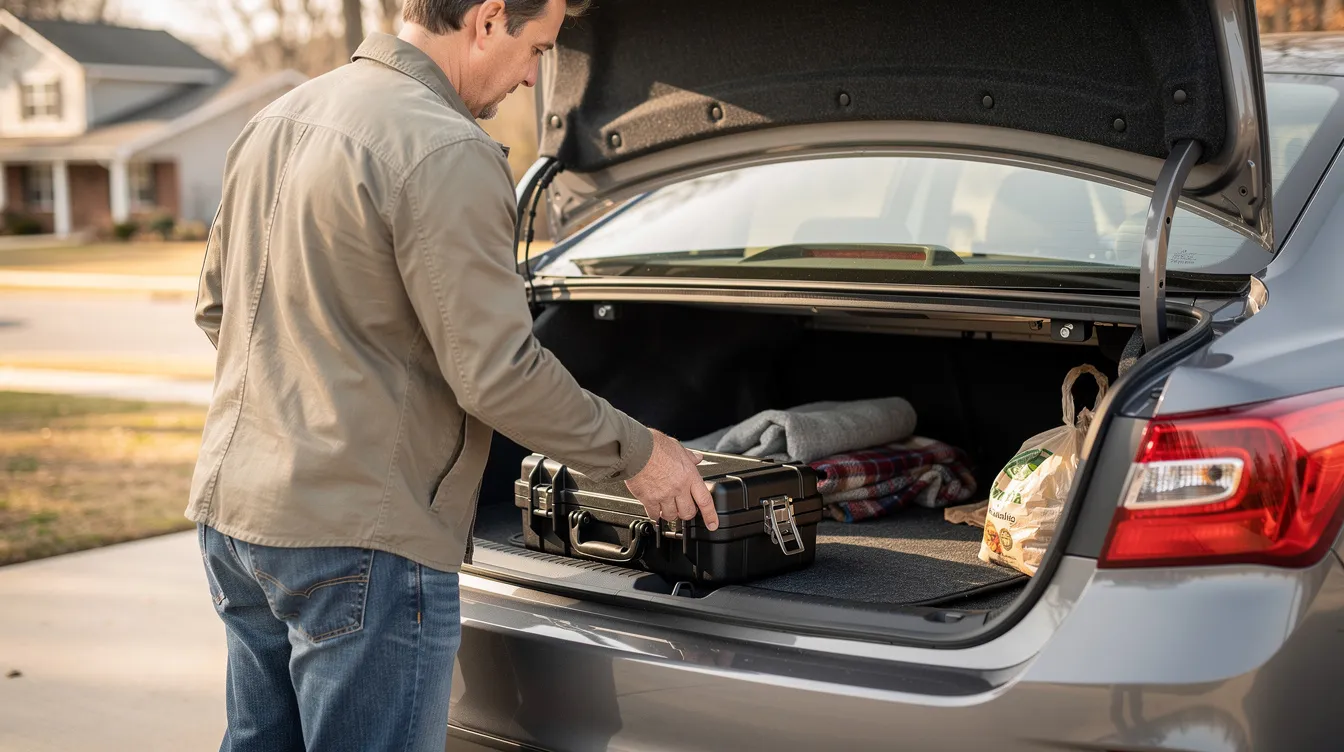
Before entering a courthouse, state office, tribal casino, school, or posted business, pause and check the rules. If there is a sign or security checkpoint, assume the prohibition will be enforced.
Use of Force, Self-Defense, and Home Protection
New Mexico allows defensive use of force, including deadly force, under specific circumstances. But every self defense case is evaluated on facts, reasonableness, and the threat faced at that moment.
New Mexico allows lethal force in home defense situations when a person reasonably faces an immediate threat of death or great bodily harm. The 1946 Couch ruling supports defense of habitation rights, and New Mexico’s version of Castle Doctrine principles generally recognizes that people have no duty to retreat from their own homes when faced with a serious threat.
That does not mean a person may shoot solely to protect property. A missing vehicle, trespass, or theft may not justify lethal force unless the facts also show an imminent threat to life or serious injury.
Lethal force outside the home is legally ambiguous in New Mexico. Self-defense cases are evaluated on a case-by-case basis, including whether the defender reasonably feared imminent serious harm, whether the defender provoked the confrontation, and whether the force used was proportional.
New Mexico does not grant immunity from lawsuits for self-defense use. Even if criminal charges are not filed, a person may still face civil litigation. Qualified legal training is worth the time because misjudging a situation can lead to homicide, aggravated battery, or weapons charges.
Transportation and Storage of Firearms
Safe transportation and storage reduce accidental shootings, theft, and misunderstandings during traffic stops. They also help show law enforcement that a gun owner is acting responsibly.
New Mexico generally allows a lawful adult to have loaded firearms in a private vehicle. However, the legal analysis can change when a person exits the vehicle and begins carrying a concealed firearm on foot. A concealed handgun outside a private vehicle usually requires a concealed handgun license or recognized permit.
As a best-practice rule, always transport firearms unloaded in New Mexico. Firearms should be secured in a locked container during transport. Ammunition must be stored separately from firearms when transporting. This is especially important when crossing into other states with stricter firearm laws.
For practical safety:
-
Use a lockbox, hard case, or vehicle safe
-
Keep an unloaded firearm separate from ammunition when possible
-
Avoid displaying firearms openly in vehicles to prevent misunderstandings
-
Do not leave guns in an unlocked glove box or center console
-
Tell officers calmly about the firearm if required or if it becomes relevant during a stop
Improper storage can create civil or criminal liability if a child, prohibited person, or thief gains access and misuses the gun. Even where no specific safe-storage statute applies, prosecutors and civil lawyers may focus on whether the owner acted reasonably.
Enforcement, Penalties, and Recent Legislative Trends
New Mexico gun laws are enforced by local police, county sheriffs, state police, and federal agencies such as ATF in serious cases. Law enforcement may investigate unlawful possession, trafficking, false statements during purchases, prohibited-location violations, and illegal modifications.
Common gun offenses can carry serious penalties:
|
Offense |
Possible Consequence |
|---|---|
|
Felon in possession |
Felony charges and possible prison time |
|
Concealed handgun without a license |
Criminal charge, fine, and possible jail |
|
Firearm in prohibited location |
Arrest, confiscation, and prosecution |
|
Transfer to prohibited person |
Criminal liability for seller or transferor |
|
Illegal conversion device |
Felony prosecution |
Possession of an unlawful “weapon conversion device” is a felony in New Mexico. A conversion device can turn a firearm into a machine-gun-like weapon, and federal law may also apply.
New Mexico has recently pursued laws aimed at gun violence prevention. Extreme Risk Protection Orders allow temporary removal of firearms from dangerous individuals. Under the Extreme Risk Firearm Protection Order process, law enforcement or a district attorney may petition a court when there is probable cause that a person poses a serious risk. In some circumstances, a court can order temporary firearm removal and set later hearings, including timelines measured in days; twenty days may matter for hearing or order procedures depending on the stage of the case.
New Mexico has a red flag law, expanded background check rules, and ongoing debates over gun-free zones, safe-storage bills, and waiting periods. New Mexico prohibits the sale of certain gas-operated semi-automatic firearms and high-capacity magazines under recently passed restrictions, and lawmakers have also debated a senate bill addressing assault-style firearms and magazine limits.
The state also regulates dealer conduct. New Mexico has introduced dealer regulations requiring state licensing for all gun dealers, affecting how a licensed business records sales, verifies buyers, and complies with public safety rules. Ammunition sales may also be addressed in broader regulatory proposals.
Follow updates from the New Mexico Legislature, the department of public safety, and reputable legal sources. Firearm laws can change after a legislative session, a governor’s signature, or a us court ruling.
FAQ
Do I need a permit to buy a handgun in New Mexico?
No separate state purchase permit is generally required to buy a handgun in New Mexico. However, a buyer purchasing from a licensed dealer must pass a federal NICS background check, and the dealer must comply with federal law, state law, and any applicable waiting period rules.
Can I carry a loaded gun in my car in New Mexico?
Adults who are not prohibited persons may generally have a loaded firearm in a private vehicle in New Mexico. The law changes once you leave the vehicle: carrying a concealed loaded firearm on foot usually requires a concealed handgun license or another recognized permit. For safety, many owners still transport guns unloaded, locked, and separate from ammunition.
Does New Mexico have a red flag law?
Yes. New Mexico has an extreme-risk protection order process, often called a red flag law. Law enforcement or a district attorney can ask a court to temporarily remove firearms from someone who poses a serious risk to themselves or others, subject to court review and legal procedures.
Are background checks required for private gun sales?
Yes, in most cases. New Mexico requires universal background checks for nearly all firearm sales, including many private transfers. The parties typically use a federal firearms licensee to conduct the background check. Limited exceptions may apply for immediate family members and certain temporary transfers.
Can local cities or counties make their own gun control rules?
New Mexico has strong state preemption for many gun laws, meaning cities and counties are generally limited in creating separate possession or carry rules. Local governments may still regulate firearm discharge, manage certain public facilities, and enforce state or federal prohibitions.
Conclusion
New Mexico gun laws protect the right to bear arms while placing real limits on possession, buying, carrying, storage, and location. The biggest practical rules are simple: know whether you are prohibited, complete the required background check, use a valid concealed handgun license for concealed carry, and avoid prohibited places.
Before buying, carrying, or transporting firearms, check the current New Mexico statutes, confirm Department of Public Safety guidance, and speak with qualified counsel if your situation is complicated.
Meta tags
title
Navigating New Mexico Gun Laws: Essential Insights for Gun Owners
65/70
description
Stay informed on New Mexico gun laws with essential insights for gun owners. Understand your rights and responsibilities—read the article now!
142/156