Michigan Gun Laws 2026: Concealed Carry, Background Checks, and 2024–2025 Updates
Michigan Gun Laws 2026: Concealed Carry, Background Checks, and 2024–2025 Updates
Michigan’s firearm landscape looks very different than it did just a few years ago. Between 2023 and early 2025, the state enacted sweeping reforms that touch nearly every aspect of gun ownership, from how you buy a firearm to how you store it at home. Whether you’re a first-time buyer, a longtime gun owner, or simply trying to understand what the rules are today, this guide breaks down the current state of michigan gun laws in practical terms.

Key Takeaways
-
Open carry is allowed without a permit in Michigan for adults 18 and older who are not legally prohibited from possessing firearms, but concealed carry requires a concealed pistol license (CPL), and Michigan is a shall-issue state for those licenses.
-
As of 2023–2024, michigan passed expanded background check requirements covering most firearm transfers – including private sales – and adopted an extreme risk law allowing courts to temporarily remove firearms from individuals deemed a danger to themselves or others.
-
New secure storage law provisions took effect in February 2024, requiring gun owners to lock firearms when minors are present or reasonably likely to be present, with criminal liability if a minor gains access to an unsecured gun.
-
Individuals with certain misdemeanor domestic violence convictions now face an eight-year ban on possessing firearms under michigan law, and separate rules apply to firearms in motor vehicles, on school property, and in designated “pistol-free” zones.
-
This article is informational only and does not constitute legal advice. Firearms laws can change quickly – always verify details with current Michigan statutes or consult a qualified attorney before making decisions about firearm ownership or carry.
Overview of Michigan Gun Laws
Michigan gun laws combine long-standing statutes with significant reforms enacted in 2023 and 2024. Two mass shooting events – the tragedy at oxford high school in 2021 and the Michigan State University shooting in 2023 – helped accelerate legislative momentum for broader gun violence prevention measures. The result was one of the most comprehensive packages of foundational gun safety laws the state has seen in a generation.
Michigan is a shall-issue state for a concealed pistol license, meaning qualified applicants who meet all legal requirements must be granted a CPL. The state also generally allows open carry of firearms for adults who are not prohibited from possession, though significant location and manner restrictions apply.
This article covers the main legal areas affecting Michigan gun owners and prospective buyers:
-
Firearm purchasing rules and background check requirements
-
Open carry vs. concealed carry rules
-
Concealed pistol license eligibility and obligations
-
The extreme risk law (red flag orders)
-
Domestic violence and firearm prohibitions
-
Safe storage requirements for homes and vehicles
-
Special rules for firearms in motor vehicles and sensitive locations
-
Recent legislative changes and enforcement trends
Key legal sources include the Firearms Act (MCL 28.421 et seq.), the Penal Code (MCL 750.xxx), and the Concealed Pistol Licensing statutes (MCL 28.425b et seq.). These govern everything from purchase permits to carry rules and broader possession requirements. The 2023 public acts – including Public Act 17 for secure storage, Public Act 201 for expanded prohibited persons, and legislation establishing extreme risk protection orders – layer new obligations on top of the existing framework.
Understanding these intersecting rules is essential for anyone who owns, carries, or plans to purchase a firearm in Michigan.
Purchasing Firearms and Background Checks in Michigan
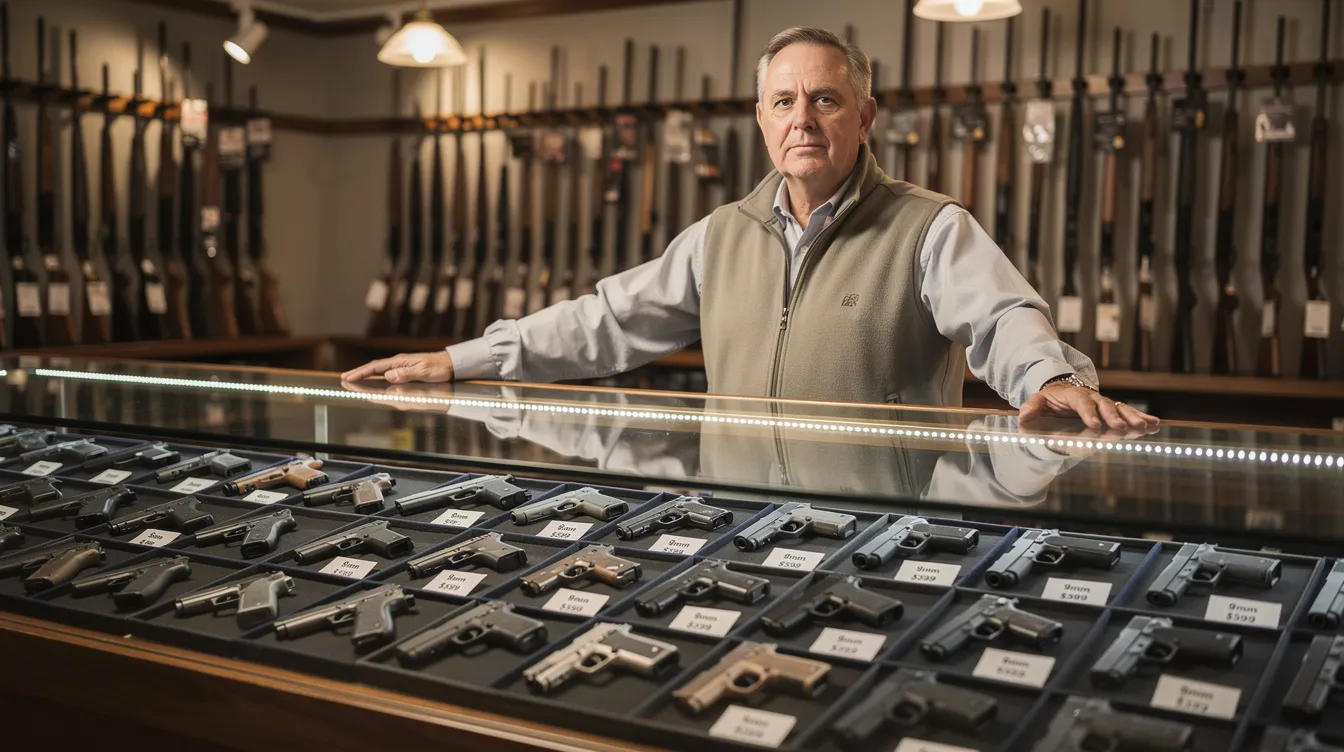
Firearm purchase rules in Michigan differ depending on whether you’re buying a handgun (pistol) or a long gun, and whether you’re buying from a federally licensed firearms dealer (FFL) or through a private transfer. Michigan law interacts with the federal National Instant Criminal Background Check System (NICS) performed by licensed dealers, but the state also imposes its own licensing and registration requirements – particularly for pistols.
-
Age requirements: You must be 18 to buy a long gun in Michigan. You must be 21 to buy a handgun from a dealer. For private transfers, the minimum age is generally 18, but additional licensing and background check requirements must be met depending on the type of firearm.
-
Who can purchase handguns: Only Michigan residents can purchase handguns in Michigan. Nonresidents may generally only buy long guns from FFLs. This residency restriction is enforced at the point of sale through dealer verification and state-level paperwork.
-
Pistol purchase license: A purchase license is required for handguns from private sellers. This license is obtained from your local law enforcement agency (typically your local police department or county sheriff). CPL holders are not required to obtain a separate purchase license for pistol transactions, since the CPL itself satisfies the background check requirement.
-
No purchase license for long guns: No purchase license is needed for long guns in Michigan. However, under expanded background check legislation effective in 2023–2024, universal background checks are mandatory for all firearm transfers in Michigan – including private long gun sales that previously had no such requirement. These transfers must go through an FFL or authorized entity.
-
Pistol Sales Record: Handgun transactions must include a Pistol Sales Record submitted to local law enforcement within 10 days. This requirement applies to both dealer and private sales and serves as Michigan’s form of firearm registration for pistols. Michigan does not maintain a traditional firearm registry for long guns.
-
Michigan gun laws require a license or background check for all firearm purchases. The expanded legislation aims to reduce gun violence by closing the private-sale loophole that previously allowed some transfers to occur without any state-level screening.
-
Disqualifying factors: Background checks screen for felony convictions, certain misdemeanor domestic violence convictions, active personal protection orders, qualifying mental health adjudications (including involuntary commitment or a finding of legal incapacity), and other state and federal prohibitions. A person with a diagnosed mental illness who has been adjudicated as such, or who has been receiving treatment in an inpatient or outpatient setting and deemed a risk, may be prohibited from obtaining a firearm.
-
Federal vs. state checks: At FFLs, the federal NICS check runs simultaneously with Michigan’s own state-level screening. For private pistol sales, the purchase license process includes a state law background check through michigan state police. These are distinct processes, and both must clear before a transfer is completed.
Open Carry and General Possession Rules
“Open carry” in Michigan means carrying a visible handgun in a holster or openly carrying a long gun. Unlike concealed carry, a license is not generally required for open carry in most public places. Michigan is one of the states that allows this practice, though it comes with significant caveats depending on location, manner, and whether the person has a CPL.
-
Adults 18 and older who are not legally prohibited from possessing firearms may openly carry a pistol in most public areas without a permit. Open carry is allowed without a permit in Michigan for both pistols and long guns, provided the firearm was lawfully purchased under applicable licensing laws and the person is not otherwise disqualified.
-
Location-specific bans for non-CPL holders: Under MCL 750.234d, individuals without a CPL are forbidden to possess firearms on certain premises, including banks and financial institutions, courthouses, churches and other houses of worship, theatres, sports arenas, day care centers, hospitals, and establishments licensed to serve alcohol. CPL holders are exempt from many of these location restrictions, though separate “pistol-free zone” designations under MCL 28.425o may still apply.
-
Carrying in a vehicle: Carrying a firearm in a vehicle requires a permit. Firearms transported in vehicles must be unloaded unless the owner has a valid concealed pistol license. Non-CPL holders must transport pistols unloaded, in a closed case, and stored in the trunk or an area not readily accessible from the passenger compartment. A loaded pistol in a motor vehicle without a CPL is a criminal offense.
-
Long guns vs. pistols: Open carry rules apply somewhat differently to long guns. While openly carrying a long gun is generally permitted in many public spaces, doing so may attract law enforcement attention, and brandishing or carrying in a manner that causes alarm or disturbance is penalized under separate statutes. Law enforcement may lawfully approach to confirm the firearm is being carried legally.
-
Polling places: Open carry at polling places has been a subject of evolving law and policy. As of October 27, 2020, open carry at polling places is allowed under certain legal interpretations, though open carry is prohibited at polling places on election day under directives from the Michigan Secretary of State that have been the subject of legal challenges.
-
Restricted items: Michigan prohibits certain weapons and ammunition types. Possession of armor piercing ammunition designed for handguns is restricted and cannot be lawfully possessed or used in most situations. Machine guns are also heavily regulated under both state and federal law, with possession requiring compliance with the National Firearms Act.
-
Firearm discharge: Discharging a firearm endangering others is prohibited in Michigan. Violating firearm discharge laws can lead to misdemeanor or felony charges depending on the circumstances. Discharging firearms is illegal in many Michigan cities and townships, even on private property, unless the area is zoned or designated for target shooting or hunting.
Concealed Carry and Concealed Pistol License (CPL)
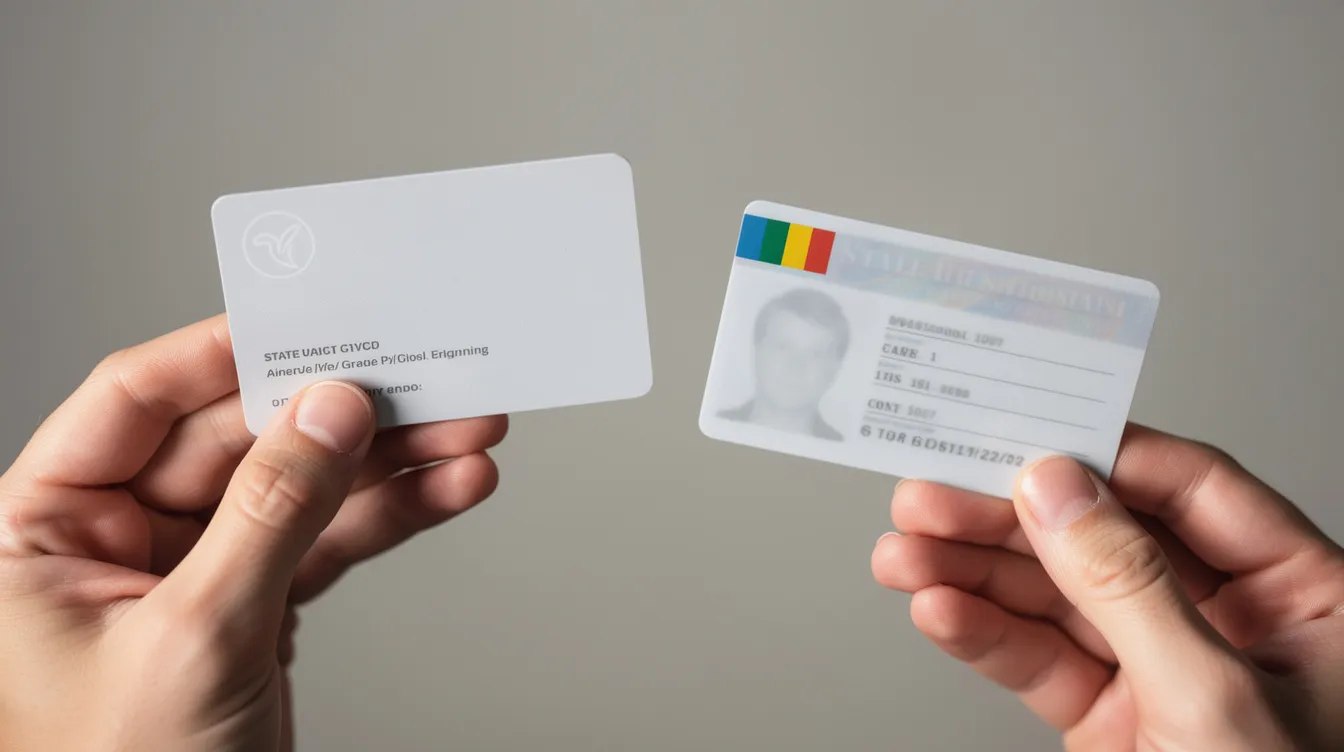
Carrying a concealed pistol on your person or in a vehicle in Michigan generally requires a valid concealed pistol license. Carrying a concealed weapon without a CPL can be charged as a felony under state law, with serious criminal consequences including imprisonment and loss of future firearm rights.
-
Shall-issue framework: Michigan is a shall-issue state for concealed pistol licenses, meaning that if you meet all statutory requirements, the county clerk must issue the license. The decision is not discretionary.
-
Eligibility requirements:
-
Applicants must be at least 21 years old.
-
Must be a U.S. citizen or an alien lawfully admitted to the United States.
-
CPL applications require residency in Michigan for at least six months, unless the applicant is active-duty united states armed forces or qualifies under an emergency safety exception.
-
Applicants must complete a state-approved firearms training course that covers pistol safety, marksmanship, and Michigan firearms laws.
-
Must pass both state and federal background checks.
-
-
Statutory disqualifiers: The following will prevent a person from obtaining a concealed pistol license:
-
A felony conviction disqualifies an applicant from obtaining a CPL. This includes pending felony charges as well.
-
Conviction of certain recent misdemeanors, including those involving violence or weapons.
-
A conviction for misdemeanor domestic violence within the last eight years (measured from sentence completion, including fines, probation, and parole).
-
Mental health commitments – a person who has been subject to involuntary commitment or has been adjudicated as having legal incapacity related to a diagnosed mental illness may be disqualified.
-
Being dishonorably discharged from the military.
-
Being subject to a current court order such as a personal protection order or extreme risk protection order.
-
-
CPL holders must follow specific rules:
-
Mandatory disclosure of a concealed pistol to law enforcement during traffic stops or other encounters when required by law. Failure to disclose is a civil infraction or misdemeanor depending on the circumstances.
-
Must carry photo ID and CPL together at all times when carrying.
-
Carrying while under the influence of alcohol or controlled substances is prohibited and can result in criminal charges, CPL suspension, or revocation.
-
-
Pistol-free zones: Even with a valid license, CPL holders are prohibited from carrying a concealed pistol in certain locations designated as pistol-free zones, including:
-
K–12 school property and school buildings
-
Day care centers
-
Sports arenas and large entertainment venues with seating capacity over 2,500
-
Bars and restaurants where a majority of revenue comes from alcohol sales
-
Places of worship, unless the presiding official has given prior approval
-
Hospitals and dormitories
-
Casinos
-
-
Penalties for carrying in a pistol-free zone can include criminal charges and CPL suspension or revocation. CPL holders no longer need a separate purchase license when buying pistols, since the CPL satisfies the background check requirement – but all other carry and location restrictions still apply.
Extreme Risk Law (Red Flag) and Domestic Violence Firearm Restrictions
In May 2023, michigan passed legislation establishing extreme risk protection orders (ERPOs), which became operational in 2024. Michigan’s extreme risk law allows courts to temporarily remove firearms from individuals deemed a serious risk to themselves or others. This law prohibiting people convicted of violating an ERPO from possessing firearms represents one of the strongest gun safety laws adopted by the state in recent memory.
-
Who can petition for an ERPO: Petitioners can include local law enforcement officers, family or household members, current or former spouses, legal guardians, individuals in dating relationships, and certain health professionals (physicians, physician assistants, nurse practitioners, and licensed mental health workers). The petitioner must present evidence that an individual presents a serious risk of harm.
-
Evidence and duration: Courts evaluate whether the respondent poses a significant danger based on recent behavior, threats, patterns of violence, or substance abuse. An ERPO can last up to one year. The order may be renewed annually by the court upon a showing that the risk persists.
-
Consequences of an ERPO:
-
Extreme risk protection orders allow firearms to be temporarily removed from individuals posing a danger.
-
The respondent is prohibited from purchasing new firearms and from possessing firearms for the duration of the order.
-
Violating an active ERPO – for instance, by obtaining or refusing to surrender firearms – can result in criminal penalties.
-
-
Due process protections: ERPOs can be requested ex parte in emergencies, meaning the respondent may not initially be notified. However, the respondent has the right to a hearing within seven days of being served with an emergency order. During the life of the order, the respondent may request a hearing during the first six months and another in the second six months. These protections ensure that the extreme risk process respects constitutional rights while addressing public safety.
-
Domestic violence firearm restrictions: Under 2023 legislation (SB 471, SB 528, HB 4945), individuals with certain misdemeanor domestic violence convictions cannot possess firearms in Michigan. The law prohibiting people convicted of specified domestic violence misdemeanors from possessing firearms imposes an eight-year ban, measured from the date all fines, imprisonment, probation, or parole are completed. Previously, only felony domestic violence convictions or federal law triggered such bans at the state level.
-
How these tools work together: Background checks and ERPOs function as complementary layers. A background check catches disqualifying convictions or court orders at the point of purchase. An ERPO addresses situations where a person who legally owns firearms becomes a risk – for example, after threatening a partner or family member. Together, they aim to reduce the gun death rate in domestic violence situations while preserving due process rights.
-
Expanded prohibited persons: Under Public Act 201 of 2023, Michigan amended MCL 750.224f to broaden the category of people prohibited from possessing firearms. This now includes those with prior convictions punishable by more than one year (including certain misdemeanors) and those with domestic violence misdemeanor convictions. The possession prohibition periods vary – typically three or five years after sentence completion for felony offenses, and eight years for domestic violence misdemeanors.
Safe Storage, Minors, and Firearms in Motor Vehicles
Michigan recently strengthened its secure storage law provisions, particularly where minors are likely to access firearms. Separate rules govern how firearms must be stored or transported in motor vehicles, and the distinctions between home storage and vehicle transport matter significantly.
-
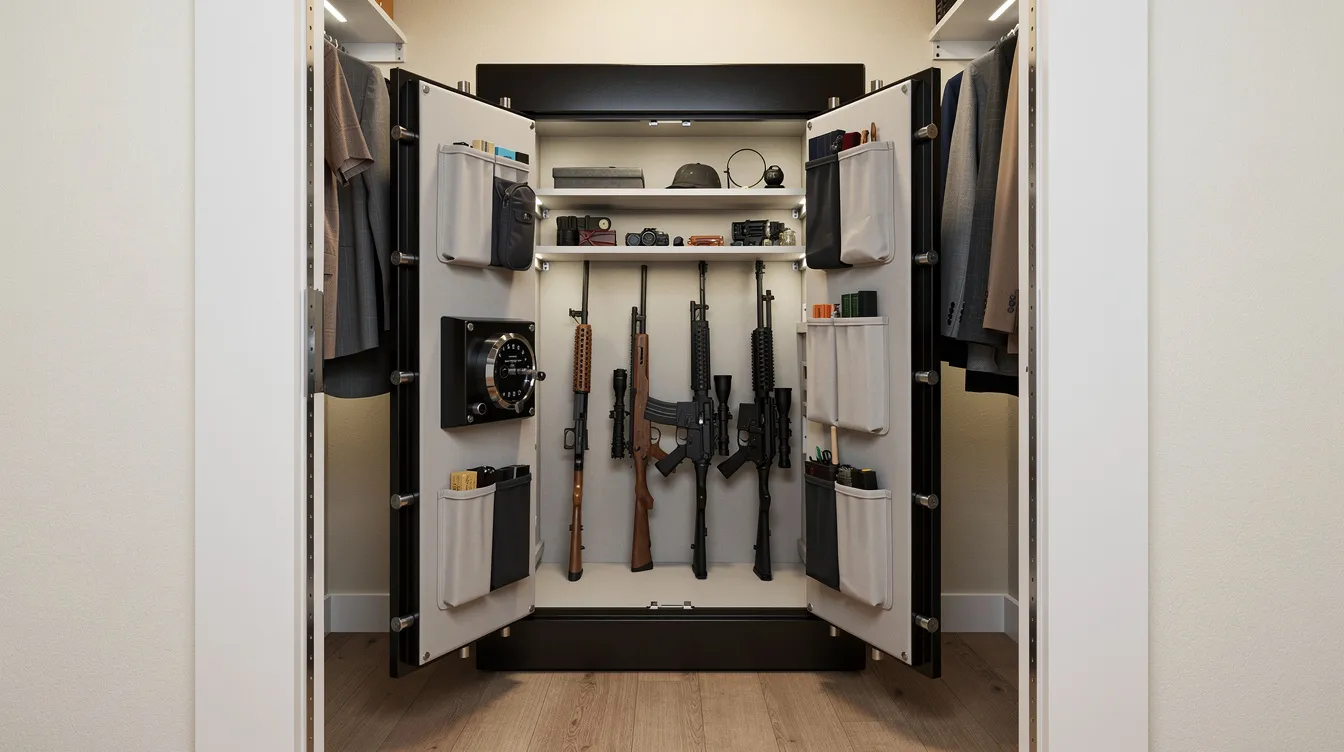
2024 safe storage requirements: As of February 2024, firearms must be locked if minors are present. Under Public Act 17 of 2023 (MCL 28.429), when a firearm is unattended in a location where a minor under 18 is present or reasonably likely to be present, the firearm must be stored in a locked box or container, or unloaded and secured with a locking device such as a trigger lock or cable lock. This applies both on your own premises and when bringing a firearm to someone else’s home.
-
Criminal liability: Gun owners are criminally liable if a minor gains access to an unsecured firearm. Penalties escalate significantly if the minor causes injury, death, or uses the firearm in a crime. The law is designed to prevent accidental shootings among youth and reduce gun violence involving minors who access unsecured firearms.
-
What “reasonably likely” means: The law uses a “reasonably should know” standard. If children visit your home occasionally, or if you’re staying at a location where minors may be present, the secure storage obligation applies. Enforcement is still developing, and courts are in early phases of interpreting what qualifies as “reasonably likely that a minor is present.”
-
Vehicle transport for non-CPL holders: Firearms transported in vehicles must be unloaded unless the owner has a valid concealed pistol license. Non-CPL holders must place pistols in a closed case and store them in the trunk or an area not readily accessible from the passenger compartment. A firearm left in plain view in a vehicle does not satisfy these requirements.
-
Vehicle storage when minors are present: When a firearm is left in a vehicle and a minor is or may be present – either in the vehicle or at the destination – the firearm must be locked in a container or unloaded and secured with a locking device. The vehicle itself must be locked when not in use.
-
CPL holders in vehicles: CPL holders may carry a loaded, concealed pistol in a vehicle but must still comply with restrictions on carrying in certain locations, such as school property or posted buildings. They must also disclose the presence of a concealed pistol when stopped by law enforcement – the same disclosure rules that apply during any encounter with police.
-
Practical distinction: Home storage rules center on preventing minor access. Vehicle transport rules center on preventing unauthorized access and ensuring firearms are not readily usable during transport. Both sets of rules carry criminal consequences for violations, but the safe storage provisions specifically target situations where children could be harmed.
Recent Legislative Changes and Enforcement Trends
From 2023 through early 2025, Michigan enacted a comprehensive package of safety laws that national leaders in gun policy have cited as among the strongest gun safety laws adopted by any state in a single legislative session. The reforms span background checks, ERPOs, safe storage, and domestic violence restrictions.
-
Chronological overview of major changes:
-
2023 (enacted): Universal background check legislation expanded checks to nearly all firearm transfers, closing loopholes in private long gun sales and handgun sales that previously evaded state screening.
-
2023 (enacted): Extreme risk protection order legislation passed, with full implementation beginning in 2024. The law creates a framework for courts, local law enforcement, and petitioners to address imminent threats.
-
February 13, 2024 (effective): The secure storage law (Public Act 17) took effect, requiring firearms to be locked when minors are present or likely to be present.
-
Late 2023 (enacted): Domestic violence misdemeanor firearm ban legislation expanded the category of prohibited persons, imposing an eight-year possession ban and amending the “felon in possession” statute under Public Act 201.
-
2024–2025: michigan state police and local law enforcement agencies began active enforcement, with MSP Legal Update No. 159 (February 2025) providing guidance on how the expanded prohibited persons statutes work in practice.
-
-
Early enforcement patterns: Thousands of ERPOs have been filed since the law’s passage, with petitions coming primarily from family and household members. Courts have issued both emergency ex parte orders and full ERPOs. Public education campaigns around secure firearm storage, led by the Michigan Department of Health and Human Services, are underway in communities across every local unit of government.
-
“Second Amendment sanctuary” resolutions: Some Michigan counties have passed symbolic “Second Amendment sanctuary” resolutions that oppose implementation of stricter gun control measures. While these resolutions reflect local political sentiment about the right to bear arms, they do not override state law or federal law. State law binds all jurisdictions, and inconsistent enforcement – while possible – does not change the legal obligations of gun owners. Prosecutors in these counties may exercise discretion differently, but the statutes remain enforceable.
-
Looking ahead: Over the next decade, courts and lawmakers will likely refine definitions central to the new laws – what qualifies as a specified misdemeanor, what counts as “reasonably likely a minor will be present,” and how rights restoration works after disqualifying convictions. Data on ERPO outcomes, prosecution rates under safe storage laws, and the impact on the state’s gun death rate in an average year will shape the next round of legislative debate. Possible future reforms could target magazine capacities, further restrictions on certain weapon types, or more comprehensive integration of mental health adjudication records. The current political climate suggests incremental changes rather than wholesale bans.
FAQ
The following FAQ addresses common Michigan gun law questions that aren’t fully covered above, including practical scenarios about reciprocity, ammunition, expungement, schools, and less-lethal devices.
Can I use my Michigan Concealed Pistol License in other states?
Michigan has reciprocity agreements with many states, but not all. Some states honor a Michigan CPL, while others require their own permit or do not recognize out-of-state licenses at all. Reciprocity agreements can change frequently – a state that honored Michigan’s license last year may not do so today.
Before traveling with a concealed pistol across state lines, check both the Michigan State Police CPL reciprocity page and the destination state’s official firearms resources. Even when another state honors a Michigan CPL, local rules on where concealed carry is allowed – such as in bars, parks, or public buildings – may differ significantly from Michigan’s firearms laws. You are always subject to the laws of the state you are in, not just your home state.
Do I need a permit to buy ammunition in Michigan?
As of 2024–2025, Michigan does not require a specific permit to purchase most types of ammunition. Buyers must comply with age limits – generally 18 for long gun ammunition and 21 for handgun ammunition – and with federal restrictions on certain types of rounds.
Armor piercing ammunition designed for handguns is restricted under Michigan gun law and cannot be lawfully possessed or used in most situations. Retailers may also have their own policies requiring ID checks or limiting sales to certain ages beyond the legal minimums, so expect to show identification when purchasing at a store or range.
How do expunged convictions affect my ability to own or carry firearms?
Some expunged or set-aside convictions may restore state firearm rights, allowing a person to resume possessing firearms and potentially apply for a concealed pistol license. However, federal firearm disability may still apply depending on the nature of the original offense – particularly for felony convictions or domestic violence misdemeanors covered under 18 U.S.C. § 922(g).
Anyone with a felony or domestic violence history should consult an attorney familiar with both Michigan and federal firearms laws before attempting to purchase or possess a gun. Successful rights restoration may also be a prerequisite for qualifying for a CPL after certain convictions, and the process of obtaining that restoration can involve court petitions and waiting periods.
Can I carry a firearm at schools or universities in Michigan?
Michigan law heavily restricts firearms on K–12 school property. Carrying a firearm – whether openly or concealed – onto school grounds or into school buildings is generally prohibited, even for CPL holders, under pistol-free zone statutes. Violations can lead to criminal charges and CPL revocation.
At the college and university level, many institutions have their own policies that ban both open carry and concealed carry on campus. Court decisions have allowed some educational institutions to prohibit open carry even for CPL holders, and violations can lead to both legal and administrative consequences, including expulsion or trespass charges. Always check the specific school district or university policy before bringing any firearm onto campus.
Are Tasers and stun guns treated like firearms in Michigan?
Michigan allows possession of Tasers and stun guns, but carrying them concealed can be regulated similarly to carrying a concealed pistol. In some circumstances, a CPL may be required to carry a concealed electronic defense device, and the same location restrictions that apply to concealed pistols may apply to these devices.
Misuse of electronic defense devices – including using one in the commission of a crime or in a threatening manner – can lead to criminal charges and may affect eligibility for a concealed pistol license. Review current Michigan statutes and local ordinances on electronic defense weapons before carrying one for self-defense, as rules can vary by local unit of government.
Meta tags
title
Understanding Michigan Gun Laws: A Guide for Responsible Gun Owners
67/70
description
Explore Michigan gun laws and learn essential guidelines for responsible ownership. Stay informed and ensure your compliance—read the full guide now.
149/156