Kentucky Gun Laws: Open Carry, Concealed Carry, and Use of Deadly Force
Kentucky Gun Laws: Open Carry, Concealed Carry, and Use of Deadly Force
Kentucky gun laws are among the most permissive in the United States, but “permissive” does not mean “anything goes.” The state allows broad open carry, permitless carry for many adults, and strong self-defense protections, while still enforcing restrictions on prohibited persons, schools, government facilities, and unlawful transfers.
Key Takeaways
-
Kentucky is a strong gun-rights state. Since June 27, 2019, Kentucky allows permitless carry for most adults 21 and older who may lawfully possess firearms, including concealed carry of a concealed firearm or other deadly weapon.
-
No state permit, firearm registration, or mandatory waiting periods are required for most firearm purchases in Kentucky. Dealer purchases still involve a nics background check under federal law.
-
Open carry is legal for anyone at least 18 years of age in Kentucky, open carry of handguns is lawful in Kentucky, and no permit is required for open carry in Kentucky.
-
Kentucky heavily preempts local gun laws, so cities, counties, and a special district generally cannot ban open carry or create stricter firearms rules than state law.
-
Kentucky recognizes stand-your-ground and castle-doctrine principles, but prohibited persons, including many people with felony convictions or certain mental-health disqualifications, can face serious charges for possessing guns.

Overview of Kentucky Gun Laws
Kentucky’s approach to firearms is built around a strong constitutional right to bear arms, broad carry rights, and limited state-level purchasing rules. The state allows people to carry openly in many public places and allows adults 21 and older to carry concealed deadly weapons without a state permit if they are not prohibited under state and federal law.
Kentucky’s gun laws are mainly found in the Kentucky Revised Statutes, including KRS Chapter 237 for firearms and concealed deadly weapons licensing, KRS Chapter 527 for weapons offenses, and KRS Chapter 503 for self-defense and deadly force rules. These statutes operate alongside the Second Amendment and federal law.
This article is an educational overview only. It is not legal advice for a specific arrest, court proceeding, gun charge, protective-order issue, or self-defense incident.
Compared with other states, Kentucky has some of the least restrictive foundational policies on firearms. Advocacy scorecards have rated Kentucky’s gun law strength score as 9.5 out of 100. At the same time, Kentucky has a gun death rate of 18.5 per 100k residents, and Kentucky experienced a 21% increase in gun deaths over the preceding decade as of 2024. Those figures often appear in policy debates about gun violence, background checks, and whether the state’s gun death rate is above the national average in an average year.
State Constitutional Right to Bear Arms
The Kentucky Constitution protects “[t]he right to bear arms in defense of themselves and of the State,” while also allowing the General Assembly to enact laws to prevent persons from carrying concealed weapons. That language matters because Kentucky historically treated open carry differently from concealed weapons.
Open carry is protected by the Kentucky State Constitution. Early Kentucky law focused more on carrying concealed weapons than on visible carry, because the constitution specifically gives lawmakers power to regulate concealed weapons. That is why modern statutes still use terms like deadly weapon, concealed deadly weapons, carry a concealed weapon, and carry concealed deadly weapons.
Kentucky courts have generally allowed the legislature to regulate the manner, location, and eligibility rules for firearms while preserving the core right of self-defense. For example, the state can prohibit possession by certain felons, regulate weapons in schools, and control carry in sensitive government facilities.
In practice, most Kentucky gun control debates do not question whether law-abiding adults may own guns. They focus on narrower issues such as background checks, school zones, domestic violence orders, safe storage, and restrictions for people deemed dangerous.
Open Carry and Permitless Concealed Carry
Open carry means visibly carrying a firearm, often a handgun in a belt holster or another obvious location. Kentucky generally allows a person to carry openly in public places that are not specifically restricted by statute. No permit is required for open carry in Kentucky, and local governments cannot ban open carry in Kentucky.
Open carry is legal for anyone at least 18 years of age in Kentucky, assuming the person is otherwise allowed to possess firearms. Open carry of handguns is lawful in Kentucky. Certain restricted areas prohibit open carry in Kentucky, including schools, police stations, detention facilities, courtrooms, and places where federal law bans guns.
Concealed carry means carrying a handgun, knife, or other deadly weapon hidden on his or her person, under clothing, in a purse, or in a bag. Kentucky allows concealed carry without a permit for those 21 and over. Kentucky allows concealed carry without a permit for those 21 and older, whether they are Kentucky residents or visitors, if they are not prohibited from possessing firearms.
Under KRS § 237.109, Kentucky’s permitless carry rule removed the concealed carry permitting requirement for qualified adults inside Kentucky. No permit is required to carry a firearm in Kentucky for a person who meets the age and eligibility rules, although a permit may still be useful when traveling.
Here are common places where carry may be restricted:
-
School property and a secondary school facility, subject to limited vehicle exceptions under KRS § 527.070.
-
Secure airport areas.
-
A justice courtroom, courthouse, or court-controlled area.
-
A police station, sheriff’s office, jail, or detention facility.
-
A day care center or child caring facility where firearms are restricted by law or policy.
-
Federal buildings, post offices, and other places where federal law prohibits firearms.
-
Private property where the owner forbids guns and asks the gun owner to leave.
What this means: Kentucky makes carry easy for eligible adults, but it still matters where you are, how the firearm is carried, and whether you are legally allowed to possess it.
Concealed Deadly Weapons Licenses (CDWL) and Reciprocity
Kentucky still issues an optional ccdw license under KRS § 237.110. The license is often called a Concealed Deadly Weapons License, CDWL, or CCDW license. Even though permitless carry applies in Kentucky, a license can help with reciprocity in other states, proof of training, and certain purchase-related processes.
Applicants must be at least 21 years old to obtain a CCDW license. Core eligibility usually includes Kentucky residency, lawful possession status, completion of an approved firearms safety course, and criminal-history and mental-health screening. Training is tied to standards administered through the Department of Criminal Justice Training and approved instructors.
The process generally works like this:
-
Complete a certified safety course, unless a military exception applies.
-
Apply through the county sheriff.
-
Submit the required photograph, identifying information, and fees.
-
Undergo state police and national background checks.
-
Wait for processing by the Kentucky State Police.
The application fee for a CCDW license is $60. A Concealed Deadly Weapons License is valid for 5 years. Kentucky issues Concealed Deadly Weapons Licenses valid for 5 years, and the Kentucky State Police processes CCDW applications within 90 days.
Kentucky honors valid concealed carry permits from other states. Kentucky recognizes all valid concealed carry permits from other states, but the scope of recognition can depend on whether the other state’s permit covers handguns only or a broader category of concealed weapons. Likewise, a valid ccdw license may help kentucky residents visiting other states, but those travelers must follow the other states’ age limits, location restrictions, and permit rules.
Military personnel may have special rules or exemptions for parts of the training requirement. A member of the military or former military applicant should check current administrative regulations, the Kentucky State Police CCDW page, and the local sheriff before applying or renewing.
Purchasing Firearms and Background Checks
Kentucky does not require a state permit to purchase rifles, shotguns, or handguns. No state permit is required to possess firearms in Kentucky, and Kentucky does not require firearm registration. No license is needed to purchase a firearm from a private individual in Kentucky.
Kentucky has no mandatory waiting periods for firearm purchases. When a person buys from a Federal Firearms Licensee, the dealer generally runs the buyer through the National Instant Criminal Background Check System. A background check is required only when purchasing a handgun from a Federal Firearms Dealer in Kentucky in the private-sale comparison most people ask about; dealer sales of other firearms also generally involve federal NICS rules.
Private, in-state sales between kentucky residents usually do not require state-mandated background checks. However, federal law and state law still prohibit selling to a person known or believed to be prohibited. A seller who knowingly transfers firearms or ammunition to a prohibited person can face criminal exposure.
People who may be prohibited from purchasing or possessing firearms include:
-
Individuals with felony convictions. Possession of firearms is prohibited for individuals with felony convictions under KRS § 527.040, subject to specific statutory dates and restoration rules.
-
Certain domestic-violence misdemeanants under federal law.
-
People subject to qualifying protective orders.
-
People who have been involuntarily committed.
-
Individuals deemed a danger to self or others.
-
People disqualified by certain mental-health adjudications.
Kentucky bars gun possession for involuntarily committed individuals. Kentucky requires mental health records to be reported for background checks, which helps the background-check system identify people who cannot lawfully possess firearms.
Straw purchases are also illegal. Do not buy a gun for someone who cannot pass a background check, and do not lie on federal or state firearm forms. False statements, illegal transfers, and trafficking can trigger federal and state charges with potential prison time.
Where Firearms Are Restricted in Kentucky
Even in a permitless carry state, firearms are prohibited in designated locations in Kentucky. Prohibited areas for firearms in Kentucky include police stations and schools, along with other sensitive places controlled by statute, federal rules, or property owners.
Under KRS § 527.070, weapons are generally prohibited on school property and at school-sponsored events. That includes many school buildings, buses, and a secondary school facility. Kentucky law has limited exceptions, including for adults who keep a firearm in a vehicle and do not remove, brandish, or use it on school property.
Government buildings have their own rules. Under KRS § 237.115, a governing body may restrict concealed weapons in posted portions of buildings it owns, leases, or controls. These rules often apply to a justice courtroom, court clerk area, detention facility, police station, or sheriff’s office. Some violations may lead to denial of entry or removal rather than a separate gun charge, but ignoring instructions can create legal problems.
Private property matters too. Businesses, churches, landlords, and private landowners may prohibit firearms on their premises. If a person refuses to comply or leave after notice, the issue can become trespass. The same practical rule applies whether the person intended to carry openly or concealed.
Alcohol rules require care. Kentucky law treats an establishment licensed to sell alcoholic beverages differently depending on its primary business. A place primarily devoted to drinking may be treated differently from a restaurant where alcohol is incidental to food service. If a bar, restaurant, or event venue posts no-gun rules, follow the posted policy or leave.
Other common restricted places include:
-
Secure airport areas.
-
Federal courthouses and federal buildings.
-
Certain child caring facility and day care center locations.
-
Areas controlled by police officers during an emergency or investigation.
-
A room where a court proceeding is taking place.
-
Any place where a person is separately forbidden by protective order or bail condition to possess weapons.

Use of Deadly Force, Self‑Defense, and Stand Your Ground
Kentucky’s self-defense statutes allow deadly force in certain situations, but only when the legal standard is met. In general, a person must reasonably believe deadly force is necessary to prevent imminent death, serious physical injury, kidnapping, sexual assault, or certain violent felonies.
The castle doctrine appears in KRS § 503.055. It gives special protection to a person defending a dwelling, residence, or occupied vehicle. In specific forced-entry situations, the law can presume that the defender had a reasonable fear of death or serious injury. A person generally has no duty to retreat from a home, dwelling, or occupied vehicle if the person is lawfully there.
Kentucky also has stand-your-ground style rules. Outside the home, the law generally does not impose a duty to retreat if the person is in a place where the person has a legal right to be and is not engaged in criminal activity. Recent amendments to KRS § 503.080 also reinforce that a person does not have a duty to retreat when lawfully present for certain property-defense issues.
Civil and criminal immunity may apply under KRS § 503.085 when force is legally justified. But immunity is not automatic in every shooting or assault case. If the facts suggest provocation, unlawful activity, unreasonable fear, or excessive force, a person may still be arrested, prosecuted, sued, or required to prove justification.
The key question is not simply whether someone was afraid. The question is whether the person’s belief and response were reasonable under Kentucky law.
Other Important Kentucky Firearm Regulations
Beyond carry and purchase rules, Kentucky gun laws regulate certain weapons, accessories, serial numbers, vehicles, and firearm-related conduct.
Machine guns, suppressors, short-barreled rifles, and short-barreled shotguns are generally governed by federal law. They may be lawful only if registered and possessed in full compliance with the National Firearms Act and all applicable state rules. Unregistered or illegally modified weapons can lead to serious penalties.
Kentucky prohibits bump stocks for semi-automatic rifles. Ghost gun parts must have serial numbers and background checks. Removing, altering, or defacing a firearm serial number is illegal, and possession of a defaced firearm can trigger charges under Kentucky weapons law.
Vehicle rules are important for everyday carry. Kentucky generally allows a person who may lawfully possess firearms to keep loaded or unloaded firearms in a vehicle. A handgun in a glove compartment, factory-installed console, or similar manufacturer-installed compartment is treated differently from an unlawfully concealed weapon. A vehicle solely occupied by the firearm owner may also raise different practical questions than a shared work vehicle or restricted parking area.
Kentucky also protects many employees’ rights to keep lawful firearms in vehicles parked on employer property, subject to important limits. This does not mean a person can carry inside every workplace, school, or government building.
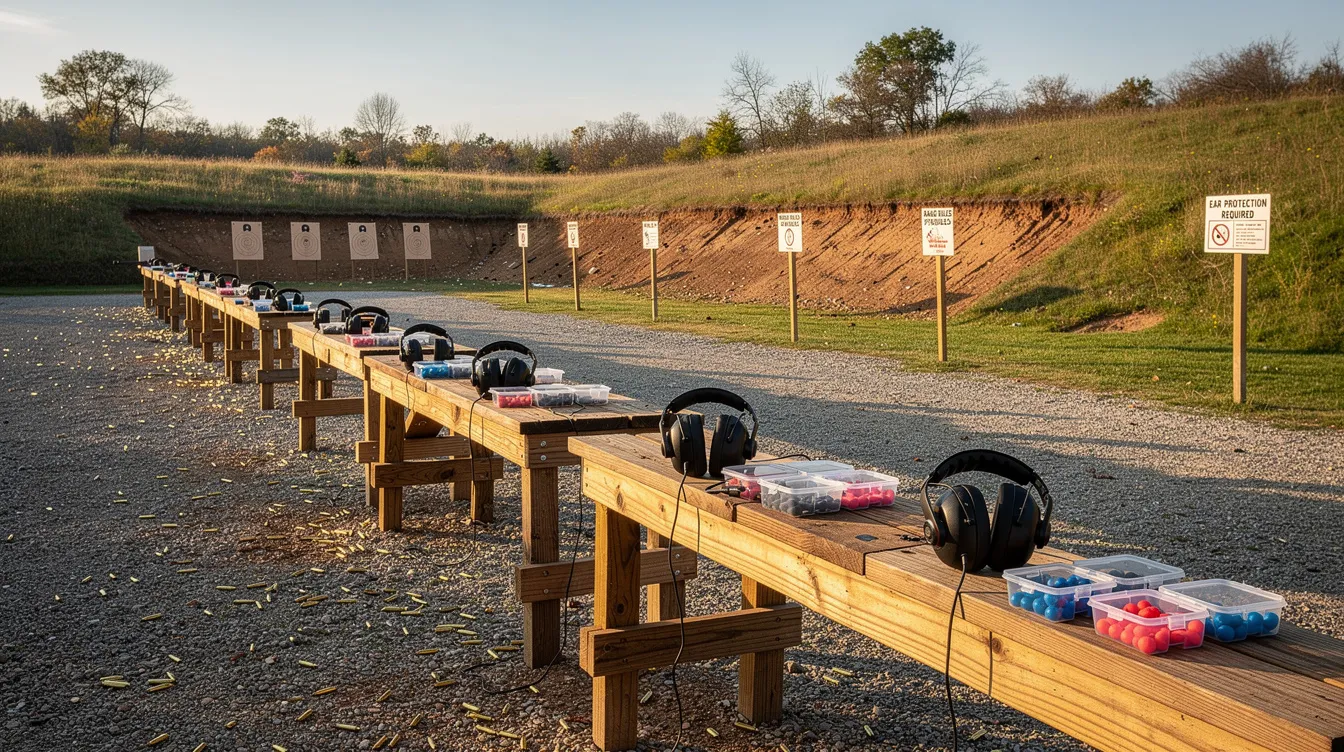
Specialized rules may apply to hunting trips, shooting ranges, and discharge conduct. Do not shoot across highways, from vehicles, or in unsafe directions. Shooting ranges may have statutory protections against certain noise-based lawsuits, but those protections do not excuse unsafe handling or unlawful discharge.
State Preemption and Local Gun Regulation
Kentucky law heavily preempts local firearms regulation. Under KRS § 65.870, cities, counties, urban-county governments, and other local bodies generally cannot regulate the manufacture, sale, purchase, taxation, transfer, ownership, possession, carrying, storage, or transportation of firearms, ammunition, components, or a combination thereof in a way that conflicts with state law.
In practice, this means local governments cannot create their own broad carry bans, registration systems, or purchase rules. A city cannot ban open carry simply because local officials dislike it. A county cannot require a local gun license when state law does not.
There are narrow exceptions. Local governments may regulate discharge in some dense areas, manage employee policies, and control posted portions of government buildings under KRS § 237.115. A governing body may also set rules for specific property it owns or controls, within the limits of state law.
Many Kentucky counties have adopted symbolic “Second Amendment sanctuary” resolutions. These statements express political opposition to future gun control measures, but they do not override federal law, state law, court orders, or the authority of the general assembly.
Preemption makes Kentucky rules more consistent for travelers within the state. But it does not protect a traveler who enters a federal facility or crosses into other states with different laws.
Gun Violence, Crime Guns, and Enforcement Efforts
Kentucky’s permissive gun laws coexist with concerns about gun violence, illegal trafficking, domestic violence, and crime guns. Law enforcement agencies use tools such as ATF tracing and eTrace to identify where recovered firearms came from and how they moved into criminal use.
Penalties can be severe. A convicted felon who possesses a handgun may face a higher felony level than a person who possesses another type of firearm, depending on the statute and prior record. Guns tied to drug trafficking, robbery, assault, or repeat violent conduct can also trigger sentence enhancements under state and federal law.
Domestic violence cases are a major enforcement area. A person subject to certain protective orders may be prohibited from possessing guns or ammunition. Violating those orders can escalate charges and affect bond, custody, and future firearm rights.
Current policy debates in Kentucky include universal background checks, red flag or extreme risk protection orders, safe storage education, and crime-gun tracing. Supporters and critics often point to different data, including the national average, the state’s gun death rate, and whether the state should create programs such as a gun safety support fund for education, training, or violence-prevention work.
FAQ about Kentucky Gun Laws
Do I need any permit to carry a handgun in Kentucky in 2026?
No. As of 2026, most adults 21 and older who are not prohibited persons may carry a handgun openly or concealed without a state permit in Kentucky. However, an optional ccdw license is still useful for reciprocity in other states and for people who want formal training documentation.
Can I carry a gun in my car without a concealed carry license?
Yes. Kentucky generally allows adults who can legally possess firearms to keep loaded handguns in vehicles, including in glove compartments or factory-installed console compartments. This is usually treated as lawful carry rather than unlawful concealed carry, assuming the person is not prohibited and the vehicle is not in a restricted location.
Are background checks required for private gun sales in Kentucky?
Kentucky does not mandate background checks for most private, in-state sales between individuals. Federal law requires background checks for purchases from licensed dealers, and private sellers may choose to use a dealer voluntarily. Sellers still cannot knowingly transfer firearms to prohibited persons.
Can I carry a firearm on Kentucky school property?
Generally, no. Guns are usually prohibited in school buildings and at school functions. Kentucky law allows limited exceptions, such as adults who keep firearms secured in vehicles and do not remove, display, or use them on school grounds.
Is Kentucky an open carry state, and can businesses ban guns on their property?
Yes. Kentucky is an open carry state with no general permit requirement for visible carry by eligible adults. Private businesses and property owners may still restrict firearms on their premises and enforce those rules through trespass laws if someone refuses to comply or leave.
Meta tags
title
Understanding Kentucky Gun Laws: Essential Information and Insights
67/70
description
Explore Kentucky gun laws, including regulations and rights. Get clear insights and essential information to navigate the legal landscape. Read more now!
153/156