Louisiana Gun Laws: 2024–2025 Guide to Open Carry, Concealed Handguns, and Public Safety
Louisiana has some of the most permissive gun laws in the United States, and recent legislation has pushed the state even further in that direction. Whether you're a lifelong Louisiana resident, a new gun owner, or a traveler passing through, understanding the current rules around open carry, concealed carry, background checks, and restricted locations is essential. This guide breaks down everything you need to know about Louisiana gun laws as they stand heading into 2025 and beyond.
Key Takeaways
Permitless carry is now the law. As of July 4, 2024, Louisiana is a permitless carry state. Individuals 18 and older can carry concealed firearms without a permit, provided they can legally possess a firearm under state and federal law.
No universal background checks or waiting periods. Background checks are only required for purchases from federally licensed dealers. Private sales in Louisiana are not subject to background checks, and there is no waiting period for firearm purchases.
The concealed handgun permit still matters. Louisiana continues issuing permits that provide reciprocity with other states, streamlined purchases, and documented training - benefits that permitless carry alone does not offer.
Firearms are banned in specific locations. Schools, many government buildings, certain bars, airports, and other sensitive places remain off-limits, and violations carry serious criminal penalties.
Local governments can't go further than the state. Cities like New Orleans and Baton Rouge are largely blocked from enacting stricter gun laws due to Louisiana's strong state preemption statute, keeping rules mostly uniform statewide.
Overview of Louisiana Gun Laws in 2024–2025
Louisiana operates as both a "shall-issue" state for concealed handgun permits and, since mid-2024, a permitless carry state. The Louisiana legislature has historically favored minimal state-level restrictions on firearms, and that trend has only accelerated. There are no state bans on assault weapons, no limits on magazine capacity, no restrictions on machine gun ownership beyond what federal law requires, and no license is required to own a firearm in Louisiana. The state treats firearms, along with other dangerous instrumentalities, as items whose regulation should primarily rest at the state level rather than with local authorities.
No permit is required for concealed carry in Louisiana, and no statewide firearm registration system exists. There is no gun registration system in Louisiana, meaning the state does not track who owns what. There is no waiting period for gun purchases, so a buyer who passes a background check at a licensed dealer can walk out with their firearm the same day. Louisiana's gun laws align with a trend of permitless carry that has swept through more than half of U.S. states over the past decade, positioning the state among national leaders in firearms deregulation.
The Louisiana Constitution, Article I, Section 11, protects the right to keep and bear arms as a "fundamental" right and requires that any restriction on it be subject to strict scrutiny - the highest legal bar a government must clear to justify a law. This constitutional foundation, strengthened by a 2012 amendment, shapes every piece of firearms legislation the state considers.
That said, Louisiana does not exist in a vacuum. Federal law still applies across the state, including the Gun Control Act of 1968 and the National Instant Criminal Background Check System (NICS). These federal frameworks govern who can purchase firearms from licensed dealers and who is prohibited from possession entirely. Understanding how state law and federal law interact is critical for any Louisiana citizen who owns, carries, or plans to purchase a firearm.
Compared to states like California or New York - which impose waiting periods, registration requirements, assault weapon bans, and strict permitting - Louisiana's approach is dramatically different. Whether that approach improves or harms public safety remains a subject of active debate, one we'll touch on later in this guide.
Open Carry in Louisiana
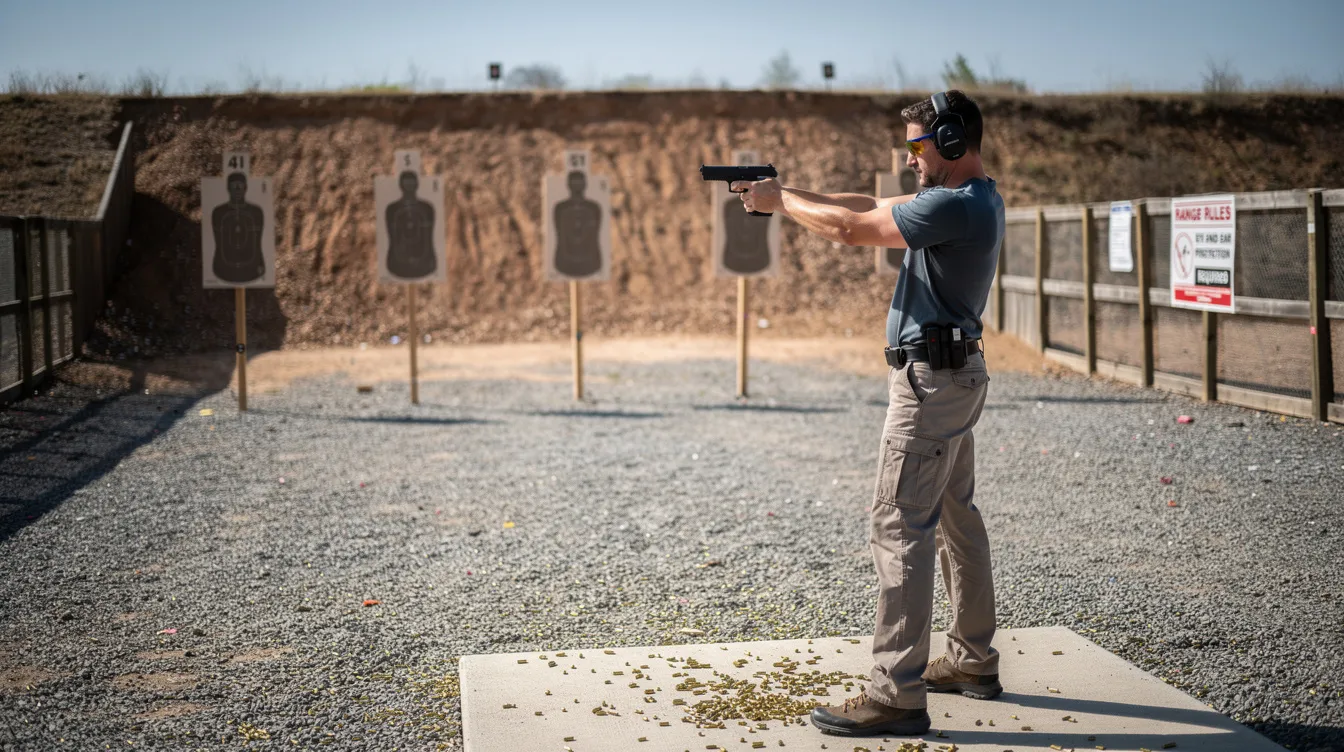
Open carry means carrying a firearm visibly in public - typically in a holster on the hip or slung across the body. Louisiana allows open carry of firearms and has done so for decades without requiring a permit. Under the structure of RS 14:95, the state's primary illegal-carrying statute, open carry is essentially the default legal status for non-prohibited persons.
Who Can Open Carry?
Any person aged 18 or older who can lawfully possess a firearm under state law and federal law may open carry in Louisiana. Louisiana allows open carry of firearms with some location restrictions, so it's not an unlimited right. Minors face significantly stricter rules: handgun possession by juveniles is governed under RS 14:95.8, and generally requires adult supervision tied to lawful activities like hunting.
Where Is Open Carry Allowed?
Open carry is generally permitted in most public spaces across Louisiana, including:
Public streets, sidewalks, and parks
Most retail businesses that do not post "no firearms" signs
Private property, with the property owner's consent
Your own home, vehicle, and place of business
Where Is Open Carry Restricted?
Even with open carry, firearms are prohibited in several sensitive locations under louisiana law:
Restricted Location | Primary Statute |
|---|---|
K–12 school campuses and buses | RS 14:95.6 |
Courthouses | RS 14:95 |
Secure areas of any airport facility | RS 14:95, federal law |
Law enforcement offices and detention facilities | RS 14:95 |
Certain establishments serving alcohol | RS 14:95.5 |
Polling places on election day | RS 40:1379.3(N) |
Behavior Restrictions
Carrying openly does not give anyone a free pass for threatening or reckless conduct. Brandishing a weapon, displaying violent behavior, or carrying while intoxicated can result in criminal charges such as illegal use of weapons or aggravated assault. Law enforcement officers retain full authority to intervene when open carry crosses the line into unlawful conduct.
Permitless Concealed Carry (Constitutional Carry) Since July 4, 2024
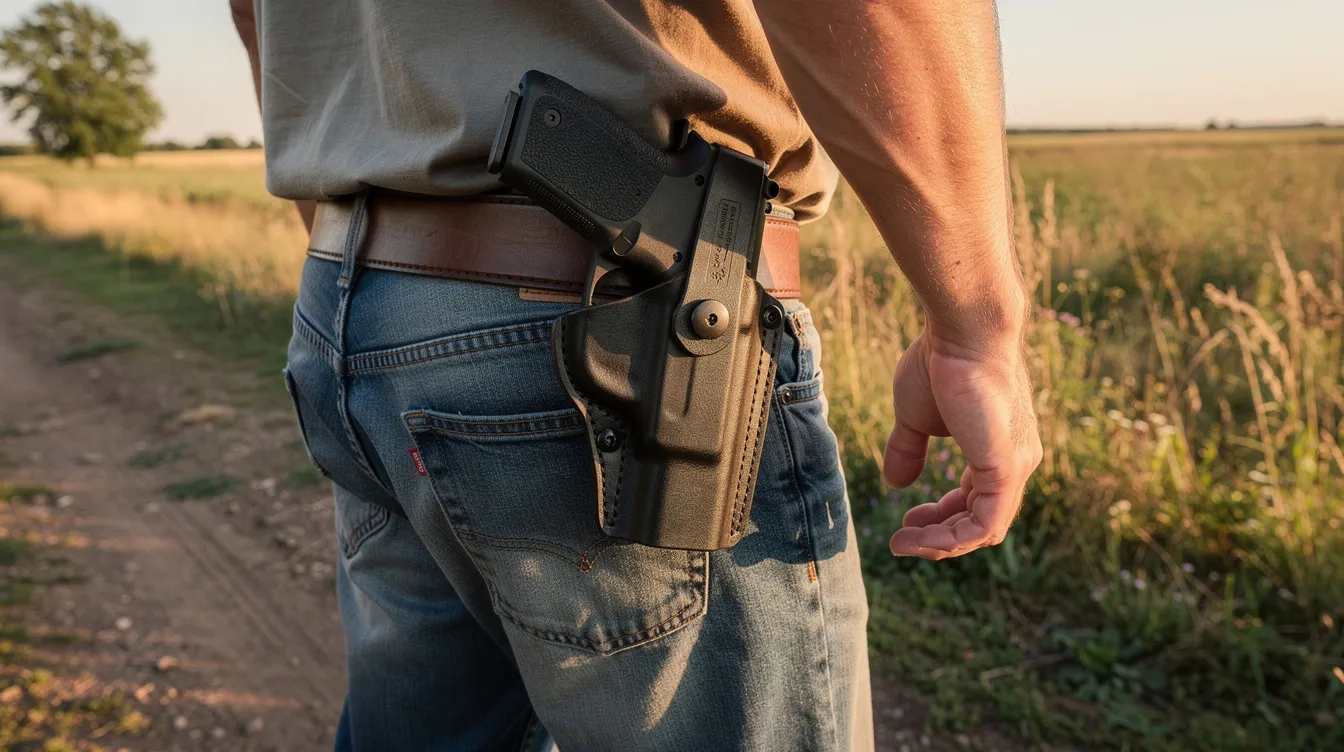
A concealed firearm is one that is hidden on a person's body or within immediate reach but not visible to others - tucked inside a waistband, carried in a purse, or stored under clothing. Before 2024, carrying a concealed weapon in Louisiana without a state-issued concealed handgun permit was a criminal offense. That changed dramatically when Governor Jeff Landry signed Senate Bill 1 (Act 1 of the 2024 Regular Session) into law.
What Changed?
Effective July 4, 2024, the new law added subsection (M) to RS 14:95, exempting from prosecution any person who is at least 18 years old and legally allowed to possess a firearm. In practical terms, no permit is required for concealed carry in Louisiana. Individuals 18 and older can carry concealed firearms without a permit, no training is mandated, and no state documentation is needed.
This makes Louisiana part of a growing wave of states adopting what advocates call "constitutional carry" - the idea that the right to bear arms includes the right to carry a concealed handgun without government-issued permission.
Eligibility for Permitless Carry
Not everyone qualifies. You may carry a concealed firearm without a permit only if you meet all of the following:
You are at least 18 years of age
You are not a person convicted of a felony under RS 14:95.1
You have not been convicted of domestic violence offenses under RS 14:95.10
You are not subject to a qualifying protective order
You are not an unlawful user of a controlled dangerous substance
You have not been adjudicated mentally defective or committed to a mental institution
You are not otherwise prohibited under federal law (18 U.S.C. § 922(g))
Any person who has been found guilty of a disqualifying offense or is currently on probation or parole for such an offense remains prohibited from carrying.
Where Concealed Carry Is Still Prohibited
Even under permitless carry, concealed handguns remain banned in the same locations that applied to permit holders:
K–12 school campuses, school buses, and within the 1,000-foot firearm free zone around schools
Courthouses and government buildings where a governing authority meets
Law enforcement offices and any detention facility
Restricted areas of airports
Polling places on election day
Places of worship, unless the administrators authorize a security service or armed presence
Bars and establishments whose primary purpose is on-premises alcohol consumption (with exceptions for Class A-Restaurant permit holders)
Any premises with posted "firearms prohibited" signage
Private Property Rules
Private property owners, employers, and business operators may still prohibit concealed handguns on their premises. Violating such a policy can result in trespassing charges, termination from employment, or weapons charges depending on the circumstances.
One notable quirk: the age for permitless carry is 18, but the minimum age to obtain a concealed handgun permit is 21. This means 18- to 20-year-olds can legally carry concealed without a permit but cannot get the formal permit that many other states require for reciprocity.
Louisiana Concealed Handgun Permit Program
Despite the shift to permitless carry, Louisiana continues to issue concealed handgun permits through the Department of Public Safety (State Police). For many gun owners, obtaining a permit remains a smart decision.
Types of Permits
Permit Type | Duration | Cost | Notes |
|---|---|---|---|
Standard CHP | 5 years | $125 | Half price for age 65+ or military |
Lifetime CHP | Lifetime | $500 | One-time fee |
Veteran CHP | 5 years or lifetime | Exempt | Honorable discharge required |
Applicants must be at least 21 years old, a Louisiana resident (or military member maintaining Louisiana domicile), and must pass a background check.
Training Requirements
Under RS 40:1379.3, permit applicants must complete a firearms training course within the past 12 months. Acceptable courses include NRA-certified instructor programs, DPS-approved law enforcement or public institution courses, and armed forces small arms training completed within the prior 60 months. The course must cover:
Safe handling and nomenclature
Louisiana gun laws governing use of deadly force
Conflict resolution principles
Safe storage practices
Live-fire or authorized simulation qualification
The state also created an optional two-hour online concealed handgun education course under RS 40:1379.3.4, which is free and covers topics like firearm free zones and safe handling. This course does not replace the required training for permit applicants.
Why Get a Permit?
Reciprocity. Louisiana honors concealed carry permits from other states, and many states reciprocate - but only for permit holders. If you travel with a concealed handgun, a Louisiana CHP is often your only ticket to legal carry in neighboring states.
Streamlined purchases. A valid permit can serve as an alternative to running a NICS background check at the point of sale in some situations.
Law enforcement interactions. Permit holders have documented training and vetting, which can simplify encounters with police during traffic stops.
Professional credibility. For those in security or related fields, formal training and a permit demonstrate competence.
Background Checks and Firearm Purchases
Louisiana lacks universal background checks and mandatory waiting periods. The state relies almost entirely on the federal system for regulating who can buy firearms from commercial sellers.
How Dealer Sales Work
When you purchase a firearm from a federally licensed firearms dealer (FFL), the process looks like this:
Complete ATF Form 4473 (the federal firearms transaction record)
The dealer runs a NICS background check
If approved, you take possession of your firearm - same day in most cases
Federal law mandates background checks for purchases from licensed dealers. There is no waiting period to purchase firearms in Louisiana, so once the check clears, the transaction is complete. Louisiana has no waiting period for firearm purchases at the state level.
Private Sales
Louisiana does not require universal background checks for gun purchases between private parties. Private sales in Louisiana are not subject to background checks unless the parties voluntarily choose to conduct the transaction through an FFL. Universal background checks are not required in Louisiana, which means a private seller is not legally obligated to verify whether the buyer is a prohibited person - though doing so is strongly recommended as a matter of public safety.
Prohibited Persons
Both state and federal law define categories of people who may not possess firearms. Individuals convicted of certain felonies are prohibited from possessing firearms in Louisiana under RS 14:95.1, which carries penalties of 5 to 20 years at hard labor. Additional prohibited categories include:
Persons convicted of a misdemeanor crime of domestic violence
Subjects of qualifying protective orders
Anyone adjudicated as mentally defective or involuntarily committed to a mental institution
Unlawful users of any controlled dangerous substance
Persons convicted of certain sex offense charges
Individuals found guilty of specific property crimes like burglary of an inhabited dwelling
Penalties for a prohibited person convicted of illegal possession are severe. A sentence can include imprisonment at hard labor for five to twenty years, with fines reaching up to $2,000. If the person is on probation or parole, the sentence runs consecutively with any existing term.
Best practice for private sellers: verify the buyer's Louisiana residency, avoid selling to anyone who appears prohibited, and consider using an FFL to run a voluntary background check. It costs a small fee but protects both parties.
Location-Based Firearm Restrictions and Sensitive Places
Louisiana has restrictions on carrying firearms in certain locations, and these apply equally to open carry and concealed carry - whether you hold a permit or carry under the permitless framework. Violating location-based restrictions can lead to arrest, weapon confiscation, and in some cases, permanent loss of your right to possess firearms.
Major Restricted Zones
The following locations are off-limits for firearms under Louisiana statutes:
K–12 schools, school buses, and the 1,000-foot perimeter around school campuses (RS 14:95.6). Illegal possession on school grounds can lead to five years in prison.
Courthouses and buildings where judicial proceedings occur
Law enforcement stations, jails, and any detention facility
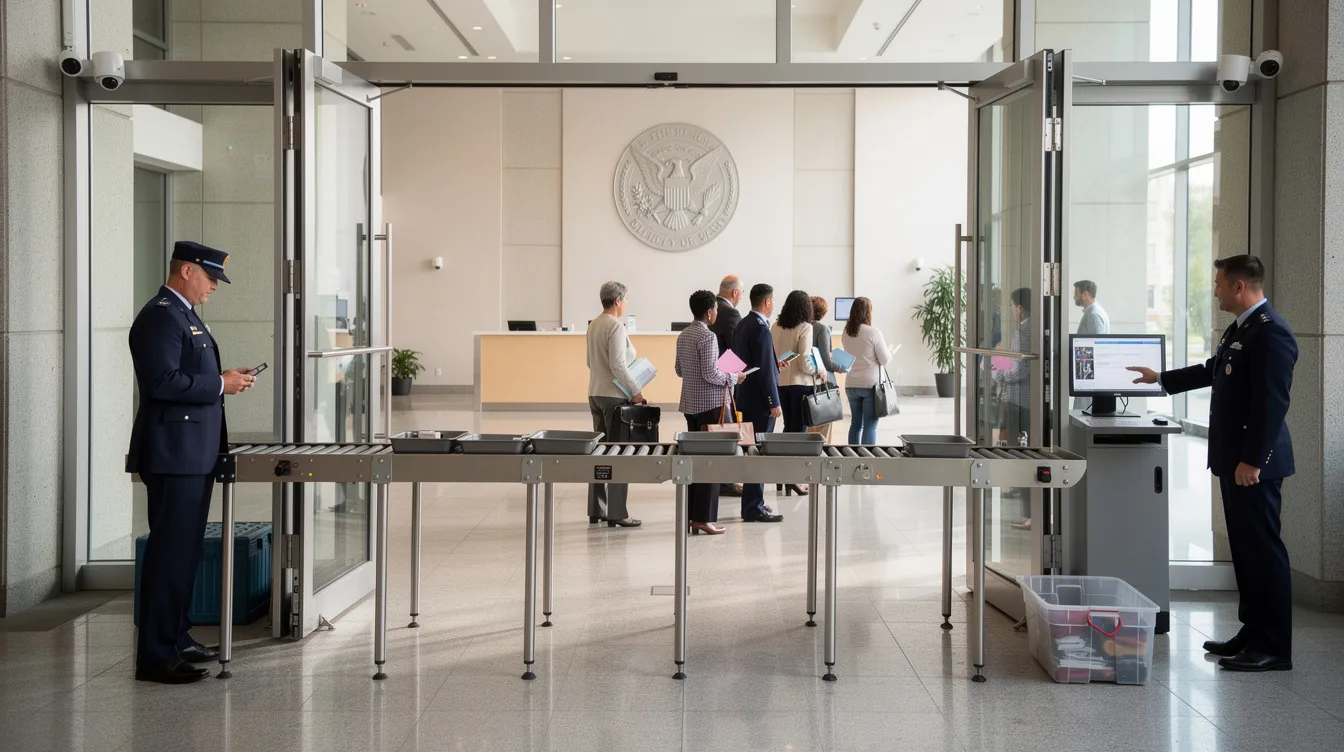
Secured (sterile) areas of any airport facility beyond TSA screening
Polling places on election day
The state capitol building
Government meeting buildings used by any governing authority
Alcohol-Serving Establishments
RS 14:95.5 generally prohibits carrying a concealed weapon or open-carrying a firearm inside businesses whose primary purpose is selling alcohol for on-premises consumption. However, restaurants holding a Class A-Restaurant permit are treated differently - both permit holders and permitless carriers may carry concealed in those establishments. The distinction between a "bar" and a "restaurant that serves alcohol" matters significantly here, and getting it wrong can mean up to six months in jail and a $500 fine.
Places of Worship, Colleges, and Events
Places of worship are restricted unless the church, synagogue, mosque, or other institution has authorized armed security or granted specific permission. Colleges and universities may have their own policies, and certain parades or permitted public events may impose temporary restrictions.
Practical Tips
Always check for posted signage before entering any building with a firearm
Confirm your employer's firearms policy, especially regarding concealed carry inside the workplace
Review the Louisiana Revised Statutes periodically, as the legislature frequently adjusts restricted location lists
When in doubt, leave the firearm secured in your vehicle
Gun Violence, Self-Defense, and Public Safety Considerations
Louisiana ranks among states with the highest gun death rates in the country, a reality that frames every policy debate about the state's firearms laws. According to an everytown research analysis, Louisiana consistently appears near the top of national rankings for gun deaths per capita. In an average year, gun homicides in cities like New Orleans, Baton Rouge, and Shreveport contribute disproportionately to these numbers. Whether permissive gun laws reduce or increase gun violence is a question that researchers continue to study, with data from the next decade likely to offer clearer answers about the impact of the 2024 permitless carry law.
Self-Defense Framework
Louisiana enacted a Stand Your Ground law in 2014, codified under RS 14:19. The law allows force in self-defense without retreating, meaning a person who is lawfully present in any location has no legal duty to flee before using defensive force - including deadly force - if they reasonably believe it's necessary to protect themselves or others from imminent death or great bodily harm.
The castle doctrine, found in RS 14:20, goes further inside the home, business, or vehicle. If someone unlawfully enters your dwelling or occupied vehicle, Louisiana law creates a legal presumption that you had a reasonable fear of death or serious harm, making the use of deadly force justifiable in most circumstances.
Legal Standards for Justifiable Homicide
For a self-defense claim to succeed under Louisiana law, several conditions must align:
The person must have had a reasonable belief of imminent danger of death or great bodily harm
The force used must be proportional to the threat
The person must not have been engaged in unlawful activity at the time
The person must have been lawfully present at the location
Using a firearm in a crime of violence, rather than in lawful self-defense, increases penalties to one to five years of additional imprisonment.
Safe Storage and Child Access Prevention
While Louisiana does not impose a blanket safe storage mandate, RS 14:95.8 makes it illegal for a juvenile to possess a handgun, and criminal liability can attach to adults who allow children to access unsecured firearms that result in injury or death. The state's optional online education course covers safe storage practices, and responsible gun owners are strongly encouraged to secure their weapons even when the law doesn't explicitly require it.
Responsible Ownership
Regardless of where you stand on policy, responsible gun ownership in Louisiana means:
Obtaining training in safe handling, even when not legally required
Storing firearms securely, especially in homes with children
Staying informed as legislation evolves - the Louisiana legislature revisits gun laws regularly
Understanding that the right to protect yourself comes with the responsibility to know the law
Preemption, Local Ordinances, and Enforcement
Louisiana's state preemption statute, RS 40:1796, is one of the strongest in the country. It prohibits any political subdivision - whether a city, parish, or other local government - from enacting or enforcing any ordinance, regulation, or policy more restrictive than state law regarding the manufacture, sale, purchase, possession, carrying, storage, ownership, taxation, transfer, or registration of firearms and ammunition.
What This Means in Practice
Gun policies in places like New Orleans, Baton Rouge, and Lafayette largely mirror state law. A city council cannot impose its own waiting period, require local registration, or ban specific firearm types that state law permits. As of 2024, the preemption was made retroactive through Acts 194, meaning any existing local ordinances that conflicted with state law had to be repealed or amended.
There are narrow exceptions:
Zoning rules related to hunting or shooting in densely populated areas
Firearm buyback programs in large municipalities (population over 425,000)
Emergency collaboration to secure FFL inventories during declared disasters
Enforcement Across the State
Enforcement of firearms laws falls to Louisiana State Police, parish sheriffs' offices, and municipal police departments. Penalties for illegally carrying a firearm vary based on circumstances - a first offense for carrying in a restricted area might be a misdemeanor, while possession by a person convicted of certain felonies carries mandatory hard labor for five to twenty years, potentially exceeding ten years depending on criminal history.
RS 14:95(I) requires any person carrying a concealed handgun - whether under a permit or permitless carry - to notify law enforcement during any lawful stop that they are armed. Failure to do so is a separate criminal offense.
Enforcement discretion plays a significant role in how gun charges are handled. Prosecutors in different parishes may prioritize different types of cases, and plea bargaining can reduce charges in some instances. A person subject to investigation, arrest, or firearm confiscation should seek legal representation from a Louisiana attorney experienced in criminal defense and firearms law to protect their rights.
If you are a citizen who legally carries and find yourself involved in a law enforcement encounter, remain calm, keep your hands visible, and immediately inform the officer that you are armed. This is not just good advice - it's the law.
FAQ: Louisiana Gun Laws
Do I need a permit to carry a concealed handgun in Louisiana now?
No. As of July 4, 2024, most adults aged 18 and older who are not prohibited from possessing firearms may carry a concealed handgun in Louisiana without a concealed handgun permit. However, a permit is still highly recommended if you plan to carry across state lines. Many states that honor Louisiana permits will not recognize the state's permitless carry provisions, so interstate travelers often still need a formal permit for legal concealed carry in other jurisdictions.
Can I carry a gun in my car without a concealed handgun permit?
Yes. Louisiana generally treats a vehicle like an extension of your home. A law-abiding adult may keep a loaded handgun in the glove box, center console, or otherwise concealed within the vehicle without a permit. The same restrictions on prohibited persons and restricted locations still apply - you cannot drive onto school property or into a secured area with a firearm, for example. If you're stopped by police, you are required to inform the officer that you have a concealed weapon in the vehicle.
Are background checks required for every gun sale in Louisiana?
No. Licensed firearms dealers must run a NICS background check on all buyers, as required by federal law. However, Louisiana does not require background checks for most private, intrastate sales between individuals. If you're buying a rifle, shotgun, or handgun from a private seller within the state, no background check is legally mandated - though both parties can voluntarily use an FFL to conduct one for added security and peace of mind.
Can my employer forbid me from bringing a firearm to work?
In most cases, yes - employers can restrict carrying firearms inside their buildings or while on duty. However, state law provides certain "parking lot" protections that allow many employees to keep a lawfully owned firearm locked in their private vehicle on employer property, even if the employer prohibits firearms inside the workplace. The specifics can vary, so reviewing your employer's written firearms policy and consulting with an attorney is advisable if you're unsure about your situation.
What should I do if my gun is seized by police after an arrest?
Contact a Louisiana criminal defense attorney immediately. The process for reclaiming a seized firearm depends on the outcome of your case, local court procedures, and whether you remain legally eligible to possess firearms. If you are ultimately convicted of a disqualifying crime - such as a felony or qualifying domestic violence offense - you may permanently lose your right to possess firearms under both state and federal law. An attorney can guide you through the reclamation process or challenge an unlawful seizure if your rights were violated during the period of investigation.
Meta tags
title
Understanding Louisiana Gun Laws: Key Facts and Regulations
59/70
description
Explore Louisiana's gun laws with key facts and regulations. Stay informed about rights and responsibilities—read the article now for essential insights.
153/156