West Virginia Gun Laws: A 2026 Guide
West Virginia Gun Laws: A 2026 Guide
West Virginia has some of the most permissive gun laws in the United States, but that doesn’t mean anything goes. Whether you’re a lifelong Mountain State resident, a new gun owner, or a visitor passing through, understanding what’s legal and what’s off-limits is essential. This guide breaks down the current state of west virginia gun laws as of mid-2026, covering everything from open carry and concealed carry to background checks, prohibited persons, and restricted locations.

Key Takeaways
-
West Virginia is categorized as a constitutional carry state. Open carry of firearms is generally legal from age 18, and no permit is needed for concealed carry over age 21, provided the person is legally allowed to possess a firearm.
-
Federal background checks are required when buying from licensed dealers, but private firearm sales do not require background checks in West Virginia. There is no waiting period for gun purchases.
-
Schools, correctional facilities, courthouses, the State Capitol complex, and certain posted private properties are among the places where carrying firearms is prohibited or heavily restricted.
-
Restraining orders, domestic violence protective orders, and certain mental health proceedings can strip a person of the right to own or carry guns under both state and federal law.
-
Laws change. Always verify current statutes with state police, your local sheriff’s office, or a licensed attorney before making decisions about firearm possession, carry, or purchase.
Overview of West Virginia Gun Laws
West Virginia consistently ranks among the least restrictive states in the country when it comes to gun regulation. The state falls into the camp of broadly protecting individual firearm rights while still enforcing federal law and maintaining certain public safety restrictions designed to address gun violence in the community.
Both state or federal law apply to anyone possessing firearms within West Virginia’s borders. Federal law sets baseline requirements, such as age thresholds for dealer purchases and categories of prohibited persons, while state law layers on its own rules about carry rights, licensing, location restrictions, and self defense.
Before diving deeper, here are the key terms you’ll see throughout this article:
-
Open carry – visibly carrying a firearm, such as in a belt or shoulder holster, without concealment
-
Concealed carry – carrying a concealed handgun hidden from casual view
-
Concealed carry permit – an optional or required license (depending on age) to carry a concealed firearm
-
Prohibited person – someone barred by state or federal law from possessing firearms
-
Background check – the NICS inquiry a licensed dealer runs before completing a sale
-
Restraining order – a court order that can restrict a person’s gun rights in domestic violence or similar cases
As of 2026, West Virginia has no assault weapons ban, no magazine capacity limits, no universal background check mandate for private sales, and no state-imposed waiting period. The state also has strong preemption laws that limit local restrictions on firearms. Gun ownership rates and household gun ownership in the state remain well above the national average year over year.
Constitutional and Statutory Framework
West Virginia’s Constitution explicitly protects the right to bear arms. Article III, Section 22 of the state’s Declaration of Rights affirms that citizens may keep and bear arms for defense of self, family, home, and the state, as well as for lawful hunting and recreational use. This provision functions alongside the Second Amendment to the U.S. Constitution, though state courts have consistently held that reasonable regulations on firearms remain permissible under both frameworks.
The primary statutes governing gun laws in West Virginia are found in Chapter 61, Article 7 of the West Virginia Code. This chapter addresses:
-
Licensing for concealed deadly weapons (standard and provisional)
-
Categories of prohibited persons
-
Penalties for unlawful carrying or possession
-
Exceptions for specific groups and activities
West Virginia enacted the castle doctrine on April 10, 2008, codified under WV Code § 55-7-22. This law removes the duty to retreat for a lawful occupant inside their home, residence, or occupied motor vehicle when facing an unlawful intruder. It also extends similar protections to persons lawfully present in other locations who face imminent threat of death or serious bodily injury. However, there are important limits: you cannot be the initial aggressor, you cannot provoke the confrontation, and only reasonable and proportionate force is permitted.
These foundational policies set the stage for how firearms are regulated across everyday life in the state, from purchasing and carrying to self defense situations.
Open Carry in West Virginia
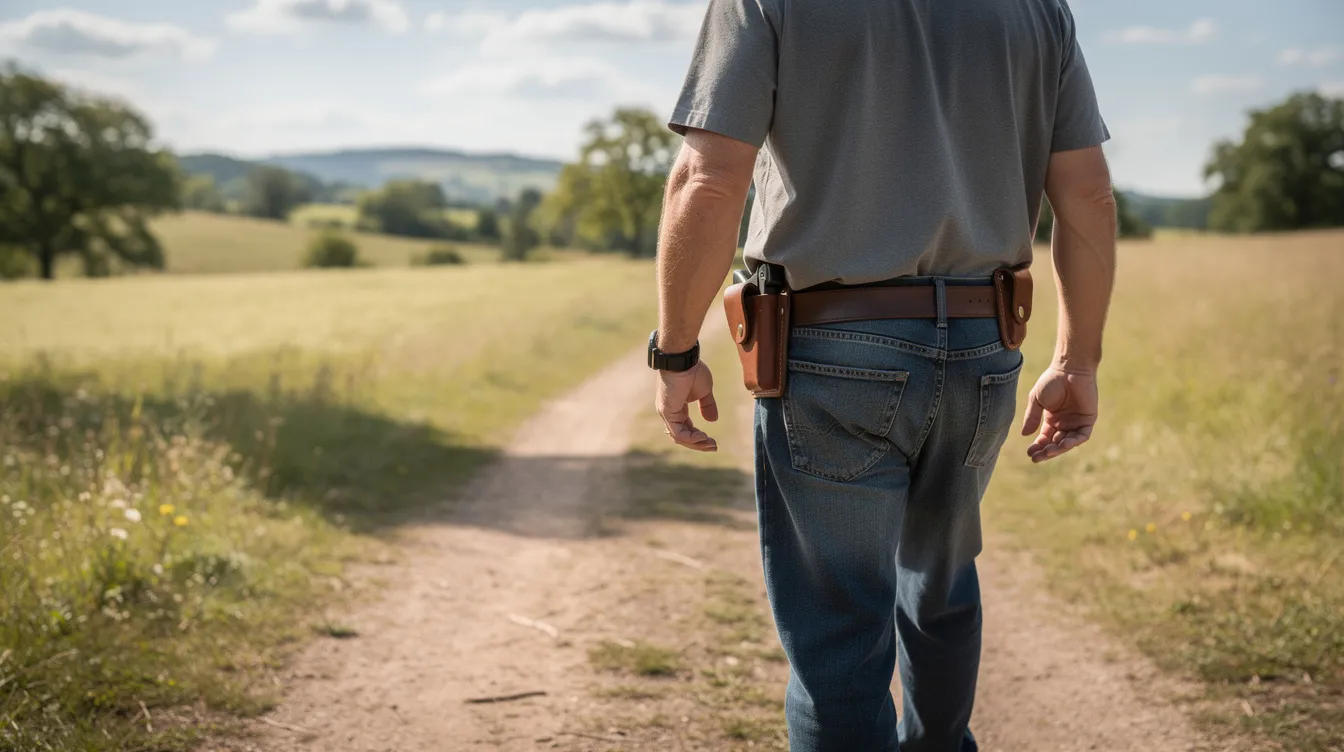
Open carry of handguns is legal at age 18 in West Virginia. No permit, license, or registration is required. The same applies to long guns like rifles and shotguns. The only baseline requirement is that the person is not otherwise prohibited from possessing firearms under state or federal law.
In practice, open carry means the firearm is plainly visible, typically in a belt holster, shoulder holster, or slung over the shoulder for long guns. Merely “printing” (the outline of a concealed weapon showing through clothing) is treated differently under concealed carry statutes. If you’re open carrying, the gun needs to be genuinely visible.
Where open carry is restricted
Even with broad carry rights, the following locations are off-limits for open carry (and concealed carry):
-
K–12 school buildings, grounds, and school buses
-
Correctional institutions, jails, and prisons
-
County courthouses and judicial facilities
-
The State Capitol complex in Charleston
-
Federal buildings and facilities
-
Posted private properties where the owner has prohibited firearms
Firearms are typically not permitted in designated areas of facilities or properties with proper signage. Private property owners, including businesses like restaurants, bars, and retail stores, may forbid open carry on their premises and can ask an armed person to leave. Refusal to leave after being asked could result in trespass charges.
Local gun ordinances
Local gun laws are allowed in West Virginia, but with significant limitations. State preemption law (§ 8-12-5a) generally prevents municipalities from enacting new gun regulations stricter than state law. However, local regulations on firearms were grandfathered before 1999. Charleston and South Charleston have grandfathered local gun ordinances that remain in effect prior to the preemption statute. Martinsburg prohibits weapons in city buildings post-1999 under a separate allowance. While neither a municipality nor a county governing body can broadly indirectly prohibit lawful carry through new ordinances, existing grandfathered rules still apply, and you should check local rules when traveling within the state.
Concealed Carry and Permits
West Virginia is a constitutional carry state. Since May 24, 2016, when SB 347 took effect, most adults aged 21 and older who are legally allowed to possess a firearm may carry a concealed handgun without a state permit, license, or training course. This means you do not need a concealed carry permit to carry a concealed weapon in the state if you meet the basic eligibility: U.S. citizen or legal resident, at least 21, and not a person prohibited under state or federal law.
Ages 18–20: Provisional license required
West Virginia requires a permit for concealed carry under age 21. Individuals 18-20 must obtain a provisional concealed handgun license under WV Code § 61-7-4a. Concealed carry permits are processed by the county sheriff’s office. The typical steps include:
-
Submitting an application with the county sheriff
-
Undergoing a background check
-
Providing proof of completing a handgun safety training course (with live-fire component)
-
Paying approximately $15 for the application plus $15 for the State Police background check
The provisional license remains valid until the holder turns 21, at which point permitless carry kicks in. Carrying a concealed firearm without this license between ages 18 and 20 is a misdemeanor for a first offense, punishable by up to 12 months in jail and a fine of $100–$1,000.
Optional standard CHL for 21+
Even though no permit is needed for concealed carry over age 21 within West Virginia, obtaining a standard Concealed Handgun License (CHL) under § 61-7-4 still offers practical advantages. Chief among them: a concealed handgun license facilitates reciprocity in other states. Many states that don’t recognize permitless carry from other jurisdictions will honor a formal WV CHL.
The standard CHL costs $50 for residents and $100 for non-residents. Applicants for concealed carry permits must be West Virginia residents. Requirements include no disqualifying criminal convictions, no active domestic violence protective orders, mental competency, and completion of a training course with live firing.
Key disqualifiers
You cannot obtain a concealed carry permit (or carry permitlessly) if you:
-
Have felony convictions (unless expunged, pardoned, or rights restored)
-
Are under indictment or serving probation/parole
-
Are subject to a domestic violence protective order or restraining order
-
Have been involuntarily committed or adjudicated mentally incompetent
-
Are an unlawful user of controlled substances
-
Fall under any federal prohibition category
Reciprocity and visitors
Concealed carry privileges do not require a West Virginia concealed handgun license for visitors compliant with laws. However, no out-of-state concealed carry permits are honored in West Virginia as a basis for carry; instead, the state’s permitless carry provision covers eligible visitors directly. Active and retired law enforcement officers, including some out-of-state police officers, may carry concealed under the federal Law Enforcement Officers Safety Act (LEOSA) with proper credentials. Members of the armed forces and national guard may also carry under certain circumstances aligned with their duties.
Background Checks, Purchases, and Transfers
Licensed dealer sales
Background checks are required for sales by federally licensed dealers. Every FFL sale in West Virginia requires the dealer to run a National Instant Criminal Background Check System (NICS) inquiry before completing the transaction. This applies to handguns, rifles, shotguns, and other firearms. Under federal law, buyers must be at least 21 to purchase a handgun from a dealer and at least 18 for long guns.
West Virginia has no waiting period for gun purchases. Once the background check clears (or the NICS delay period expires), the sale can be completed immediately.
Private sales
Private firearm sales do not require background checks in West Virginia. This means two private individuals can buy, sell, or trade guns without running a NICS check. The state lacks a universal background check requirement for these transactions.
However, it is illegal to sell firearms to prohibited persons, even in a private sale. Both buyer and seller can face serious criminal liability if the transfer knowingly goes to someone barred from possession. To reduce legal and safety risks, many sellers choose to conduct private transactions through a licensed dealer who can run a voluntary check.
Interstate transfers
Federal law restricts interstate transfers of firearms. Handguns purchased out of state generally must be shipped to a federally licensed dealer in West Virginia for transfer. Carrying or transporting firearms across state lines requires compliance with both the origin and destination state’s laws, plus federal rules under 18 U.S.C. § 922.
Prohibited Persons and Disqualifying Conditions
West Virginia law mirrors and supplements federal rules about who is a person prohibited from possessing firearms. The categories are extensive and carry severe penalties.
Who is prohibited?
Under both state and federal law, the following persons are barred from possession:
-
Felons are barred from gun possession in West Virginia (unless conviction is expunged, set aside, or pardoned)
-
Persons under indictment for a crime punishable by imprisonment exceeding one year
-
Individuals involuntarily committed to a mental health facility or adjudicated mentally incompetent
-
Persons subject to final or emergency domestic violence protective orders
-
Those convicted of misdemeanor domestic violence offenses
-
Unlawful users of controlled substances
-
Fugitives from justice
-
Persons dishonorably discharged from the armed forces
-
Those who have renounced U.S. citizenship
Domestic violence and restraining orders
Under WV Code § 48-27-502, protective orders in domestic violence cases must include a clause prohibiting the respondent from possessing firearms and ammunition, including ammunition components. Courts may order surrender of weapons to a law enforcement officer or approved third party. Violating the firearms provisions of a protective order is a criminal offense under both state and federal law, and can result in arrest, new charges, and permanent loss of gun rights.
Mental health prohibitions
Individuals involuntarily committed cannot possess firearms. Mental health records can be reported to background check systems, which feeds into the NICS database. Weak systems for reporting in some jurisdictions have historically led to gaps, but the general framework aims to prevent those adjudicated as dangerous from accessing guns.
Restoration of rights
West Virginia law allows for restoration of firearm rights in certain cases. Expungement, set-aside convictions, pardons, or judicial relief from firearms disabilities can remove some prohibitions. For mental health adjudications, a court must find that the person is no longer under disability. These processes are technical and typically require legal counsel.
Lying on a background check form (ATF Form 4473) or attempting to purchase firearms while prohibited is itself a serious felony under federal law.
Places Where Guns Are Restricted
Even in a state that broadly supports the right to carry, there are places where carrying firearms is prohibited. Here is a summary of key restricted locations:
-
K–12 schools: School buildings, grounds, and school buses are off-limits. Firearms may be kept locked inside a personal vehicle in a parking lot under limited circumstances, often governed by school policy.
-
Correctional facilities: Jails, prisons, and detention centers prohibit all firearms.
-
Courthouses: County courthouses and judicial facilities are weapon-free zones.
-
State Capitol: Certain areas of the Capitol complex in south charleston and Charleston are restricted.
-
Federal buildings: Post offices, federal courthouses, and secure areas of airports remain gun-free under federal law, regardless of state permit status.
-
Posted private properties: Any private property owner or business can prohibit firearms with proper signage or verbal notice. Violators may be treated as trespassers.
Concealed carry is allowed in state parks under specific conditions, but always check posted rules at individual park facilities. Hospitals, churches, and businesses serving alcohol may also set their own restrictions. Even if state law allows carry, a property owner’s posted prohibition overrides your carry rights on their premises.
Forcing higher education institutions to allow firearms has been debated in some state legislators’ proposals, but as of 2026, many higher education institutions maintain their own firearms policies that may restrict carry on campus.
Law Enforcement, State Police, and Enforcement Practices
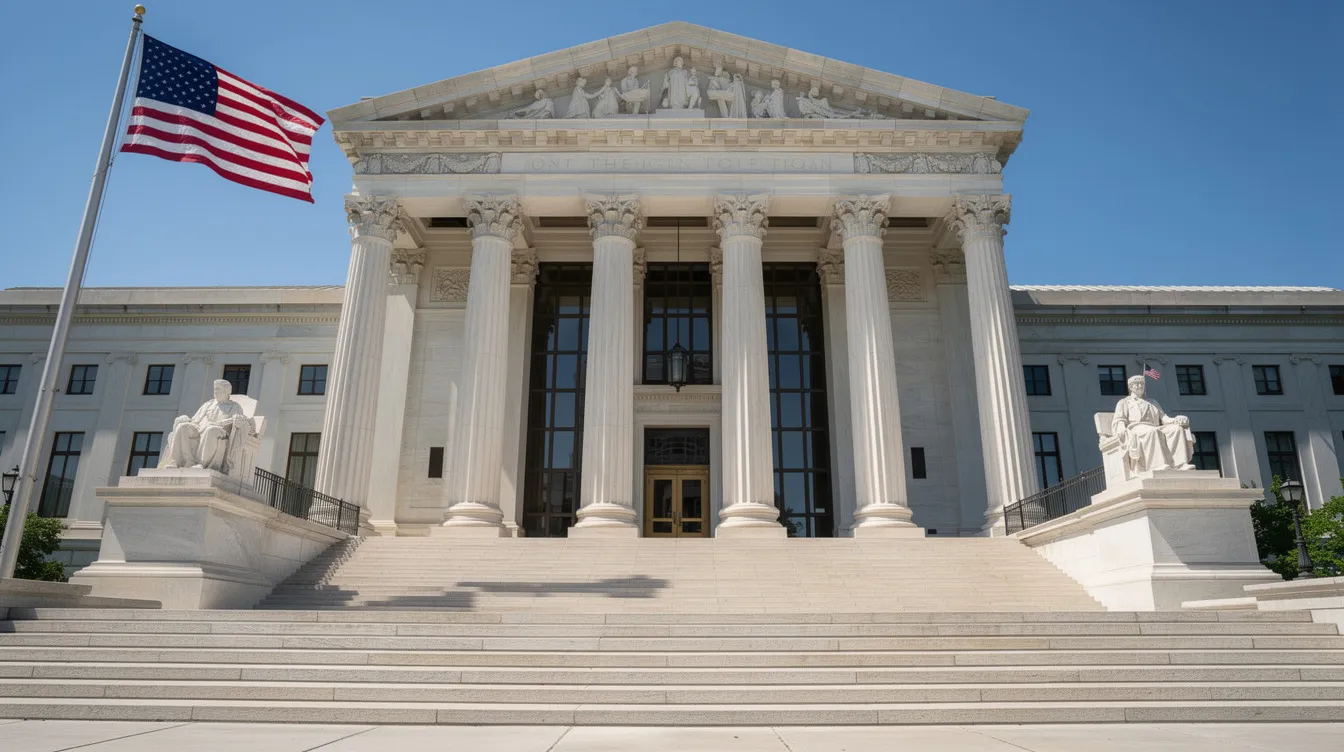
The West Virginia State Police and county sheriffs share responsibility for enforcing firearm laws. Sheriffs handle the processing of concealed carry permits and provisional licenses, while state police maintain background check databases and investigate weapons violations.
Traffic stops and encounters
West Virginia does not have an explicit statutory “duty to inform” a law enforcement officer that you are carrying a concealed weapon during a traffic stop. However, calm, voluntary disclosure is widely recommended. Officers may ask about firearms in the vehicle during routine encounters, and keeping your hands visible while following all instructions is essential for everyone’s safety.
Police officers have the authority to temporarily secure weapons during certain encounters for officer safety. Refusing lawful instructions during such encounters can lead to arrest or additional charges.
Protective order enforcement
When a restraining order or protective order includes a firearms prohibition, law enforcement must notify the respondent, may seize weapons, or facilitate transfer to an approved third party. Written proof of surrender is required. Upon expiration or dismissal of the order, return of firearms is possible after a background check confirms the person is no longer prohibited.
Criminal penalties
Even in a gun-friendly state, pointing a weapon at someone, brandishing, or threatening another person with a gun can lead to serious criminal charges like wanton endangerment, assault, or worse. The defense of self must always be proportionate and reasonable. Complaints about police officer conduct related to gun seizures or searches can be filed with local supervisors or internal affairs units within the state police.
Gun Violence, Public Safety, and Recent Legislative Trends
Gun violence data
West Virginia faces ongoing challenges with gun violence, particularly firearm-related suicides, which track above the national average in an average year. Domestic violence-related firearm incidents and the broader threat of unregulated access for at-risk individuals remain areas of public concern. Gun safety laws and the gun safety support fund have been topics in legislative discussions aimed at reducing harm while respecting constitutional rights. Precise data for last year and the current year should be sourced from official state health and crime reports for the most accurate picture.
Recent legislation
Major gun-related legislation in the past decade includes:
-
SB 347 (2016): Established permitless concealed carry for adults 21+
-
House Bill 4106 (February 2026): Passed the WV House to allow 18- to 20-year-olds to carry a concealed weapon without a permit, expanding permitless carry. As of mid-2026, the bill’s final status (Senate action, governor signature) should be verified before relying on it as enacted law.
The state does not currently have a comprehensive “extreme risk protection order” (red flag) law. In states that have adopted such laws, courts can temporarily remove guns from people deemed an imminent threat to themselves or others, based on civil petition. West Virginia’s legislature has debated but not passed such measures, and the national rifle association and other advocacy groups have been active in shaping the conversation around these proposals across the country.
Ghost guns
Federal regulation of unserialized firearms (“ghost guns”) applies in West Virginia. The ATF’s final rule 2021R-05F, upheld by the Supreme Court in Bondi v. VanDerStok (2025), requires serial numbers on unfinished frames and receivers and background checks when such parts are sold by licensed dealers. West Virginia has not enacted independent state-level ghost gun statutes beyond federal conformity, meaning federal definitions and enforcement are what currently regulate firearms in this category.
The state has been recently weakening certain concealed carry permitting requirements and expanding carry rights, a trend that state legislators may continue in upcoming sessions. Debates over school safety, domestic violence protections, and mental health record reporting are likely to shape future policy, whether or not broader restrictions are adopted.
Practical Tips for Gun Owners and Visitors
Safe storage
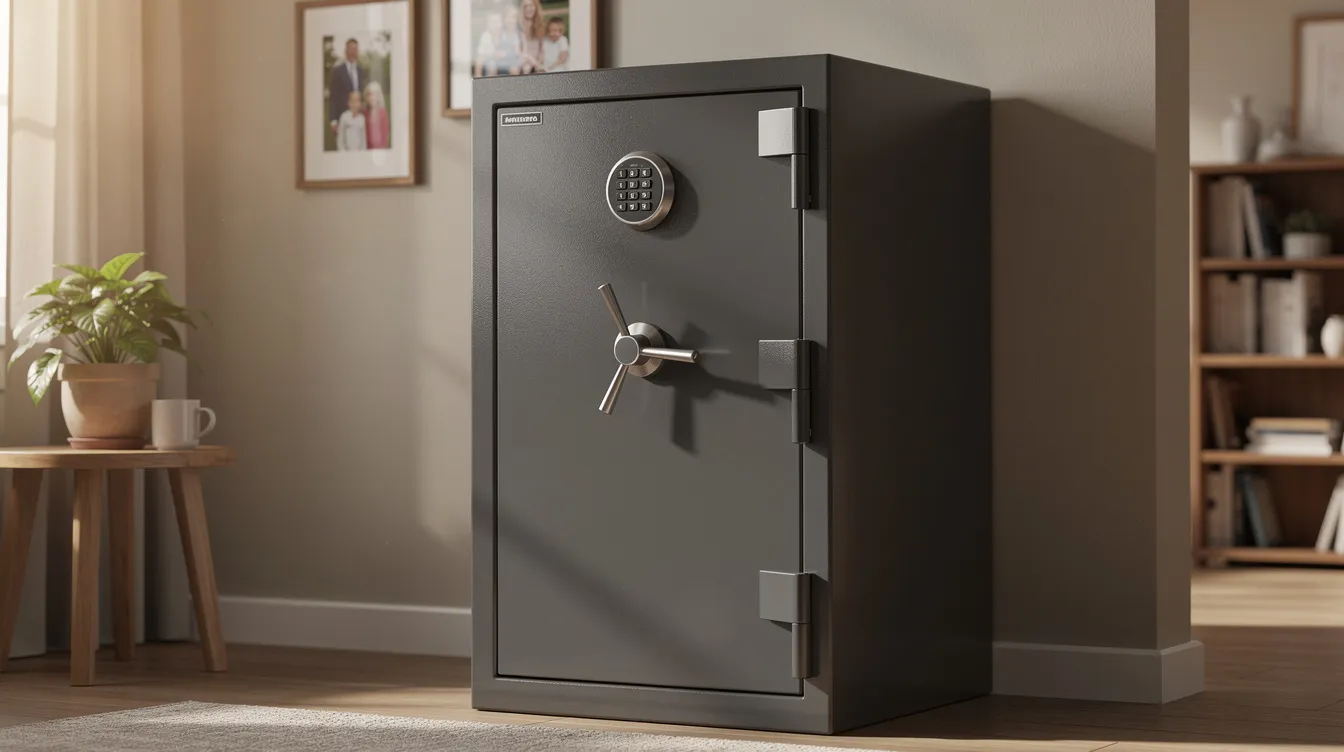
Secure storage at home is one of the most impactful steps any gun owner can take. Use a gun safe, lockbox, or cable lock to prevent unauthorized access by children, visitors, or any person prohibited from possessing firearms. While West Virginia does not mandate specific storage methods by statute, negligent storage can lead to civil liability and tragic outcomes.
Carrying in a vehicle
Individuals can carry a loaded handgun in a vehicle if they are legally allowed to possess a firearm. There is no requirement for a permit or license for those 21 and older. For hunting purposes, long guns must be transported unloaded and encased in a vehicle for hunting to comply with lawful hunting transport rules.
Keep your firearm in a location where you can safely access and secure it, and be prepared to calmly inform officers during any traffic stop. Store your motor vehicle firearm in a way that minimizes risk during unexpected encounters.
Crossing state lines
If you’re traveling outside West Virginia, research the gun laws of every state you’ll pass through or visit. A West Virginia concealed carry permit may be recognized by many states, but some do not honor it or recognize permitless carry from other jurisdictions. Federal rules for interstate transportation (18 U.S.C. § 926A) provide some protections for travelers passing through restrictive states, but only if the firearm is unloaded and locked in a container separate from ammunition.
Stay current
Gun laws evolve. Regularly check updates from the West Virginia State Police, your local sheriff’s office, or trusted legal resources. Bills like HB 4106 can change the landscape quickly, and what was legal in effect prior to a new law may not remain so afterward.
Training
Even though West Virginia law does not require a training course for permitless carry over 21, completing a voluntary firearms safety course is strongly recommended. Quality training improves safe handling, legal understanding, and confidence. Many ranges and organizations across the state offer affordable courses covering marksmanship, gun safety, and the legal use of deadly force in defense situations.
FAQ
Can I carry a concealed handgun in West Virginia without any permit if I am from another state?
Many non-residents who are 21 or older and lawfully allowed to possess firearms may carry a concealed handgun in West Virginia without a state-issued permit. The state’s permitless carry provision applies to eligible visitors, not just residents. However, you must still follow all West Virginia gun laws and federal restrictions, including location-based prohibitions. Carrying in schools, courthouses, and other restricted locations remains illegal regardless of your permit status or home state. Always verify current reciprocity and permitless carry rules before traveling, since your home state’s laws may differ significantly.
Do I have to tell a police officer that I am carrying a gun during a traffic stop?
West Virginia does not currently have a statute requiring you to proactively inform officers that you are carrying. However, if asked, you should answer truthfully. Best practices include keeping your hands visible, avoiding sudden movements, and calmly disclosing that you have a firearm if the situation arises. Following all lawful instructions is essential for everyone’s safety during the encounter. Check the latest guidance from the West Virginia State Police or your local sheriff for any updated notification requirements.
Are background checks required for private gun sales between West Virginia residents?
Under current West Virginia law, private sellers who are not federally licensed dealers are not required to run background checks on in-state buyers for most firearms. However, both parties face serious criminal liability if they knowingly transfer a firearm to a prohibited person. Using a licensed dealer as an intermediary for private sales is a practical way to reduce legal and safety risks and confirm the buyer’s eligibility.
How do domestic violence or family court orders affect my gun rights in West Virginia?
Certain domestic violence protective orders and related restraining orders prohibit firearm and ammunition possession and may require immediate surrender of guns to law enforcement or an approved third party. Violations can result in arrest, new criminal charges, and permanent loss of gun rights under federal law. If you are involved in a domestic violence case or have a pending protective order, consult an attorney promptly to understand how the specific order impacts your right to possess guns and what steps you must take to comply.
Does West Virginia regulate “ghost guns” or homemade firearms?
West Virginia does not currently have state-specific statutes regulating ghost guns beyond what federal law requires. Under the ATF’s final rule (2021R-05F), unfinished frames, receivers, and gun kits sold by licensed dealers must have serial numbers and are subject to background checks. Personal manufacture of firearms for lawful use may be allowed under certain conditions, but selling or transferring homemade guns can trigger additional federal legal requirements. Stay up to date with evolving federal regulations and watch for any new West Virginia statutes that may address unserialized or untraceable firearms in the future.
Meta tags
title
Understanding West Virginia Gun Laws: Key Insights and Implications
67/70
description
Explore West Virginia’s gun laws, their implications, and what you need to know for responsible ownership. Read the article for essential insights.
147/156