Puerto Rico Gun Laws: Licenses, Restrictions, and Domestic Violence Protections
Gun laws in Puerto Rico are governed by the Puerto Rico Arms Act of 2020 (Act 168-2019), a comprehensive statute that unified the territory's firearms licensing system and introduced significant changes to how residents obtain, carry, and register weapons. Whether you're a resident, a visitor, or someone navigating a domestic violence situation, understanding these regulations can protect you from serious legal consequences and help you exercise your rights responsibly.
This guide breaks down everything you need to know about Puerto Rico gun laws, from licensing eligibility and background checks to domestic violence protections and penalties for violations.

Key Takeaways
Puerto Rico gun laws are governed mainly by Act 168-2019 (the Puerto Rico Weapons Act of 2020), which created a single unified firearms license covering purchase, possession, and concealed carry. Most people must obtain this weapons license before they can legally own or carry a firearm in the territory.
Domestic violence protection orders and certain criminal convictions, including felony convictions and qualifying domestic violence misdemeanors, can disqualify a person from owning or buying a gun in Puerto Rico. Courts can order immediate surrender of firearms and suspension of licenses when a protection order is issued.
Background checks and security verification steps are required before a firearms license is granted and when purchasing from licensed dealers. This includes checks through both local databases and the federal NICS system, which verifies that the applicant is not a prohibited person.
Violating Puerto Rico gun laws carries severe consequences. Carrying a gun without a valid license is a felony that can lead to a ten-year prison sentence, while owning a gun without a license is a felony punishable by a five-year prison sentence. Penalties may vary based on the crime's circumstances.
Laws and procedures change over time, so readers should verify current rules with official Puerto Rico government sources or a qualified attorney before making decisions about firearms.
Performing Security Verification
Any online guide about Puerto Rico gun laws should emphasize the importance of website and data security, including protection from malicious bots. When you visit legal or government websites that host sensitive regulatory content, you may encounter a page displayed while the website uses a security service to protect itself against malicious bots and unauthorized scraping.
This security service to protect against malicious bots typically involves performing security verification before granting access. You might see a page asking you to complete a CAPTCHA or wait briefly while the system checks your connection. The page displayed often includes a respond ray id for troubleshooting and a message confirming that verification successful has occurred, allowing you to proceed to the content you need.
This process is a website security measure, not a legal requirement. It helps protect against malicious bots that might scrape or misuse sensitive legal information. However, this type of online verification has nothing to do with the official background checks, fingerprinting, or security verification required for an actual Puerto Rico firearms license. The system that verifies your eligibility to own a firearm involves law enforcement databases, criminal history reviews, and mental health record checks, which are an entirely separate and far more rigorous process.
Overview of Puerto Rico Gun Laws
Puerto Rico is a U.S. territory whose firearms regulations are primarily set by the Puerto Rico Weapons Act of 2020 (Act 168-2019), signed on December 11, 2019, and effective January 1, 2020. This law replaced older statutes, including Act 404 of 2000, and fundamentally reshaped how gun ownership and carry work on the island.
What Changed Under Act 168-2019
The Puerto Rico Arms Act of 2020 shifted firearms licensing to a shall-issue system, meaning that qualified applicants who meet all legal requirements must be granted a license. Before 2020, Puerto Rico operated under a may-issue regime where authorities had broader discretion to deny applications, fees could reach as high as $1,500, and residents needed separate permits for possession and carrying.
Under the current law, a single Weapons License allows for purchase, possession, and concealed carry of firearms. This streamlined approach replaced the old multi-permit structure and reduced the standard licensing fee to approximately $200.
Core Concepts
Here are the foundational elements of the current system:
Unified license: One license covers purchasing, possessing at home, and carrying concealed in public.
Mandatory registration: Puerto Rico requires all firearms to be registered with the Office of Weapons Licenses (maintained by the Puerto Rico Police Bureau).
Federal alignment: Federal law applies equally in Puerto Rico regarding firearms regulation, including prohibited persons categories and dealer licensing requirements.
Restricted items: Certain weapon types and accessories face restrictions. However, modern sporting rifles and high-capacity magazines are generally allowed for licensees. Class III items like suppressors are legal in Puerto Rico with necessary federal ATF tax stamps, though applicants should confirm current local regulations.
While federal gun laws set a baseline, Puerto Rico gun laws can be stricter or have different procedures than many U.S. states. For example, ammunition purchases are tied to registered calibers, and the territory imposes fixed prison terms for licensing violations that exceed penalties found in many states.
Firearms Licensing and Eligibility in Puerto Rico
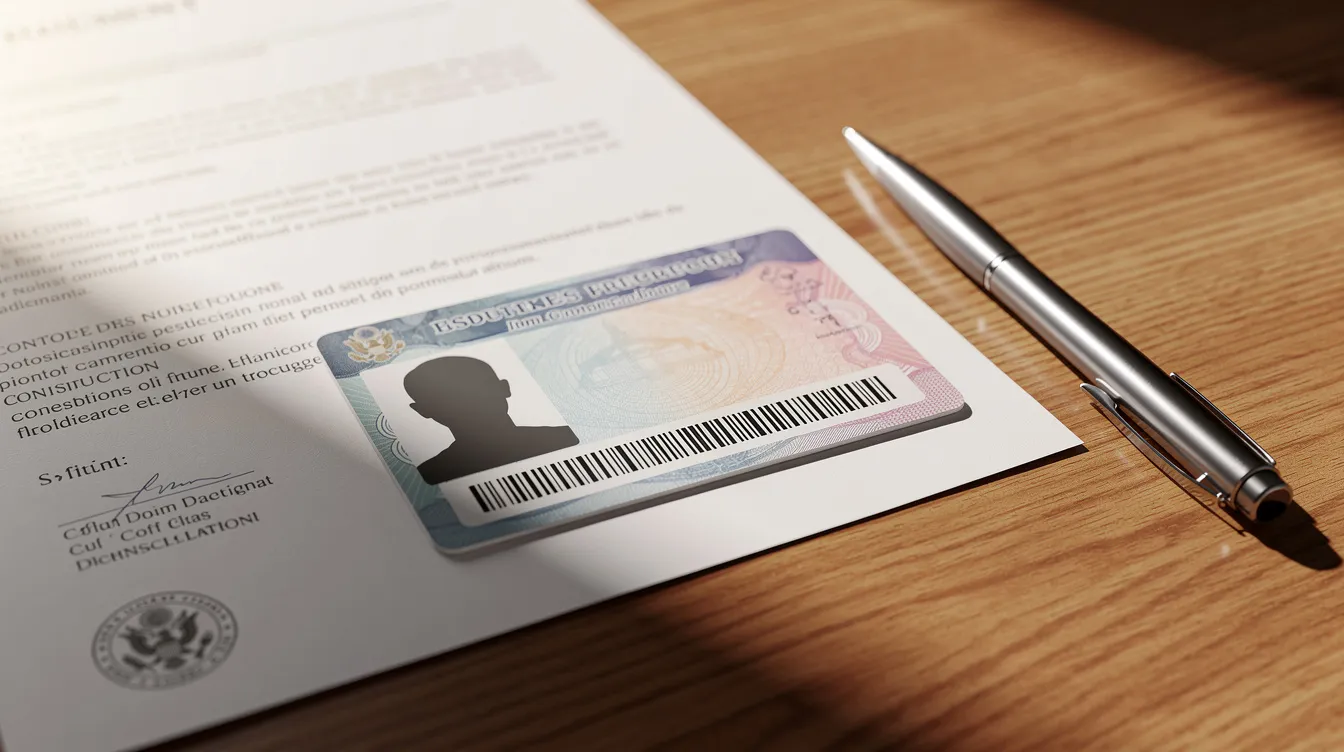
Almost all lawful firearm possession and carrying in Puerto Rico requires a valid weapons license issued by the Puerto Rico Police Bureau. A weapons license is required to own a gun in Puerto Rico, and operating without one exposes you to serious criminal penalties.
Licenses are issued by the Weapons Licensing Office in Puerto Rico, which processes applications, conducts checks, and maintains the firearms registry.
Eligibility Requirements
To qualify for a Puerto Rico weapons license, applicants must meet the following criteria:
Requirement | Details |
|---|---|
Age | Applicants must be U.S. citizens or legal residents at least 21 years old |
Residency | Must demonstrate legal residency in Puerto Rico with valid proof |
Identification | Government-issued photo ID (such as a Real ID or passport) |
Criminal history | No felony convictions, no pending violent crime charges, no qualifying DV convictions |
Mental health | No involuntary commitments or adjudications of mental incompetence |
Military status | No dishonorable discharge from any branch of the military |
Substance use | No habitual drug or alcohol abuse |
Training Requirement
Individuals must complete an official firearms use and handling course to apply for a license. This course must be taught by a PRPB-certified instructor and covers safe handling, legal responsibilities, use-of-force principles, and a practical shooting component. Upon completion, the applicant receives a Certificate of Use and Handling from a certified instructor, which must be submitted with the license application.
You must have a Certificate of Use and Handling from a certified instructor prior to licensing. Without it, your application will not be processed.
Application Process
The standard application steps include:
Fill out form PPR-329 (Solicitud de Licencia de Armas), sworn before a notary.
Submit fingerprints for criminal background screening.
Pay the government fee (approximately $200 for a new license; renewal fees are lower).
Provide recent photographs, birth certificate or passport, and Social Security proof.
Consent to background check and mental health record review.
Performing security verification in this context means the authorities run local, territorial, and federal checks, including FBI and NICS databases, to confirm the applicant is not a prohibited person.
The licensing office is required to act within 30 calendar days from the date a complete application is accepted. In practice, some applicants have reported waiting several months, particularly in busier jurisdictions.
If verification successful, the applicant can receive a firearms license valid for five years. The Weapons License is valid for five years in Puerto Rico, after which the holder must apply for renewal and demonstrate continued compliance with all eligibility requirements.
Prohibited Persons and Domestic Violence–Related Restrictions
Puerto Rico law and federal law both bar certain people from legally owning or purchasing guns, with particularly strong protections in domestic violence situations. These restrictions exist to protect victims and reduce the risk of lethal violence.
Who Cannot Obtain a Weapons License
The following categories of people are typically disqualified:
Individuals with felony convictions cannot obtain a weapons license, regardless of the nature of the offense.
Persons convicted of qualifying domestic violence misdemeanors, including assault or battery against a spouse, partner, or household member.
Individuals subject to active domestic violence protection orders, whether temporary or final.
Persons with specific mental health adjudications, such as involuntary commitment or a court finding of mental incompetence.
Anyone dishonorably discharged from the U.S. military.
Habitual users of controlled substances or those with documented alcohol addiction.
How Protection Orders Affect Gun Rights
Under Puerto Rico's Domestic Abuse Prevention and Intervention Act (Law 54 of 1989), victims of domestic abuse can petition the court for protective orders without needing to file a prior criminal complaint.
When a court issues a protection order:
Abusers' firearm licenses are suspended when a protection order is issued. The suspension takes effect immediately.
Judges may order abusers to surrender firearms under protection orders, including all weapons in their possession, even those used for work or hunting.
Gun licenses can be revoked if a protection order is issued, and in cases where the subject violates the terms of the order, a protection order can lead to permanent revocation of gun licenses.
Protection orders can prevent abusers from obtaining firearms for the duration of the order, and potentially permanently if the order results in a conviction.
Federal laws also restrict abusers' rights to possess firearms. Under 18 U.S.C. § 922(g)(8), anyone subject to a qualifying protection order is federally prohibited from possessing firearms or ammunition.
In a real-world enforcement example from 2021, a person in Puerto Rico was federally indicted after police found an AK-type rifle during a stop. The individual was subject to an active domestic violence protective order and was arrested for federal firearms violations, facing up to 10 years in prison if convicted.
Judges have discretion in how orders are crafted, and outcomes depend on the exact wording and the evidence presented to the court. However, the law strongly favors victim protection in these situations.

Background Checks, NICS, and Purchase Procedures
All licensed firearms purchases in Puerto Rico involve a combination of local and federal background checks. A criminal background check is mandatory for gun purchases, and no sale can be completed without clearance.
The Role of NICS
The National Instant Criminal Background Check System (NICS) applies to Puerto Rico just as it does to all U.S. jurisdictions. When you attempt to purchase a firearm from a licensed dealer, the dealer submits your information to NICS and must receive a "proceed" response before completing the sale.
NICS checks can flag:
Criminal convictions (felonies and qualifying misdemeanors)
Active domestic violence protection orders
Mental health adjudications
Drug-related disqualifiers
Dishonorable military discharge records
If the system returns a denial, the sale cannot proceed. The dealer verifies the response before completing any transaction.
Purchase Rules
All firearms purchases must be processed through a licensed gun dealer in Puerto Rico. Private, person-to-person transfers are also subject to licensing and registration requirements. You cannot legally transfer a firearm without conforming to the registration process.
Additional purchase regulations include:
Ammunition restrictions: Licensees can only buy ammunition for specific calibers associated with their registered weapons. Holders of a Weapons License can only purchase ammunition for their registered weapon calibers.
Quantity triggers: Purchasing more than 10 firearms or over 20,000 rounds in a calendar year can trigger a law enforcement investigation for potential trafficking.
Registration: Every firearm purchased must be registered in the electronic registry maintained by the Puerto Rico Police Bureau.
Record-Keeping Gaps
One challenge worth noting is that incomplete records in Puerto Rico or other jurisdictions can occasionally allow prohibited buyers to slip through the system. If convictions or protection orders are not entered properly into NICS or local databases, the background check may not catch a prohibited person. Accurate court and police reporting remains essential to the effectiveness of the system.
Carrying Firearms, Transportation, and Travel in Puerto Rico
Puerto Rico's unified weapons license generally covers both possession at home and carrying a firearm in public, but there are important restrictions to understand.
Concealed Carry vs. Open Carry
Concealed carry is legal for residents with a Puerto Rico Weapons License. However, open carry is not permitted in Puerto Rico. If you carry in public, the firearm must be concealed and covered at all times. Only one concealed firearm is permitted to be carried at a time in Puerto Rico.
Shooting ranges can be used legally by individuals without a license in Puerto Rico, provided they are under supervision at an approved facility. This is one of the few contexts where a person without a license may handle a firearm.
Transporting Firearms in Vehicles
When transporting firearms, the rules are specific:
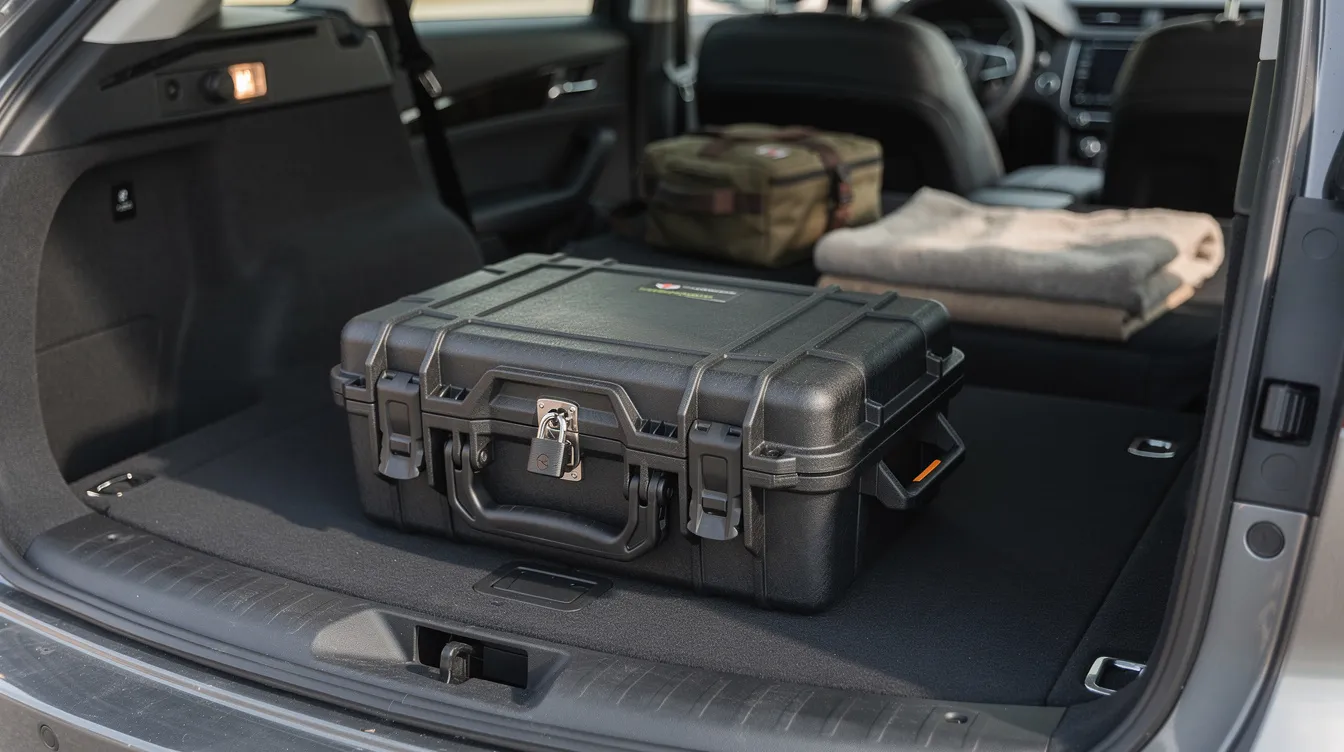
Licensees can transport their firearms unloaded in a closed case in vehicles.
Licensees may transport more than one firearm in a vehicle if unloaded and out of sight.
License documentation must be carried at all times and made available for inspection by any police officer who requests it.
Ammunition should be stored separately from the firearm during transport.
Traveling to Puerto Rico With Firearms
For visitors arriving from the mainland U.S., the reciprocity situation requires careful attention. Puerto Rico recognizes concealed carry licenses from any U.S. state for visitors under certain conditions. However, Puerto Rico does not recognize out-of-state concealed carry permits for non-residents as automatic authorization for unrestricted carry. The distinction matters: travelers must still comply with Puerto Rico's import notification requirements and should contact the Weapons Licensing Office before departing to confirm the current process.
Travelers arriving at any airport in Puerto Rico with firearms in their luggage must comply with both TSA regulations and Puerto Rico law. Federal transportation rules for airlines and ports apply, meaning firearms must be:
Declared to the airline at check-in
Unloaded and stored in a locked, hard-sided container
Placed in checked luggage (never in carry-on bags)
Before arriving or departing, verify current guidance with the Puerto Rico Police Bureau, TSA, and your airline. Rules can change, and declaring firearms at the airport is mandatory regardless of your home state's laws.
A Note for Visitors
If you hold a valid conceal carry permit from another state, do not assume it grants you the same privileges in Puerto Rico as it does at home. Puerto Rico is a U.S. territory with its own regulatory framework. Travelers should visit the official PR government website (www) or contact the commissioner's office for the most current reciprocity and notification requirements.
Penalties for Violations of Puerto Rico Gun Laws
Unauthorized possession or misuse of firearms in Puerto Rico is treated seriously, often far more severely than in many U.S. states. The Weapons Act imposes fixed prison terms that leave little room for judicial leniency.
Penalty Structure
Violation | Classification | Penalty |
|---|---|---|
Owning a gun without a license | Felony | 5-year prison sentence |
Carrying a gun without a license | Felony | 10-year prison sentence |
Carrying with aggravating circumstances | Felony | Up to 20 years |
Carrying with mitigating circumstances | Felony | Minimum 5 years |
Expired license (registered gun, no violence) | Misdemeanor | Up to 6 months or $5,000 fine |
Owning a gun without a license is a felony. This felony is punishable by a five-year prison sentence. Carrying a gun without a license is also a felony. This felony can lead to a ten-year prison sentence. Penalties may vary based on the crime's circumstances, with aggravating factors pushing sentences higher and mitigating factors allowing for some reduction.
Additional Consequences
Sentence enhancements: Using a firearm while committing another crime, such as robbery, assault, or a domestic violence offense, can trigger separate weapons charges or enhanced sentences under the force of law.
Seizure of weapons: Guns and ammunition involved in crimes can be seized by police, stored as evidence, and later destroyed, sold, or transferred according to court orders.
License revocation: Even legal gun owners can face permanent revocation if they violate protection orders or commit disqualifying offenses.
Federal charges: In some cases, violations may also subject the person to federal prosecution, particularly when drugs, trafficking, or domestic violence protection orders are involved.
The definition of what constitutes illegal possession is broad. If you possess a firearm without completing the licensing process, you are subject to arrest and prosecution regardless of your intentions.
Practical Safety Tips and Resources for Victims and Families
If you or someone you know is experiencing domestic violence and is worried about a person's access to guns in Puerto Rico, your safety comes first. The law provides concrete tools to help, but knowing how to use them matters.
Safety Planning Steps
Document everything: Keep records of any threats involving firearms, including text messages, voicemails, and witness accounts. This proof can support a protection order petition.
Keep copies of police reports: If you have filed a report with a police officer about threats or violence, obtain and store copies in a safe location outside your home.
Share your safety plan: Let trusted friends, family members, or domestic violence advocates know about your situation and your plan.
Secure your own documents: Keep your ID, birth certificate, and any court orders in a location the abuser cannot access.
Where to Get Help
Contact local domestic violence hotlines and shelters in Puerto Rico for immediate assistance and safety planning.
Reach out to legal aid organizations that can help you obtain a protection order and understand how it affects the abuser's gun rights.
If you believe someone who is prohibited from possessing firearms still has guns, contact local police and provide as much detail as possible, including any protection order case numbers and evidence of threats.
Important Reminder
While the information displayed in this article can guide you through the process and help you understand your options, only a licensed Puerto Rico attorney or qualified advocate can provide personalized legal advice on your specific case. Laws evolve, courts interpret them differently, and your situation may have unique factors that require professional guidance.

FAQ
Do U.S. federal gun laws apply in Puerto Rico?
Yes. As a U.S. territory, Puerto Rico is subject to federal firearms laws, including background check requirements for licensed dealers, federal bans on certain prohibited persons (such as convicted felons and those under qualifying protection orders), and ATF regulations on dealer licensing and form requirements. The constitution's commerce clause and federal statutes extend these rules to all U.S. territories.
Puerto Rico can add its own, sometimes stricter, rules on top of federal law. This means residents and visitors must follow both systems. If federal law allows something but Puerto Rico law prohibits it, the stricter local rule applies within the territory.
Can I bring my legally owned gun from a U.S. state to Puerto Rico for vacation?
Travelers must comply with airline and TSA rules, as well as Puerto Rico's licensing and import requirements, before arriving with a firearm. This means declaring the firearm at the departing airport, packing it unloaded in a locked hard-sided case in checked luggage, and ensuring ammunition is stored properly.
Having a concealed carry permit from a U.S. state does not automatically authorize unrestricted possession or carry in Puerto Rico. Visitors should contact the Puerto Rico Police Bureau or the Weapons Licensing Office before their trip to confirm the current notification and compliance process. Arriving without proper documentation can result in being arrested and having the firearm seized.
How can I find out if someone in Puerto Rico has a criminal record that might bar them from owning a gun?
Some court conviction records are public, but accessing them can require visiting local courthouses or using official online systems when available through the PR judicial website. Not all records are digitized, and there may be waiting periods for obtaining certified copies.
Only law enforcement and licensed firearms dealers can directly search NICS. If you are a concerned person, such as a domestic violence victim, you may need to ask police or an attorney for guidance on how to verify whether someone is prohibited from possessing firearms. Hear from an advocate before taking action on your own.
What should I do if I believe a prohibited person still has guns in Puerto Rico?
Contact local police with as much detail as possible, including any protection orders, case numbers, or evidence of threats. A police officer can investigate and, when appropriate, remove weapons from a prohibited person. If the person has been subject to a court order declaring them prohibited from firearm possession, law enforcement has the authority to search for and seize weapons.
Victims should also reach out to domestic violence advocates or legal aid organizations that can help communicate with law enforcement and document ongoing safety concerns. These organizations can assist with the process of obtaining or enforcing protection orders.
Are ammunition and accessories regulated differently from firearms in Puerto Rico?
Puerto Rico law regulates not only firearms but also ammunition and certain accessories. Licensed individuals can only purchase ammunition in calibers that match their registered weapons. Attempting to purchase non-matching calibers is not allowed.
Regarding accessories, the territory has its own rules that may differ from federal standards. Readers should check the current Puerto Rico Weapons Act provisions and official guidance to confirm quantity limits, storage rules, and any bans on specific types of ammunition or devices. If you're looking to obtain a link to the latest regulations, the official Puerto Rico government page and the ATF website are the most reliable starting points.
Meta tags
title
Understanding Puerto Rico Gun Laws: Key Facts and Considerations
0/70
description
Explore Puerto Rico's gun laws with key facts and considerations. Understand your rights and responsibilities—read the article for essential insights.
0/156