Mississippi Gun Laws: A 2026 Guide to Firearm Rules, Rights, and Restrictions
Mississippi Gun Laws: A 2026 Guide to Firearm Rules, Rights, and Restrictions
Key Takeaways
-
Mississippi has some of the least restrictive gun laws in the United States, including permitless carry for many adults, open carry without a permit for anyone at least 18, and a “shall-issue” system for concealed carry permits.
-
Permitless carry allows individuals to carry firearms without a permit, but prohibited locations include schools, courthouses, and polling places, and certain locations prohibit carrying firearms even with a permit.
-
A federal background check is required when purchasing a handgun from a licensed dealer, but Mississippi generally does not require background checks for most private, in-state firearm sales.
-
Machine gun ownership is not broadly banned by state law, but fully automatic firearms must comply with federal National Firearms Act rules.
-
This guide is informational only. Always verify current Mississippi gun laws with official statutes, law enforcement guidance, or a qualified attorney for public safety and compliance.
Overview of Mississippi Gun Laws in 2026
Mississippi is widely known as a gun-friendly state. Compared with states that have the strongest gun safety laws, Mississippi is often described by advocacy groups as having among the weakest gun laws because it has permitless carry, no firearm registration, no state waiting period, and only a few policies limiting private transfers. Supporters see this as respect for lawful possession and self-defense. Critics connect permissive gun laws with higher gun deaths and a higher gun death rate, especially in states with high household firearm ownership.
Mississippi’s modern carry framework changed significantly in the last decade. Open carry of a holstered handgun has generally been legal without a permit since July 1, 2013. Permitless concealed carry expanded on April 15, 2016, and the state continues to update firearm penalties, including major youth and stolen-firearm changes effective July 1, 2026.
At a high level, Mississippi’s foundational gun laws are set by state statute, especially Mississippi Code Title 97, Chapter 37 and Section 45-9-101. Federal law still overlays state law. That means the Second Amendment may protect broad firearm rights, but federal rules still control background check requirements at licensed dealers, prohibited-person categories, and machine gun transfers.
This guide covers who may own guns, how purchases work, where carrying is allowed, which places remain off-limits, how youth firearm offenses are treated, and what recent legislation means for the next decade. Local governments have limited authority over possession and transportation, but they may regulate specific matters such as discharge, public events, parks, and emergencies.
Who May Own or Possess a Firearm in Mississippi
Mississippi does not have a separate statewide firearm owner licensing system. There is no state permit required simply to own a gun, and there is no limit on the number of firearms an individual can own or purchase. Most eligibility rules come from a mix of state criminal statutes and federal prohibited-person laws.
Age rules are one of the easiest areas to misunderstand. There is no minimum age to possess long guns in Mississippi under a separate state possession rule, although other child-safety, delinquency, school, and hunting laws may still apply. State law generally allows adults 18 and older to possess handguns in many contexts. At the same time, federal law generally requires a buyer to be 21 to purchase a handgun from a federally licensed dealer. Some summaries state that Individuals must be 21 to legally possess a firearm in Mississippi, but that statement is too broad unless it is referring to specific purchases, licenses, or federally regulated transactions.
Federal law also applies in Mississippi. Felons are prohibited from possessing firearms under federal law, and Mississippi separately bars convicted felons from firearm possession unless rights have been restored through a qualifying pardon, relief, or rehabilitation process. Other prohibited categories include certain domestic violence misdemeanants, people subject to qualifying protective orders, unlawful users of controlled substances, and people with certain mental-health adjudications.
Mississippi Code Section 97-37-1 also recognizes carrying in a private residence, business, associated real property, or motor vehicle for people 18 or older. In everyday terms, a person who may lawfully possess a gun has broader freedom on property tied to home, work, or travel than in sensitive public locations.
Background Checks and Gun Purchases
When buying from a federally licensed firearms dealer, often called an FFL or retail dealer, the buyer must present valid identification, complete ATF Form 4473, and pass a National Instant Criminal Background Check System review. A federal background check is required when purchasing a handgun from a licensed dealer, and lying on Form 4473 is a federal offense.
Mississippi is not a state point-of-contact system for NICS. Dealer checks are handled through the federal system. You can review the federal process through the FBI NICS overview.
For private sales, Mississippi does not impose a universal background check requirement for most intrastate transfers between people who are not licensed dealers. There is also generally no additional state waiting period. That said, private sellers are still bound by federal law and should not sell such firearm to someone they know or have reason to believe is prohibited.
A practical private-sale checklist includes:
-
Confirm the buyer’s age.
-
Decline the sale if anything seems suspicious.
-
Consider using an FFL for a voluntary background check.
-
Keep a simple bill of sale where lawful and appropriate.
-
Avoid sales involving intoxication, threats, straw purchasers, or unclear residency.
Open Carry and Concealed Carry in Mississippi
Open carry means the firearm is visible to ordinary observation. Concealed carry means the weapon is hidden from ordinary view. Mississippi law has special definitions here: a handgun carried in a belt holster or shoulder holster, if wholly or partially visible, may not be treated as concealed under the statute.
Open carry is legal in Mississippi without a permit for anyone at least 18, as long as the person is not otherwise prohibited and is not in a restricted place. Since 2013, a visible holstered handgun has generally been lawful without a license.
Permitless concealed carry is also broad. Since April 15, 2016, many adults who can legally possess firearms may carry a concealed handgun without a state permit in many public places. Individuals can carry concealed handguns in a holster without a permit, and purse carry allows individuals to carry a firearm in a bag without a license when the person otherwise qualifies under Mississippi’s permitless carry rules.
Mississippi also allows concealed carry with a valid license. Mississippi is a “shall-issue” state for concealed carry permits, meaning officials generally must issue a permit when the applicant meets statutory requirements. Mississippi offers Enhanced Carry Permits for carrying in restricted areas where standard license holders or permitless carriers may not carry. Enhanced permits typically require training, including legal instruction and live fire, and are useful for reciprocity in other states.
One technical point: Mississippi’s concealed-weapon statute lists certain short-barreled weapons. A firearm must be 16 inches or longer to carry concealed if the firearm is a rifle covered by the short-barrel restriction, while short-barreled shotguns and other listed weapons raise separate state and federal concerns.
Restricted Places and Local Regulation of Firearms
Where you carry matters as much as whether you can carry. Mississippi gun laws allow broad carrying rights, but a lawful gun owner can still be arrested for carrying in the wrong location.
Common restricted places include:
-
Schools, colleges, and nonfirearm related school events
-
Courthouses and courtrooms
-
A police station, sheriff’s office, or highway patrol station
-
Jails, prisons, and detention facilities
-
A polling place on election day
-
Government meetings, including a public meeting or official political meeting of a governmental body
-
Secured areas of an airport, including a passenger terminal
-
Bars or businesses primarily devoted to dispensing alcoholic beverages
-
A professional athletic event or other sporting event not involving firearms
-
Certain churches, unless an exception provided by law applies
Rules can differ for enhanced permit holders, standard permit holders, and people who carry concealed without a license. But even enhanced permit holders cannot carry everywhere.
Private property also matters. A business, church, private residence, or other entity may prohibit firearms with proper notice. Ignoring a posted sign can lead to removal, trespass consequences, or other legal problems.
Local regulation is limited but not nonexistent. Section 45-9-53, often discussed in mississippi code ann summaries, restricts counties and cities from broad gun bans, but local laws can regulate firearm discharge within municipalities. A city may address a public park, political rally, public meeting, riot, insurrection, or natural disasters. A county, municipality, or other governmental body may also adopt land use regulations, zoning ordinances, fire code rules, or building code provisions if such regulation is not a disguised firearm ban.
Some municipal rules become very specific. For example, a local ordinance may discuss a center fire rifle, black powder firearm, muzzle loading rifle, air rifle, air pistol, bb gun, arrow discharged, caliber discharged, or an occupied building located within a certain distance. A city finds that discharge rules are needed for public safety may regulate an occupied building, an area designated for shooting, an area annexed into city limits, or the extraterritorial jurisdiction where state law allows. Such codes must stay within the authority granted by state law and cannot require citizens to give up general lawful possession or transportation.

Specific Weapon Types: Handguns, Long Guns, and Machine Guns
Mississippi generally treats ordinary handguns, rifles, and shotguns as legal for people who are not prohibited. A concealed pistol or concealed handgun is the most common carry question, but long guns remain subject to hunting, discharge, and location rules.
Machine guns and fully automatic firearms are different. Section 97-37-1 includes a machine gun and other weapon types in its concealed-carry restrictions. Carrying a machine gun concealed without proper authorization is a serious offense.
Federal law is even more important. The National Firearms Act regulates machine guns, silencers, short-barreled rifles, short-barreled shotguns, and destructive devices. Civilian machine guns generally must have been lawfully registered before the federal cutoff date, and transfers require ATF approval, tax payment, registration, and a background check. The ATF National Firearms Act page is the best starting point for federal requirements.
Common sporting arms are generally legal if the owner is not prohibited. That includes shotguns, rifles, and firearms used for lawful hunting, target shooting, or a lawful purpose. But lawful hunting rules, safe discharge laws, game regulations, and landowner permission still apply.
Local ordinances may treat air guns and primitive weapons differently. An air rifle, air pistol, bb gun, or muzzle loading rifle may not be a firearm for every legal purpose, but discharge inside city limits can still be restricted.
Youth, Juvenile Offenses, and Recent Sentencing Changes
Mississippi has moved toward stricter treatment of juvenile firearm offenses. Senate Bill 2710, effective July 1, 2026, shifts certain firearm-related crimes by minors into adult circuit court when the offense would be a serious felony if committed by an adult. You can review the bill history through the Mississippi Legislature bill status system.
The practical effect is serious: a juvenile firearm offense may no longer stay in youth court. A teenager accused of a violent crime involving a gun, rifle, shotgun, or other deadly weapon may face adult prosecution, adult sentencing, and long-term criminal consequences.
Adults also face severe liability for furnishing firearms to minors for unlawful use. If a gun provided to a minor is used in a homicide or serious felony, prison exposure can stretch for decades under Mississippi law.
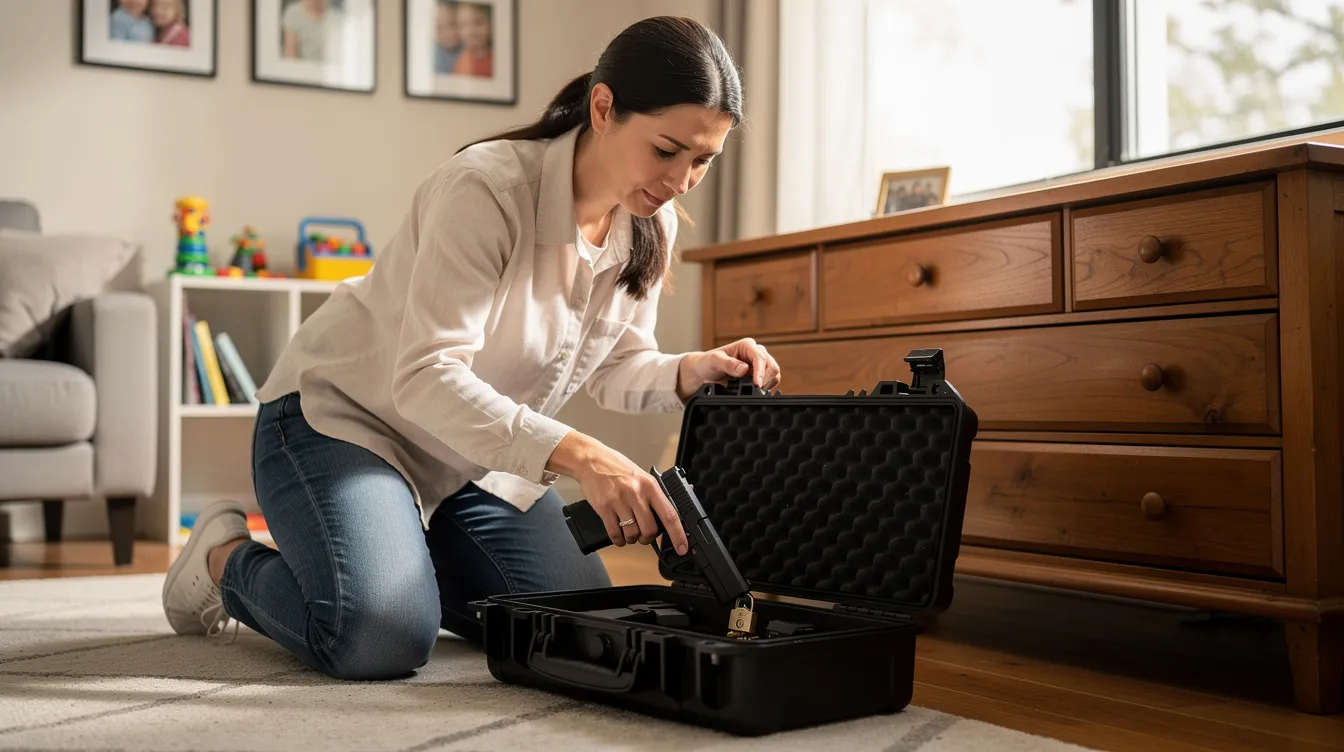
Supporters argue that youth court was not deterring violent firearm crime. Critics argue that automatic adult prosecution can miss opportunities for intervention, supervision, counseling, and alternative sentencing. Parents and guardians should not wait for the criminal system to intervene. Secure storage, trigger locks, locked safes, and direct conversations about firearm safety are basic risk-reduction steps.
Seizure, Forfeiture, and Disposal of Firearms Used in Crimes
Weapons used in violations may be forfeited by the court. Under Section 97-37-3, firearms or other weapons connected to unlawful concealed carry or similar offenses can be seized by law enforcement, introduced as evidence, and forfeited after a guilty finding.
If the accused is acquitted or the charge is dismissed, Mississippi law generally requires return of lawfully owned seized weapons unless another legal basis exists to keep them. If the weapon is forfeited, it may be transferred to law enforcement or sold through authorized channels, often with proceeds directed toward law enforcement equipment such as bulletproof vests.
Mississippi also created a parental surrender process. The Mississippi Parental Amnesty Act provides immunity for parents. Parents can deliver firearms owned by minors to law enforcement. No identification is required when surrendering firearms under this act. The act takes effect on July 1, 2026. Parents are immune from liability for actions involving surrendered firearms. Firearms surrendered under the Parental Amnesty Act are destroyed after law enforcement determines they are not needed as evidence.
In plain terms, the act gives a parent or guardian a safer legal path if a minor has a gun and the adult wants to prevent harm without creating new liability by reporting or surrendering it.
Penalties for Illegal Carrying and Misuse of Firearms
Mississippi imposes escalating penalties for unlawful concealed carry and firearm misuse. Under Section 97-37-1, carrying a concealed pistol, knife, machine gun, or other listed weapon without authorization can lead to fines, jail, prison, and loss of firearm rights.
Key penalty ranges include:
-
First conviction carries a fine of $100 to $500.
-
Second conviction results in 30 days to 6 months imprisonment.
-
Third conviction leads to 1 to 5 years in prison.
-
Felons face 1 to 10 years for concealed carry violations.
Those penalties are separate from other crimes. If a firearm is used during a robbery, assault, drug crime, murder, or other violent felony, sentencing enhancements can make punishment much more severe than for the underlying offense alone.
Recent 2026 changes also increase penalties for stolen firearms and shooting into groups of people. SB 2710 criminalizes willfully and unlawfully shooting into a group of two or more people, even if no injury occurs, with potential felony punishment. Mississippi also punishes shooting into a dwelling, vehicle, or occupied structure harshly, especially when someone is injured or killed.
Carrying a gun is a serious responsibility. A misunderstanding about a polling place, courthouse, school function, or alcoholic beverages restriction can still end in arrest. So can negligent handling, brandishing, or using a gun to threaten someone without lawful justification.
Staying Informed and Promoting Public Safety
Mississippi gun laws change through statutes, court decisions, attorney general opinions, agency guidance, and federal cases. A rule that was accurate last year may be incomplete after July 1, 2026.
Here are the best habits for responsible owners:
-
Review current Mississippi Code sections before relying on old summaries.
-
Check Department of Public Safety guidance before applying for a state permit.
-
Take voluntary training even when the law does not require it.
-
Store firearms securely, especially around minors.
-
Never handle firearms while impaired by alcohol or drugs.
-
Stay calm and respectful when interacting with law enforcement while carrying.
Public employees, security staff, business owners, hunters, and everyday license holders all benefit from knowing both the rights and limits in Mississippi law. National leaders often debate gun policy in broad terms, but compliance happens in specific places: a courthouse, a school parking lot, a public park, a vehicle, a workplace, or a private residence.
Frequently Asked Questions About Mississippi Gun Laws
Do I need a permit to carry a concealed handgun in Mississippi in 2026?
Generally, no. Mississippi allows permitless concealed carry for many adults who may legally possess firearms. But a state permit can still be useful, especially for reciprocity with other states and for enhanced carry privileges in some restricted areas.
A permit does not make every place legal. Schools, courthouses, polling places, detention facilities, and certain government or alcohol-related locations may still be restricted.
Are background checks required for private gun sales in Mississippi?
Mississippi does not require universal background checks for most private, intrastate firearm transfers between individuals who are not licensed dealers. However, federal law still prohibits selling to a person known or reasonably believed to be prohibited.
Using an FFL for a voluntary background check is a smart option when either party wants extra documentation and risk reduction.
Can local governments in Mississippi ban guns in city parks or during emergencies?
Local governments generally cannot create broad firearm possession or transportation bans that conflict with state law. But they may regulate carrying or discharge in specific contexts such as a public park, public meeting, political rally, riot, insurrection, or natural disasters.
Always check posted signs, local ordinances, and event rules before carrying in city facilities or at special events.
Is it legal to own a machine gun in Mississippi?
Mississippi does not create a broad state-level ban on machine gun ownership, but federal law controls nearly everything about lawful civilian possession. A transferable machine gun must comply with the National Firearms Act, including ATF approval, registration, tax payment, and background checks.
Carrying a machine gun concealed without lawful authority can create serious state criminal exposure.
What should I do if I find that my minor child has a gun?
The Mississippi Firearms Parental Amnesty Act allows a parent or guardian to surrender a firearm owned or controlled by a minor to law enforcement with immunity. The surrender can typically be made at a police station or by arranging contact with law enforcement.
This is not just a legal option. It is a practical safety step that can prevent injury, prosecution, and long-term consequences for a child and family.
Meta tags
title
Understanding Mississippi Gun Laws: Key Points for Responsible Owners
69/70
description
Explore essential Mississippi gun laws for responsible ownership. Stay informed and compliant—read our article for key insights and practical guidance.
151/156