Maryland Gun Laws: 2026 Guide to Firearms, Carry Permits, and Restrictions
Maryland Gun Laws: 2026 Guide to Firearms, Carry Permits, and Restrictions
Key Takeaways
-
Maryland has some of the strictest gun laws in the United States, with detailed rules for firearms ownership, purchase, transportation, and public carry.
-
A handgun qualification license is required to purchase a handgun, and a separate carry permit is required to carry, wear, or transport a handgun in public or in a vehicle.
-
Maryland bans certain semi-automatic rifles classified as “assault weapons,” and Maryland bans firearm magazines exceeding 10 rounds capacity for in-state manufacture, sale, or transfer.
-
Maryland prohibits open carry in public for ordinary handgun carry, while carry concealed is allowed only with a valid Maryland permit and is restricted in many sensitive locations.
-
Maryland law changed significantly after the 2023 Gun Safety Act and the 2026 Novotny v. Moore lawsuit, so gun owners should verify current rules before relying on older guidance.
Introduction to Maryland Gun Laws
Maryland gun laws are strict, detailed, and easy to violate by mistake. The state uses licensing, background check systems, waiting periods, registration records, sensitive-location rules, and bans on specific guns and accessories to reduce gun violence and protect public safety.
This guide explains the practical rules that affect ordinary residents: who may own firearms, what kinds of guns are regulated or prohibited, how a person may purchase a handgun, and when a person may legally carry or transport guns.
Maryland residents must follow federal law, state law, and some location-specific rules. State law generally preempts most local firearms regulations, but private property policies, posted locations, and federal restrictions can still matter. Most core rules are found in the Maryland public safety article and the criminal law article, including Title 5 rules on regulated firearms and criminal law restrictions on unlawful carry.
This article is educational only. If you face a specific legal situation, review the official Maryland statutes, the Maryland State Police firearms website, and speak with a qualified attorney.
Who May Own a Firearm in Maryland
Maryland uses background checks and disqualifying criteria to decide whether a person can legally purchase or possess a regulated firearm. The basic rule is simple: a person must be old enough, must not be legally prohibited, and must pass the required checks before purchase or transfer.
Generally, a person must be at least 18 to buy ordinary rifles or a shotgun. Individuals must be 21 years old to buy a handgun in Maryland. Limited exceptions may apply for supervised sporting use, training, hunting, or a sport shooting event, especially where supervision is by a person at least 21 years old.
Common disqualifiers include felony convictions, some misdemeanor convictions, domestic violence orders, certain mental health commitments, and federal prohibitions. A habitual user of controlled substances, including marijuana under federal law, can be prohibited. Maryland rules also refer to categories such as habitual drunkard in some licensing contexts.
A background check is performed through the maryland state police and federal NICS system when a person buys from a licensed dealer. Private transfers of all firearms in Maryland require a universal background check. Straw purchases, false statements, and lying on state or federal forms are serious criminal law violations.
Handgun Qualification License (HQL) and Regulated Firearm Purchases
Maryland classifies handguns and certain semi-automatic centerfire rifles as a regulated firearm category. That classification triggers extra licensing, waiting-period, and registration rules before the sale can be completed.
A Handgun Qualification License is required to purchase a handgun. The HQL is not the same thing as a handgun permit for carry. It is a purchase license, not permission to carry a loaded firearm in public.
To obtain an HQL, an applicant generally must:
-
Be at least 21.
-
Complete a firearms safety training course.
-
Submit fingerprints through the approved process.
-
Apply through the Maryland State Police online licensing portal.
-
Pass the required background check.
The firearms safety training course is normally taught by a qualified handgun instructor and includes safe handling, storage, Maryland law, and live-fire elements. The training is also referred to as firearms safety training, a firearms training course, or firearms training depending on the context.
Some people are exempt from the HQL requirement, including certain law enforcement officers, members of the armed forces, national guard members, some uniformed services members, certain security professionals, and in some cases an honorably discharged member of the military. Exempt does not always mean exempt from every rule.
All handgun transfers must be processed through a licensed dealer in Maryland. Maryland also requires a seven-day waiting period for many regulated firearm transfers, and the transaction creates a state record showing that the firearm is registered to the buyer.
Maryland limits handgun purchases to one every 30 days. Two handguns can be purchased within 60 days with paperwork when the transaction is processed under Maryland’s multiple-purchase rules or a recognized exception. A designated collector status from MSP can also change how the one-per-30-days rule applies.
Wear and Carry Handgun Permit (Concealed Carry and Transport)
Maryland requires a separate handgun permit, commonly called a Wear and Carry Permit, to legally carry, wear, or transport a handgun on your person or in a vehicle. You must have a valid permit to carry a handgun, and you must have a valid permit to transport a handgun outside the narrow statutory exceptions.
After the U.S. Supreme Court’s Bruen decision, Maryland became a “shall-issue” state for carry permits. That means eligible applicants no longer have to prove a special “good and substantial reason,” but they still must satisfy training, fingerprinting, background, and application requirements.
For a new permit, applicants generally must complete a firearms training course approved by the Maryland State Police. The course is usually 16 hours for new applicants and includes live fire. Renewals generally require shorter training.
The application process usually includes:
-
Creating an account in the MSP licensing portal.
-
Uploading a color passport-style photo.
-
Submitting fingerprints.
-
Completing the training documentation.
-
Paying the fee electronically.
The initial handgun carry permit costs $125.00. Renewal of a handgun carry permit costs $75.00. Handgun permits are valid for two years after issuance for the initial term, with later renewals typically running for three years. Apply early before expiration to avoid a gap in legal carry authority.
Open Carry vs. Concealed Carry in Maryland
Maryland treats open carry of handguns far more restrictively than many states. In practical terms, lawful public carry is almost always concealed, discreet, and backed by a valid permit.
Carrying a handgun openly in public without a permit is generally a crime under Criminal Law § 4-203, which restricts wearing, carrying, or transporting a handgun, whether open or concealed, unless a permit or statutory exception applies. Even permit holders should avoid visible display. Printing, accidental exposure, or a visible handgun in an enclosed holster may still lead to law enforcement contact or complaints.
Long guns, including rifles and shotguns, are governed by different laws. However, openly carrying rifles in crowded public places can still create legal risk, especially if the conduct appears threatening or disorderly.
The safer approach is simple: if you carry, carry concealed, follow all permit rules, and respect posted property restrictions.
Places You Cannot Carry: Sensitive Locations and 2023–2026 Changes
Maryland’s post-2023 laws list many sensitive locations where even permit holders cannot carry a handgun. These restrictions are one of the most important parts of Maryland gun laws because they can turn an otherwise legal permit holder into a criminal defendant.
Examples of prohibited locations include:
-
K–12 schools.
-
Certain government buildings.
-
Public transit systems.
-
Polling places.
-
Some health care and childcare facilities.
-
Many public parks and state-owned properties.
-
Establishments serving alcohol where the permit holder is drinking.
In designated sensitive locations firearms are strictly prohibited in Maryland unless a narrow exception applies. Violating these restrictions can lead to criminal charges, permit revocation, and loss of future licensing eligibility.
Private property rules also matter. Posted signs and owner policies can affect whether lawful carry is allowed. The 2026 Novotny v. Moore decision changed the legal treatment of some private property open to the public, but the rules remain unsettled in borderline locations.
Assault Weapons and Other Banned or Restricted Firearms
Maryland restricts a defined list of assault weapons, including assault long guns and copycat weapons. Assault long guns are defined in section 5-101 of state code, specifically in the public safety article. Maryland bans specific assault weapons listed in state code, and the list includes many named AK-style, AR-style, UZI, and similar firearms.
Assault pistols are defined in section 4-101 of the Criminal Law article. Some materials also discuss assault pistols under related criminal law article provisions, so buyers should check the current statute text before making decisions.
Many AR-15 style rifles and other semi-automatic centerfire rifles may be prohibited to buy or transfer if they match a banned model or meet the copycat weapon feature test. Older grandfathered models may still be possessed if lawfully owned before the applicable ban, but transfer and sale rules remain strict.
Short-barreled rifles, short-barreled shotguns, and some tactical-feature firearms may also implicate federal NFA rules. Before buying a borderline model, check the MSP banned firearms resources and speak with a knowledgeable Maryland dealer.
Detachable Magazines and the 10-Round Limit
Maryland prohibits the manufacture, sale, or transfer within the state of detachable magazines capable of holding more than 10 rounds of ammunition. Detachable magazines over 10 rounds are prohibited in Maryland for those in-state commercial and transfer activities.
This 10-round rule applies to many pistol and rifle magazines. There are statutory exceptions, including some tubular magazines for certain .22 caliber rimfire rifles and limited official-use exceptions for law enforcement.
There is an important distinction between possession and transfer. Mere possession of a larger-capacity magazine acquired lawfully outside Maryland may not be treated the same as sale or transfer inside the state. Still, bringing, buying, selling, or using larger magazines can create risk.
For most civilians, the safest practice is to use 10-round or smaller magazines.
Rifles, Shotguns, and Non-Handgun Firearms
Ordinary hunting rifles and shotguns are generally less regulated than handguns, but they are not unregulated. Buyers usually must be at least 18 and must pass federal and state background checks when purchasing from a licensed dealer.
Common bolt-action hunting rifles are usually legal. Many ordinary shotguns used for hunting are also legal. But some semi-automatic rifles and shotguns can become regulated firearms or prohibited assault weapons because of their caliber, detachable magazine design, folding stock, or other features.
Very short sawed-off shotguns are prohibited unless they comply with rare federal and state requirements. A machine gun is treated even more strictly.
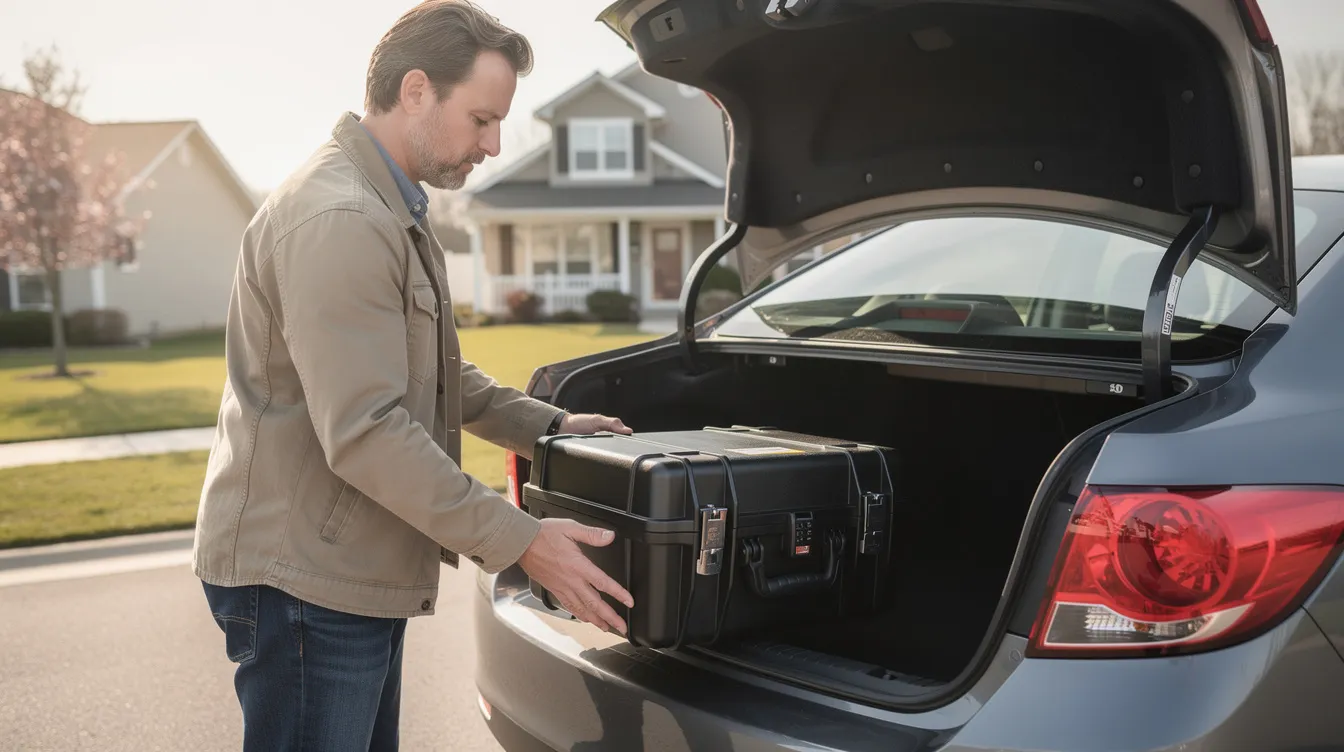
When transporting any long gun, use conservative habits. Transporting firearms generally requires them to be unloaded. Firearms must be kept in a case during transport. Ammunition should be stored separately from firearms. A closed container, enclosed case, or secured trunk is far safer than leaving a firearm loose in the passenger area.
Machine Guns and National Firearms Act (NFA) Weapons
A machine gun is any firearm that fires more than one round with a single trigger pull. Machine guns are illegal in Maryland without special licenses and strict federal compliance.
For civilians, possession of a machine gun in Maryland is generally unlawful unless the firearm is lawfully registered under the federal National Firearms Act and also complies with state registration and licensing requirements. Federal approval alone does not automatically solve every Maryland issue.
NFA items such as short-barreled rifles, short-barreled shotguns, silencers, and destructive devices require federal tax stamps and approvals. Crimes committed with machine guns or NFA weapons can carry enhanced penalties because Maryland uses these restrictions to deter gun violence.
Anyone interested in NFA firearms should speak with a Maryland firearms attorney and a properly licensed federal firearms dealer before spending money.
One-Handgun-Per-Month Rule and Designated Collector Status
Maryland limits most people to buying one handgun or certain regulated long guns in a 30-day period. The rule is designed to reduce trafficking, straw purchases, and bulk buying for illegal resale.
There are exceptions. Some multiple purchases can be handled through specific paperwork, and a Designated Collector status from the Maryland State Police can allow more than one regulated firearm purchase within 30 days.
At a high level, a person seeking collector status applies to MSP and provides documentation showing eligibility. This status affects purchase frequency only. It does not expand where a person may carry, and it does not override other laws.
Private transfers, gifts among family members, inheritance, and estate transfers may have special rules, but they still often require background checks, dealer involvement, or registration steps to remain legal.
Transporting Firearms in Maryland
Maryland has strict transportation rules because unlawful vehicle carry is one of the easiest ways to violate the law. Without a carry permit, a handgun generally may be transported only for limited lawful purposes and under strict conditions.
As a best practice:
-
The firearm should be unloaded.
-
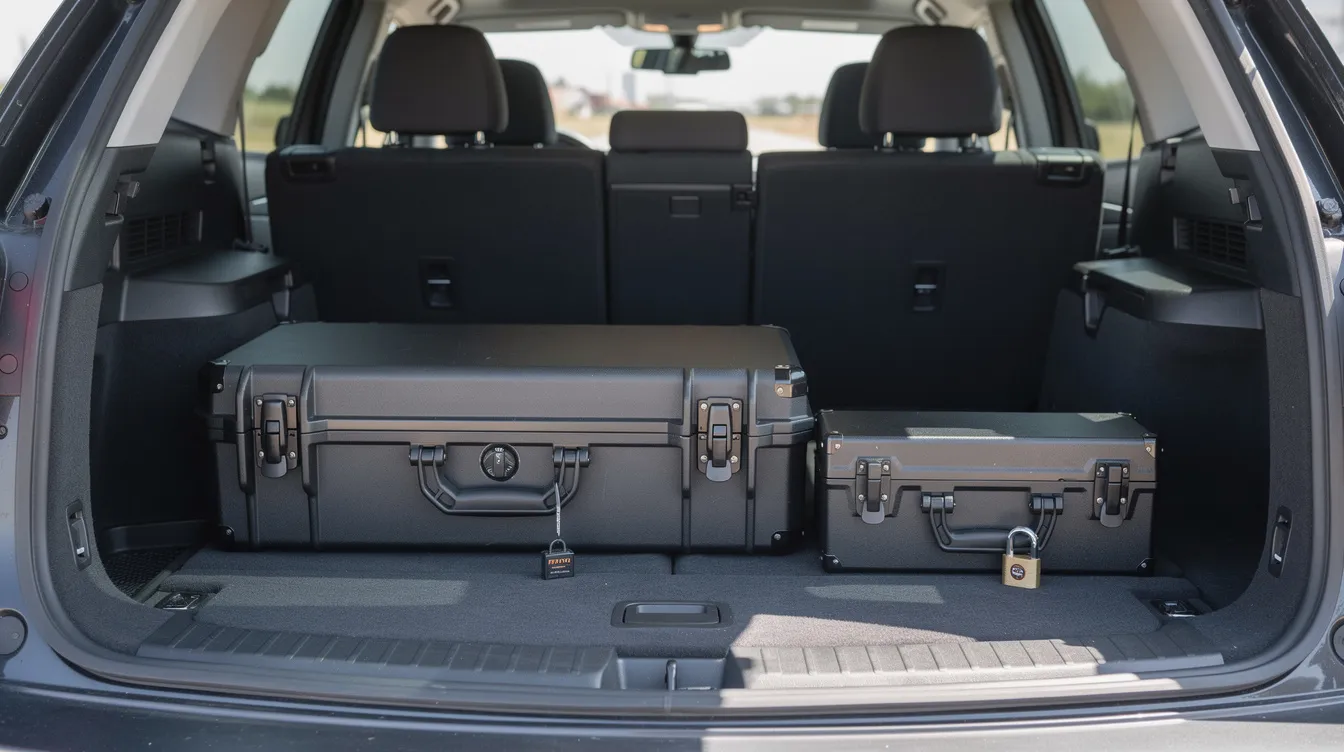
The firearm should be in an enclosed case or locked container.
-
Ammunition should be separate from firearms.
-
The firearm should be stored in the trunk or rear compartment when possible.
Exceptions to transport laws include going to hunting or shooting. Other common lawful destinations include a gun shop, gunsmith, residence, business, range, training class, or official firearms event. Travel should be direct, not a general errand run with a handgun in the car.
Permit holders may carry a loaded concealed handgun in a vehicle, but must still obey sensitive-location rules and private property restrictions.
Background Checks, Red Flag Laws, and Public Safety Measures
Maryland uses background checks for most firearm transfers, including dealer sales and many private transactions. These checks screen for criminal convictions, domestic violence orders, mental health disqualifiers, and other records that affect public safety.
Maryland also has an Extreme Risk Protective Order process, often called a red flag law. Family members, certain professionals, and law enforcement can petition a court to temporarily restrict a person’s access to firearms when the person is alleged to pose a danger.
Safe storage is also part of responsible ownership. Firearms must be stored unloaded and locked up. Children under 16 cannot access loaded firearms. If a child or prohibited person gains access because a gun was unsecured, the owner may face criminal penalties.
These regulations are not just paperwork. They are meant to reduce accidents, theft, suicide risk, and violence.
Penalties, Enforcement, and Working with Law Enforcement
Violating Maryland gun laws can mean jail, fines, a criminal record, and permanent loss of firearm rights. Prosecutors and law enforcement officers enforce rules on illegal possession, unlawful carry, straw purchasing, banned guns, and use of firearms in violent crime.
Carrying without a permit can lead to serious charges. Possessing a banned assault weapon, transferring a regulated firearm illegally, or making false statements on a purchase form can also trigger major penalties.
If stopped by police while transporting firearms, stay calm and respectful. Do not argue on the roadside. If questioned about possible violations, you may exercise your right to remain silent and request legal counsel.
Anyone with prior convictions, protective orders, immigration concerns, or mental health history should speak with an attorney before attempting to purchase, possess, or transport firearms or ammunition.
Recent Legal Developments: 2023 Law and Novotny v. Moore (2026)
Maryland’s gun laws changed quickly after the Supreme Court’s Bruen decision. The state removed the old “good and substantial reason” requirement from ordinary carry permit analysis, but then passed new restrictions on where permit holders may carry.
The 2023 Maryland law expanded sensitive locations, increased training expectations, and tightened carry rules. The practical result is that a permit holder may be approved to carry, yet still prohibited from carrying in many common locations.
Multiple lawsuits challenged the 2023 law. In Novotny v. Moore, the 2026 appellate decision upheld many location-based restrictions while striking down or modifying some limits, including parts of the rules for private property open to the public.
The law may continue to shift. Before carrying in a borderline area, check the current MSP website, current court orders, and the latest version of the statute.
Responsible Gun Ownership and Safety Practices
Understanding Maryland gun laws is part of being a responsible gun owner. So is training beyond the minimum legal requirement.
Regular practice helps with safe handling, marksmanship, malfunction clearing, and decision-making under stress. A permit does not replace judgment. Carrying a firearm in public creates legal and moral duties to avoid conflict where possible.
Good ownership habits include:
-
Using a safe, lockbox, or locked cabinet.
-
Keeping guns unloaded when not in lawful defensive use.
-
Storing ammunition separately when appropriate.
-
Keeping firearms away from children and prohibited persons.
-
Taking refresher classes even when not required.
A personal safety plan should include de-escalation, avoidance, and clear limits on when a firearm will not be displayed.
Conclusion and Next Steps
Maryland imposes extensive regulations on firearms ownership, assault weapons, detachable magazines, handgun purchases, and carry permits. The goal is to balance individual rights with public safety concerns, but the rules can be technical.
To stay compliant, know whether a firearm is regulated, confirm whether a model is banned, complete the required background check process, and understand where carry is prohibited. Review the Maryland Public Safety Article and Criminal Law Article directly when in doubt.
Your next steps are practical: take an approved safety course, verify the MSP banned firearms list before buying, use compliant magazines, transport firearms unloaded and cased, and ask a qualified attorney when the answer is not clear.
Staying informed is not optional. Court decisions and new laws will continue to shape Maryland gun laws beyond 2026.
Frequently Asked Questions about Maryland Gun Laws
Do I need a permit just to own a handgun in Maryland?
No. You do not need a wear and carry permit merely to own a handgun in your home. However, you generally need a handgun qualification license before buying most handguns, and you need a separate carry permit to carry, wear, or transport a handgun in public.
Can I carry a handgun in my car without a Maryland carry permit?
Generally, no. Carrying a loaded handgun in a vehicle without a valid Maryland wear and carry permit is generally illegal. Narrow exceptions allow unloaded, cased transportation directly to or from places such as your home, a range, a gun store, a gunsmith, hunting, or shooting.
Are out-of-state handgun permits recognized in Maryland?
No. Maryland does not recognize concealed carry permits from other states. Nonresidents who want to carry a handgun in Maryland generally must obtain a Maryland wear and carry permit. LEOSA rules for qualified law enforcement and retired officers are separate.
Can I buy a firearm in another state and bring it back to Maryland?
Federal law generally requires out-of-state handgun purchases to be transferred through a dealer in the buyer’s home state. Some long guns may be purchased out of state, but they must still comply with Maryland law. Do not bring banned assault weapons or non-compliant detachable magazines back into Maryland without legal guidance.
What should I do if I’m unsure whether a specific gun or magazine is legal in Maryland?
Check the Maryland State Police firearms resources, including the current banned firearms list. Then speak with a reputable Maryland dealer. If the firearm, magazine, license, or possession issue creates criminal exposure, consult a firearms attorney before purchase or transport.
Meta tags
title
Understanding Maryland Gun Laws: Essential Guidelines and Requirements
70/70
description
Navigate Maryland’s gun laws with clarity. Explore essential guidelines and requirements to ensure compliance and safety. Read the article for key insights.
156/156