South Carolina Gun Laws: 2026 Guide for Gun Owners and Visitors
South Carolina Gun Laws: 2026 Guide for Gun Owners and Visitors
South Carolina gun laws have shifted significantly in recent years, and staying current matters whether you live in the state, own property here, or plan to visit with firearms. This guide covers the legal landscape as of mid-2026, from permitless carry rules and purchase requirements to restricted locations, self-defense protections, and traveling across state lines. Everything you need to stay compliant is below.
Key Takeaways
-
South Carolina operates under Constitutional Carry laws allowing eligible adults 18 and older to carry handguns openly or concealed without a permit, effective since March 2024, while the state continues issuing concealed weapon permits for reciprocity and other benefits.
-
No permit is required to purchase firearms in South Carolina, and there is no state registration of firearms, though commercial purchases of firearms require a NICS background check through a licensed dealer.
-
Firearms are strictly banned in sensitive areas across South Carolina, including schools, courthouses, and many government buildings, with narrow exceptions and specific signage rules for private businesses.
-
The state has stand your ground and Castle Doctrine protections, and assault weapons are not separately regulated under current state law.
-
Individuals with felony convictions are barred from possessing firearms in South Carolina, and restoring those rights typically requires a pardon.
Overview of South Carolina Gun Laws
As of June 2026, South Carolina remains one of the more gun-friendly states in the country. The state’s legal framework prioritizes individual firearm rights, with preemption provisions that limit cities and counties from passing gun regulations stricter than what the state legislature has enacted.
Historically, south carolina required a concealed weapon permit for anyone wanting to carry a handgun hidden from view. That changed in 2024 with the passage of House Bill 3594, also known as the Second Amendment Preservation Act, which Governor McMaster signed on March 7, 2024. The law took effect immediately, establishing permitless carry for qualifying adults while preserving the existing CWP system.
South Carolina does not require registration of firearms. There is no state permit needed to purchase rifles, shotguns, or handguns, though federal law still requires background checks through the National Instant Criminal Background Check System (NICS) for sales by licensed dealers. The state law enforcement division, known as SLED, administers the CWP process, maintains firearm-related records, and coordinates with federal systems.
As of December 31, 2024, there were 517,709 active CWPs in South Carolina, with 62,523 new permits issued that year alone. These numbers reflect continued interest in the permit program even after permitless carry became law.
Who Can Own and Possess Firearms in South Carolina
Firearm ownership in South Carolina is broadly accessible to adults who meet eligibility requirements under both state law and federal law. The state does not impose extra licensing or registration hurdles beyond what the federal government requires.
Age Requirements
-
Rifles and shotguns: Must be 18 or older to purchase from any source.
-
Handguns from a federal firearms licensee (FFL): Must be 21 or older under federal rules.
-
Handguns via private sale: South Carolina does not prohibit sales to individuals 18 or older, though federal prohibitions still apply.
Prohibited Persons
South Carolina generally follows federal prohibited person categories. You cannot legally own or possess firearms if you fall into any of these groups:
-
Convicted of a felony or any crime punishable by more than one year of imprisonment (under § 16-23-500)
-
Convicted of certain domestic violence offenses (first degree, second degree, or aggravated), with prohibitions lasting from three years to life depending on severity
-
Subject to qualifying court protective orders that explicitly include firearm restrictions
-
Adjudicated mentally defective or involuntarily committed to a mental institution
-
An unlawful user of controlled substances
-
An illegal alien
-
Under indictment for a felony
Individuals with felony convictions are barred from possessing firearms in South Carolina. Restoration of firearm rights after a felony is limited and almost always requires a pardon through the South Carolina Department of Probation, Parole and Pardon Services. Pardons require completion of sentence, payment of fines, and typically a crime-free period of five years or more.
SLED plays a key role in processing mental health adjudications and other disqualifying records for submission to NICS. Private possession of firearms in the home is broadly protected for eligible individuals, but carrying outside the home is governed by more detailed rules covered in the sections below.
Buying and Selling Firearms in South Carolina
South Carolina draws a clear line between purchases from licensed dealers and private sales between residents. The rules differ, and understanding both is essential.
Purchases from Licensed Dealers
-
No state permit, license, or firearm registration is required.
-
Commercial purchases of firearms require a NICS background check, whether you buy from a gun store, sporting goods retailer, or any other federal firearms licensee.
-
There is no state-mandated waiting period. Once the background check clears, you can take possession of the firearm immediately.
-
Holding a valid permit (CWP) may help streamline the process at some dealers, though the background check is still conducted.
Private Sales
-
Intrastate private transfers between South Carolina residents are not subject to state-mandated background checks.
-
Both buyer and seller must still comply with state and federal law regarding prohibited persons. Selling a firearm to someone you know or have reason to believe is a prohibited person is illegal.
-
No paperwork is required by the state, but maintaining a record of the transaction is a smart practice.
Dealer Obligations
Licensed dealers must comply with federal record-keeping requirements, including maintaining a bound book of acquisitions and dispositions, cooperating with law enforcement during criminal investigations involving traced firearms, and reporting multiple handgun sales to ATF. Dealers handling NFA items such as machine guns, sawed-off shotguns, or short-barreled rifles must also register those items with SLED and follow additional state and federal record-keeping rules.
Carrying Firearms: Open Carry, Concealed Carry, and CWPs
Carrying laws in South Carolina changed dramatically in 2024. Here is where things stand now.
Permitless (Constitutional) Carry
Since March 7, 2024, South Carolina law authorizes adults age 18 and older who are not prohibited persons to carry a concealable weapon-meaning a handgun-either openly or concealed without a permit. Open carry of handguns is allowed as of August 18 (when earlier legislation first authorized it), and open carry of long guns has always been lawful in South Carolina.
No permit is required to carry a loaded handgun in a vehicle, whether openly on the seat, on your person, or stored in a closed glove compartment, closed container, or center console. The law does not impose a duty to inform a law enforcement officer that you are carrying a firearm during a routine encounter.
Concealed Weapon Permits (CWPs)
South Carolina is a shall issue concealed carry permit state, meaning SLED must issue a CWP to any applicant who meets the statutory criteria. The CWP program continues even under Constitutional Carry, and there are practical reasons to obtain one.
Benefits of a CWP:
-
Interstate reciprocity with states that recognize South Carolina permits
-
Potentially faster purchases at some dealers
-
Formal documentation of training and eligibility
CWP eligibility requirements include:
-
Minimum age of 21 (or 18 for military members)
-
South Carolina residency, or ownership of property in the state (concealed carry permits are issued to non-residents owning property in South Carolina)
-
Completion of an approved training course, including live-fire requirements
-
Fingerprinting and a background check through SLED
-
No disqualifying criminal history, mental health adjudications, or active protective orders
SLED is required to provide free statewide CWP training classes, with each county offering the course at least twice per month. Participants need to bring a handgun and 25 rounds of ammunition (or rent through the instructor).
Interactions with Law Enforcement
There is no legal duty to volunteer that you are carrying a firearm during a traffic stop or other encounter with a police officer. However, best practice is to remain calm, keep hands visible, and comply with any instructions from the law enforcement officer. If asked directly whether you are armed, answer truthfully. Carry identification and your CWP card (if you have one) whenever you are person carrying a firearm.
Gun-Free Zones and Location-Based Restrictions
Even under permitless carry, certain locations in South Carolina are completely off-limits to firearms regardless of permit status. Violating these restrictions can result in criminal charges.
Schools (K–12)
Carrying a firearm onto school property is unlawful in South Carolina. This ban covers any private or public school, including buildings, parking lots, and school-sponsored events. The restriction extends to secondary school property and applies equally to CWP holders and permitless carriers.
Limited exceptions exist. A firearm remains inside a locked motor vehicle in certain circumstances if properly secured, such as in a closed container secured by a key or combination lock, and the weapon remains inside the vehicle at all times. A parent or adult instructor participating in an approved program may also be exempt in narrow situations.
Government Buildings and Facilities
Firearms are prohibited in:
-
Courthouses and buildings used for judicial proceedings
-
Detention facilities and correctional institutions
-
A publicly owned building used for official government business meetings
-
Polling places on election days
-
State or political subdivision offices where carrying is expressly restricted
Any state or political subdivision thereof may restrict firearms in buildings under its legal control, provided appropriate signage is posted.
Colleges and Universities
Many colleges adopt their own policies restricting firearms on campus. This includes any post secondary institution and other post secondary institution campuses, as well as areas used for a college athletic event. A technical college may also impose its own restrictions. Check the specific institution’s policy before carrying on campus.
Churches and Places of Worship
An established religious sanctuary or other established religious sanctuary may restrict firearms. If a church shares property with a school, the school-zone firearm ban generally applies. Carrying in a place of worship requires express permission from the appropriate church official or church official who has authority over the premises. Without that permission, carrying in such locations is unlawful.
Private Property and Businesses
Private property owners, including businesses, can prohibit firearms by posting compliant signage. Signs prohibiting concealed weapons must be highly visible and meet specific size criteria under § 23-31-235. A business posting a sign prohibiting concealable weapons allowed on the premises effectively bars entry with a firearm. If you enter a property with such signage and refuse to leave when asked, you can face trespass charges or misdemeanor prosecution.
Restaurants and Bars
Under § 16-23-465, carrying a concealable weapon into a business that sells alcoholic beverages for on-premises consumption is a misdemeanor carrying a fine up to $2,000 and imprisonment up to two years. A permit holder found in violation may have their CWP revoked for five years. However, this penalty does not apply if the person does not consume alcoholic liquor while carrying. If you carry into a restaurant that serves alcohol, do not drink. And if the business has posted a sign banning firearms, do not enter with a weapon.
Other Restricted Locations
Other locations where carrying is restricted include:
-
A daycare facility
-
A medical clinic, doctor’s office, or other facility where medical services are provided
-
Any law enforcement agency building
-
An appropriate entity designated by the governing body of a jurisdiction

Self-Defense, Stand Your Ground, and Castle Doctrine
South Carolina provides strong legal protections for self-defense, but these protections come with limits and complexities that every gun owner should understand.
Castle Doctrine
South Carolina has a Castle Doctrine for deadly force. Under this doctrine, if an intruder unlawfully enters your home, occupied vehicle, or place of business, the law presumes you had a reasonable fear of imminent death or great bodily injury. You are not required to retreat before using force, including deadly force, in these situations.
Stand Your Ground
The Protection of Persons and Property Act supports stand your ground principles. No duty to retreat exists if attacked in a lawful place. If you are lawfully present in any location where you have the right to be, are not engaged in criminal activity, and reasonably believe you face imminent death or great bodily injury, you may use deadly force without first attempting to flee.
Defense of Others
The alter-ego clause allows defense of others using deadly force. If a third party faces the same imminent threat that would justify your own use of force, you may intervene with force-including lethal force-on their behalf. The legal standard is whether the person you are defending would have been justified in using that level of force themselves.
Critical Nuances
These laws are intensely fact-specific. A shooting that looks justified in one set of circumstances may result in criminal charges in another. Law enforcement and prosecutors will evaluate every detail: the nature of the threat, your actions before and during the incident, whether you were engaged in wrongful conduct, and whether the force used was proportionate.
Even if criminal charges are not filed, you may still face civil lawsuits from the injured party or their family. Every self-defense situation involves risk, and negligent manslaughter arising from reckless use of a firearm can result in prosecution regardless of initial intent.
The bottom line: know the law, exercise judgment, and seek qualified legal counsel immediately after any defensive use of a firearm.
Assault Weapons, Magazines, and Other Equipment Regulations
South Carolina does not currently have a state-level assault weapons ban. The state does not define a firearm commonly referred to as an “assault weapon” separately from other semi-automatic firearms, and there is no statewide limit on magazine capacity.
What Is Legal
-
Standard and high-capacity magazines for rifles, shotguns, and handguns
-
Semi-automatic rifles, including AR-15-style platforms and similar designs
-
Suppressors, short-barreled rifles, and other NFA items-provided all federal requirements (registration, tax stamps, approval from the appropriate federal agency empowered to regulate such weapon categories) are met
What Is Regulated or Restricted
-
Any machine gun, military firearm, or military weapon must comply with the National Firearms Act. Possession of an unregistered machine gun is illegal under both state and federal law.
-
A dangerous weapon classified under NFA rules requires registration with SLED and the united states department of the Treasury (ATF).
-
Certain armor-piercing and explosive ammunition involved in civilian sales is restricted by federal law. South Carolina does not add significant extra ammunition regulations.
Pending Legislation
Bill 3180, introduced in the 2025-2026 legislative session, would define assault weapons and high-capacity magazines under South Carolina law and potentially ban them. As of May 2026, the bill has been filed but not enacted. Gun owners should monitor this bill for any changes.
Law Enforcement, Criminal Offenses, and Penalties
State and local law enforcement agencies share responsibility for enforcing South Carolina’s firearm laws. SLED handles CWP processing and statewide firearms enforcement, while county sheriffs, city police departments, and a county court judge may also be involved depending on the jurisdiction.
Common Firearm-Related Offenses
|
Offense |
Classification |
Potential Penalty |
|---|---|---|
|
Unlawful carrying of a concealable weapon |
Misdemeanor |
Fine up to $1,000, up to 1 year jail |
|
Possession by prohibited person |
Felony |
Up to 5 years imprisonment |
|
Carrying into prohibited location (e.g., school) |
Misdemeanor/Felony |
Varies by location and circumstances |
|
Carrying into establishment serving alcohol (with consumption) |
Misdemeanor |
Fine up to $2,000, up to 2 years jail |
|
Use of a firearm during violent crime |
Felony enhancement |
Mandatory minimum sentences |
|
Using firearm under influence of alcohol or controlled substance |
Misdemeanor/Felony |
Testing provisions and enhanced penalties apply |
Enhancements and Seizure
Penalties increase significantly when a firearm is used during drug trafficking, robbery, or other designated offenses. A person authorized by the court may order firearms seized as evidence, and upon conviction, weapons may be forfeited. A law enforcement agency is typically responsible for storage or destruction according to statute.
Reporting Requirements
Gun owners must report lost or stolen firearms within 10 days to avoid criminal charges. Failing to report a lost or stolen firearm within this window can lead to separate legal consequences, especially if the firearm is later used in a crime.
Even technical or first-time violations can have lasting effects: loss of gun rights, difficulty passing future background checks, and a permanent criminal record. Do not assume that minor infractions will be overlooked.
Gun Violence, Safety Practices, and Prevention Efforts
South Carolina tracks gun violence through crime statistics compiled by SLED and public health data reported through the state’s Department of Health and Environmental Control. Gun homicides in the state have drawn attention from both lawmakers and community organizations in recent years, though this guide focuses on practical safety guidance rather than policy debate.
Community and Law Enforcement Efforts
State and local law enforcement agencies collaborate with community programs to reduce gun violence, focusing on illegal gun use, gang activity, and repeat offenders. Programs that target a person carrying firearms illegally and the sources of those firearms have expanded in several South Carolina metro areas.
Safe Storage and Training
-
Lock firearms when not in use. Use a gun safe, lock box, or trigger lock.
-
Store ammunition separately when appropriate, especially if children are present.
-
Consider advanced training beyond the free CWP classes. The national rifle association and other organizations offer courses in defensive shooting, situational awareness, and home defense.
-
SLED’s free training classes are a starting point, but they are not the end of your education. Certified instructors across the state offer courses for every skill level.
A Note on Statistics
South Carolina’s rate of gun homicides has remained above the national average in recent years. Responsible ownership-including secure storage, lawful carry, and awareness of the law-plays a direct role in reducing both accidents and criminal misuse.
Traveling with Firearms in and out of South Carolina
Transporting firearms across state lines or through airports introduces a different set of rules. What is perfectly legal in South Carolina may be a serious offense in another state.
Carrying in Vehicles Within South Carolina
South Carolina law permits carrying a firearm in a vehicle without a CWP. You may carry a handgun on your person, in a closed glove compartment, in a closed container, or secured in a center console. Long guns may be transported openly in a vehicle. The firearm remains inside the vehicle and under your control at all times when on restricted property such as a school parking lot.
Reciprocity
South Carolina has reciprocity with 16 states as of June 2016. As of June 3, 2016, South Carolina recognizes permits from 16 states. States with reciprocity include Florida, Texas, and Virginia, among others. SLED publishes an updated reciprocity list, but it changes periodically-always verify before traveling.
Key reciprocity details:
-
Non-resident permits are not recognized in South Carolina. Only resident permits from reciprocal states are honored in South Carolina.
-
A concealable weapon pursuant to a permit issued pursuant to another state’s laws must be a resident permit from a recognized state.
-
Carrying without a recognized CWP in South Carolina as a visitor means you must comply with South Carolina’s permitless carry age and eligibility requirements, or risk unlawful carrying charges.
Air Travel
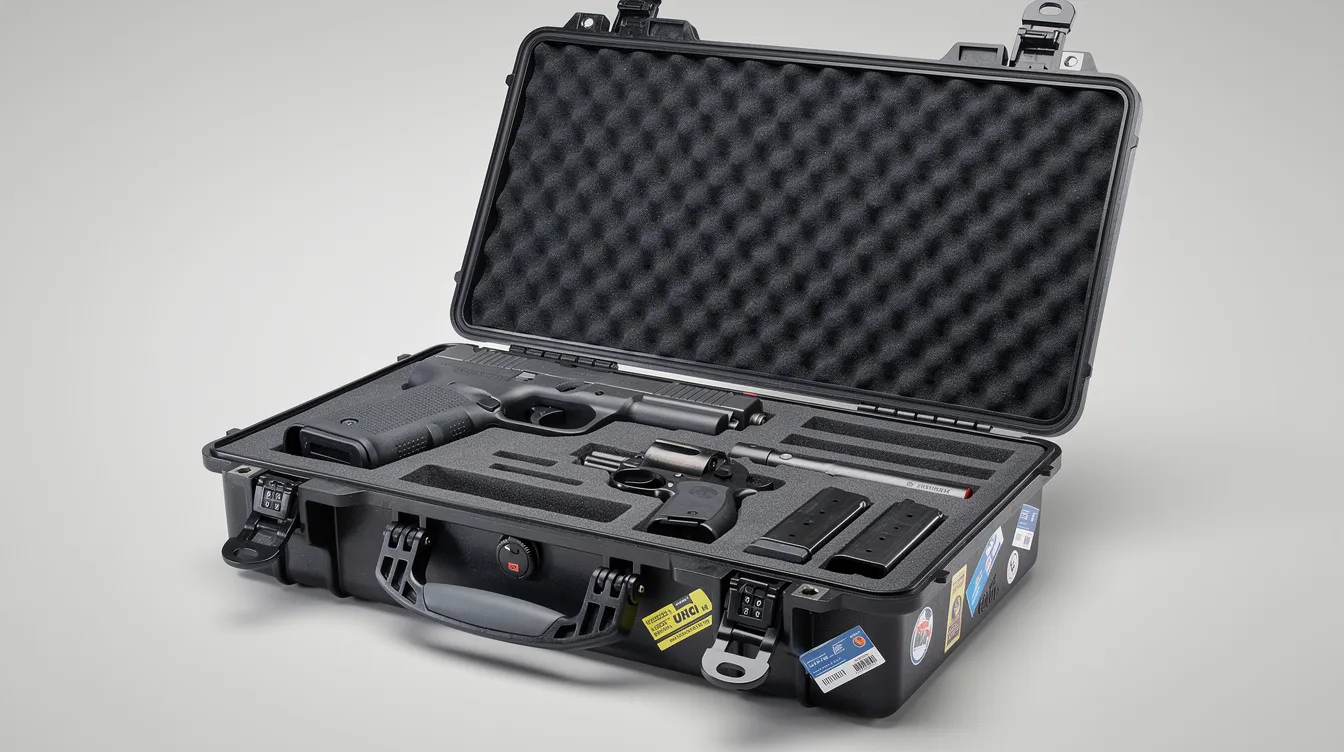
Traveling by air with firearms requires strict compliance with TSA and federal rules:
-
Firearm must be unloaded
-
Stored in a locked hard case
-
Placed in checked baggage only
-
Declared at the ticket counter during check-in
-
Check your airline’s specific policies, as some impose additional requirements
The Federal Safe Passage Provision
The Firearm Owners Protection Act (FOPA) provides a federal safe passage provision for travelers transporting firearms through states where possession might otherwise be illegal. However, local enforcement can vary, and travelers should not rely on FOPA to ignore another state’s gun laws. If your destination state bans assault weapons, limits magazine capacity, or requires permits you do not have, you may face arrest even during a brief stop.
Research destination-state laws before you travel. What South Carolina allows, another state may criminalize.
Local Control, Preemption, and Second Amendment Sanctuaries
South Carolina generally reserves gun lawmaking to the state legislature. State preemption means that local governments-cities, counties, and municipalities-have limited ability to regulate possession, carry, or sale of firearms beyond what state statutes permit. A political subdivision cannot create its own firearms licensing system or ban types of weapons that state law allows.
Some South Carolina counties and municipalities have adopted symbolic Second Amendment sanctuary resolutions expressing opposition to certain gun control measures at the state or federal government level, or by any federal government pursuant to executive action. These resolutions signal political positions but do not override state or federal law. A law enforcement agency in a sanctuary county is still obligated to enforce state statutes and any applicable federal agency regulations.
The practical takeaway: gun owners can generally expect uniform enforcement of state firearms law statewide, and should not assume that a sanctuary resolution provides any additional legal protection. The governing body of a city or county cannot waive state-level restrictions on your behalf.
Staying Compliant and Finding Up-to-Date Information
Gun laws change. New legislation, court decisions, and regulatory updates can alter what is legal or restricted in South Carolina. Verifying current rules before you buy, carry, or transport a firearm is not optional-it is part of responsible ownership.
Recommended Resources
-
SLED’s Constitutional Carry Guidance page for the latest on permitless carry and CWP information
-
The South Carolina Code of Laws for statutory language
-
NRA-ILA’s South Carolina gun law summary for a frequently updated overview
-
Local law enforcement agencies for jurisdiction-specific questions
For complex situations-self-defense incidents, criminal charges, or rights restoration after a conviction-consult a qualified South Carolina attorney. A person expressly authorized to practice law in the state can provide guidance tailored to your specific circumstances. Online summaries, including this article, are informational and not a substitute for legal counsel or direct communication with a law enforcement officer about a specific scenario.
Responsible gun ownership means more than knowing how to shoot. It means understanding the law, staying current on changes, cooperating with law enforcement, and giving reasonable notice of your intentions when required. That combination keeps you legal and keeps your community safer.
FAQ about South Carolina Gun Laws
Do I need a permit to carry a handgun in South Carolina in 2026?
As of 2026, most qualifying adults aged 18 and older may carry a concealed or openly carried handgun without a permit under South Carolina’s permitless carry law. You must not be a prohibited person (no felony convictions, qualifying domestic violence convictions, or other disqualifiers). The concealed weapon permit system still exists and is useful for those who want interstate reciprocity, formal training documentation, or who carry openly across state lines. Always confirm the most current law with SLED or the South Carolina Code, since carry laws can change through legislation or court rulings.
Are assault weapons or high-capacity magazines banned in South Carolina?
South Carolina does not currently have a state-level assault weapons ban or magazine capacity limit. Most common semi-automatic rifles and standard-capacity magazines remain legal. Any such weapon classified as a machine gun, short-barreled rifle, or suppressor is regulated under federal law through the NFA, which requires special paperwork and approval from the appropriate federal agency. Bill 3180, filed in the 2025-2026 session, proposes defining and potentially banning certain assault weapons and high-capacity magazines, but it has not been enacted. Travelers should check laws in destination states, where these items may be heavily regulated or prohibited.
Can I carry a gun in my car without a permit?
Yes. South Carolina allows lawful gun owners to carry firearms in vehicles without a CWP. You may carry a handgun on your person, in a closed glove compartment, in a closed container secured within the vehicle, or in a center console. However, rules change when you drive onto property owned by a public school district, enter school grounds, or park at other restricted locations. In those cases, the firearm should remain locked inside the vehicle in a closed container. Check the exact statutory language before relying on vehicle carry rules, because what counts as a “closed compartment” can matter during a law enforcement encounter.
Can I bring a handgun into a bar or restaurant that serves alcohol?
South Carolina generally allows lawful carriers to enter restaurants that serve alcohol, but you must not consume alcoholic liquor while carrying. Under § 16-23-465, carrying a concealable weapon into an establishment that serves alcohol and drinking while armed is a misdemeanor punishable by up to $2,000 in fines and two years in jail. If the establishment posts compliant “no concealable weapons allowed” signage, you cannot enter with a firearm at all. If asked to leave by staff, you must comply or face trespass charges. The safest approach: if you plan to drink, leave the firearm secured at home or in your locked motor vehicle.
How does South Carolina handle gun rights after a felony conviction?
Individuals convicted of felonies-especially a violent crime-are barred from possessing firearms under both South Carolina and federal law (§ 16-23-500). The primary path to restoring gun rights is obtaining a pardon through the South Carolina Department of Probation, Parole and Pardon Services, which requires completion of your sentence, payment of all fines and restitution, and typically a crime-free period of at least five years. A pardon is not guaranteed. Even with a state pardon, federal disqualifications may still apply. Armed forces veterans may have additional considerations. Anyone with a criminal record should consult a qualified South Carolina attorney before attempting to purchase, possess, or carry a firearm, as the consequences of unlawful possession are severe.
Meta tags
title
Essential Guide to South Carolina Gun Laws: What You Need to Know
65/70
description
Navigate South Carolina gun laws with confidence. This guide covers essential regulations and what you need to know. Read on for clarity and understanding.
155/156