Wyoming Gun Laws: Complete 2026 Guide
Wyoming Gun Laws: Complete 2026 Guide
Key Takeaways
-
Wyoming is a permitless carry state: most eligible adults may open carry and carry concealed without a wyoming permit, though age rules still matter and concealed carry permits remain useful.
-
Wyoming maintains permissive gun laws often ranking alongside states with few restrictions; Wyoming ranks #46 for gun laws in the U.S., and one reported gun law score dropped from 6.5 to 5.
-
Wyoming has a gun death rate of 23.4 per 100k residents, compared with the national average for gun deaths of 12.8 per 100k residents, and Wyoming has one of the highest rates of gun suicides in the country.
-
federal law still applies in Wyoming, including dealer background checks, felony prohibitions, domestic violence firearm restrictions, and rules for federal facilities.
-
HB0125 passed the legislature in 2024 but was vetoed by governor mark gordon on March 25, 2024, so its proposed repeal of many gun-free zones is not current law.
-
Always confirm current statutes, local sheriff’s office procedures, campus policies, and private property rules before carrying, buying, or transporting firearms.
Overview of Wyoming Gun Laws in 2026
Wyoming gun laws are among the most permissive in the United States. The state has permitless carry, no state registration requirement, no assault weapon ban, no mandatory state waiting period, and few hardware restrictions compared with states that regulate firearms more heavily.
That said, “permissive” does not mean “no rules.” wyoming state law still restricts guns in schools, courts, certain government buildings, bars, and other sensitive locations. federal law also creates separate prohibitions that can apply even when Wyoming statutes are silent.
Here are the basic terms you’ll see throughout this guide:
-
Open carry means carrying a firearm visibly.
-
concealed carry means carrying a concealed handgun or other concealed firearm so it is not readily visible.
-
background checks are required by federal law for sales by Federal Firearms Licensees, often called FFLs.
-
Prohibited person means someone who cannot legally possess firearms because of a conviction, court order, mental health adjudication, controlled substance issue, or another disqualifying condition.
-
Preemption means state law limits what a political subdivision, city, county, or other governmental entity may do when regulating firearms.
Wyoming has state preemption laws preventing local governments from enacting stricter firearm regulations. In other words, Wyoming does not broadly allow local towns to create their own gun laws; although some summaries claim “Wyoming allows local towns to create their own gun laws,” the better reading is that state preemption blocks many local rules restricting firearms. Local governments may still affect zoning, building codes, emergency rules, or other ordinances that do not directly regulate possession, transfer, or carry.
Policy groups often place Wyoming near the bottom for gun safety regulation. Critics describe Wyoming as having some of the weakest gun safety laws in the nation compared to states with strict policies, and some rankings put it among states with the weakest gun laws overall. Supporters, including many gun owners and groups such as the national rifle association, often see that same framework as a strong protection for self-defense and individual liberty.
Who Can and Cannot Possess Firearms in Wyoming
Wyoming law generally allows adults who are lawfully present and not disqualified to possess firearms. But both state law and federal law can make possession illegal for specific people.
Under Wyoming law, a felony is generally a crime punishable by death or imprisonment for more than one year. Gun possession is barred for felony convictions in Wyoming in key situations. The state treats a violent felony more seriously than some nonviolent felonies.
Under Wyo. Stat. § 6-8-102:
|
Person or status |
Wyoming consequence |
|---|---|
|
Convicted of or pleaded guilty to a violent felony without rights restored |
Felony offense for possessing or using a firearm; up to 3 years in prison and/or up to a $5,000 fine |
|
Certain people with nonviolent felonies without rights restored |
Misdemeanor; up to 6 months in jail and/or up to a $750 fine |
|
Person adjudicated mentally incompetent or committed to a mental institution |
May be prohibited under state or federal standards |
|
Certain substance-related disqualifications, including alcohol abuse or controlled substance commitments |
May affect eligibility for permits and possession |
federal law also prohibits possession by several categories of people, including many felons, fugitives, unlawful users of controlled substances, people subject to qualifying domestic violence protection orders, and people with a misdemeanor conviction for domestic violence.
This is important because Wyoming does not explicitly mirror every federal domestic violence rule in the same way. Still, federal law applies in Wyoming.
Wyoming also has a Firearms Freedom Act that attempts to shield some firearms, accessories, and ammunition made and kept entirely in Wyoming from federal regulation. However, that law does not erase federal prohibited-person rules. A person with a disqualifying felony, protection order, or federal restriction should not assume that an in-state-made firearm is exempt. This is a legal advice situation, not a “social media answer” situation.
Open Carry in Wyoming
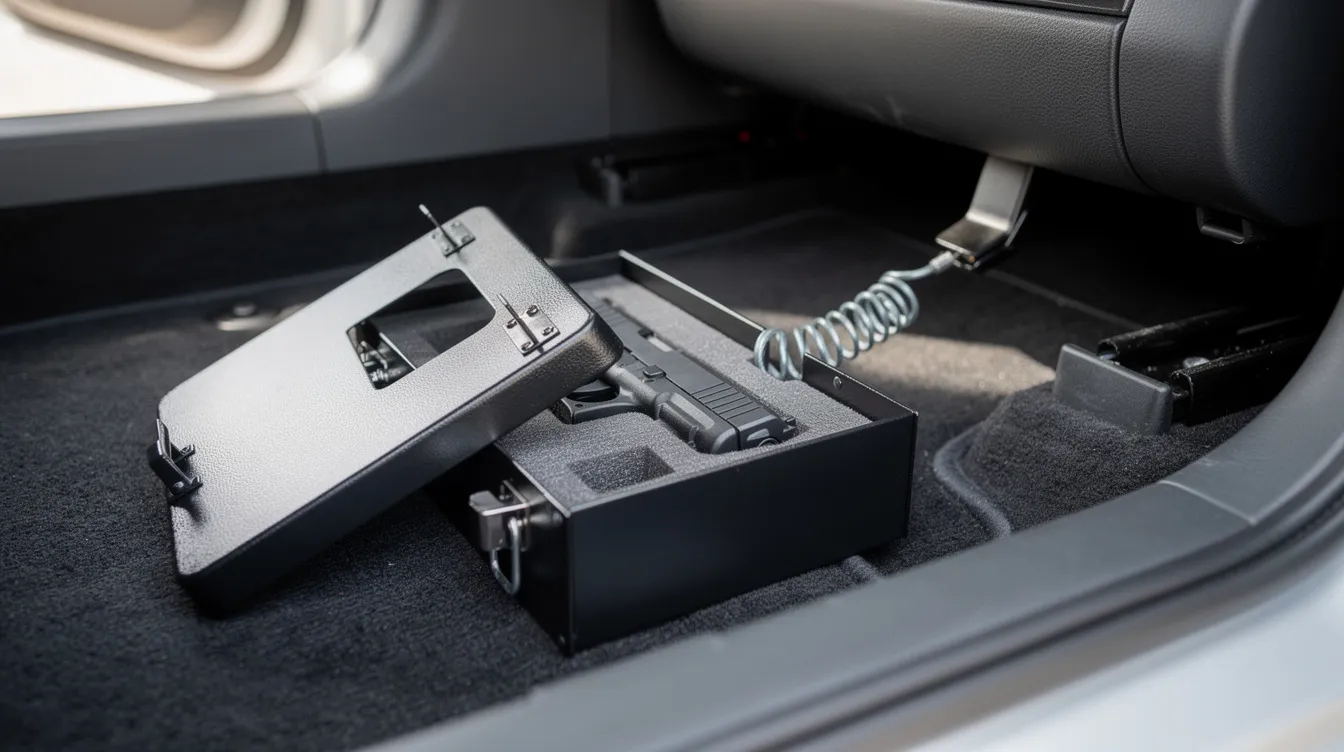
Open carry is legal for anyone at least 18 years old who is legally permitted to carry a firearm. In practical terms, most adults who are not prohibited under state or federal law may openly carry a handgun or long gun in Wyoming without a permit.
Open carry is generally allowed in places such as:
-
public streets and sidewalks
-
many parks and outdoor areas
-
most businesses that do not ban firearms
-
vehicles, because firearm transport in vehicles is allowed without a permit in Wyoming
-
many forms of public property unless a specific restriction applies
However, open carry is restricted or risky in places such as:
-
courtrooms and secured court areas
-
a detention facility, jail, prison, or correctional building
-
buildings used primarily for law enforcement operations
-
areas where federal law prohibits firearms
-
parts of a public school, public elementary school, elementary or secondary school, secondary school, or secondary school facility
-
certain government meetings or secured government spaces
-
places where possession could violate a posted rule or trespass law
A private property owner may prohibit firearms on private property. If a business posts a “no firearms” policy, or if an owner or manager gives notice, you should leave or secure the firearm elsewhere. Ignoring a private property rule can lead to trespass consequences even if state law would otherwise allow carry.
Responsible behavior also matters. A holstered sidearm is different from waving, displaying, or handling a gun in a way that causes alarm. Brandishing, threatening conduct, or acting as the initial aggressor can turn lawful carrying into a criminal case. Wyoming’s self-defense laws include Stand Your Ground principles and allow reasonable defensive force in appropriate situations, but those protections do not cover illegal activity or provoking a confrontation.
Concealed Carry and Permit Rules
Wyoming is a concealed carry and permitless carry state for most lawful gun owners. The state operates under a permitless carry system for eligible residents, and nonresidents who meet the legal requirements can generally carry concealed while in Wyoming.
Individuals aged 21 or older can carry a concealed handgun without a permit in Wyoming, assuming they are legally allowed to possess firearms. As of July 1, 2026, Wyoming’s HB0096 lowers certain concealed firearm permit age rules to 18, but federal purchase restrictions still matter. Wyoming’s minimum age to purchase a handgun is 21; for rifles and shotguns, it is 18.
A Wyoming Concealed Firearm Permit, often called a CFP, is optional but still useful. concealed carry permits in Wyoming are issued on a shall-issue basis but are optional. A permit holder may want a state permit because it can help with:
-
reciprocity when traveling
-
proving training and eligibility
-
carrying in limited places where a permit is treated differently
-
simplifying some dealer procedures where allowed
Applicants generally apply through the local sheriff’s office, pay an application fee, submit fingerprints, and show firearm familiarity or training. The permit issued by Wyoming is a concealed weapon permit for qualifying purposes, but readers should check the exact current statutory language for the latest age and eligibility rules. The University of Wyoming campus carry FAQ summarizes some 2026 changes.
Certain locations are prohibited for concealed firearm carry in Wyoming, such as schools and bars. In particular, restrictions may apply to:
-
K-12 schools and school-sponsored activities
-
courtrooms
-
law enforcement buildings
-
jails and detention facilities
-
a facility owned or leased for certain government purposes
-
a university facility or public college facility depending on campus policy
-
places with explosive or volatile materials, including volatile materials storage areas
-
an establishment licensed to dispense alcoholic liquor or sell alcoholic beverages, especially areas primarily devoted to alcoholic beverages
A person lawfully carrying should also watch for rules involving security service areas, screening checkpoints, written consent requirements, and any chief administrator policy for a facility.
For nonresidents, Wyoming generally recognizes permitless carry for eligible U.S. residents, but travel is different. A wyoming permit may not protect you in another state. Always check reciprocity before crossing state lines.
Guns in Schools, Colleges, and Other Sensitive Places
Wyoming does not allow guns in K-12 schools as a general rule. Firearms are generally prohibited in public school buildings, on school property, and at school-sponsored activities unless a specific exception applies.
Common exceptions may involve:
-
law enforcement
-
approved security service personnel
-
authorized school programs
-
staff approved under a school district policy
Under Wyo. Stat. § 21-3-132, a school district may adopt rules allowing certain employees to carry concealed if they have a valid permit and meet district requirements. A board of trustees can require training, storage rules, firearm handling policies, revocation procedures, and parent notification. Students do not get a general right to carry because a school employee policy exists.
Colleges and universities are more complicated. A public college or university facility may have its own rules for lecture halls, dorms, stadiums, administrative buildings, and events. There is no simple statewide rule saying every public college must allow concealed carry everywhere. Check the institution’s current policy before carrying.
HB0125 is worth mentioning because it caused confusion. The bill would have repealed many gun-free zones, changed rules for some government meetings, and strengthened preemption. It also addressed whether local rules could encompass firearms businesses and firearms businesses operations. The bill passed the legislature, but governor mark gordon vetoed it on March 25, 2024. Because of that veto, HB0125 is not current law. The bill history is available through LegiScan.
Under existing preemption, Wyoming limits a governmental entity, political subdivision, or committee thereof from restricting firearms in many ways, but that does not mean every public building is open to guns. Preemption also does not automatically invalidate every rule involving public property, employment, security screening, school safety, or facility management.
Background Checks, Waiting Periods, and Gun Purchases
Wyoming relies mainly on the federal background check system for dealer sales. Background checks are required for handgun purchases from Federal Firearms Licensees, and FFLs must run the National Instant Criminal Background Check System, commonly called NICS, before completing most firearm sales.
No permits or licenses are needed to purchase firearms from private sellers or licensed dealers under Wyoming state law, although federal age and background check rules still apply to licensed dealers.
Key purchase rules include:
|
Issue |
Wyoming rule as of June 2026 |
|---|---|
|
State firearm registration |
No state registration required |
|
Waiting period |
No mandatory state waiting period |
|
Universal background checks |
No universal state requirement |
|
Private sales |
Private sales usually do not require a state background check |
|
Dealer sales |
federal law requires NICS checks |
|
Assault weapons |
No state assault weapon ban |
|
High-capacity magazines |
No state magazine-capacity ban |
No state registration or waiting periods are required for firearm purchases in Wyoming. Wyoming does not require background checks for all gun sales. Wyoming has no background checks for all gun sales in the sense that private, person-to-person transfers are not covered by a universal check mandate. That is a major difference from states with stricter gun laws.
One required clarification: it is incorrect under current Wyoming law to say “Wyoming requires a waiting period before gun purchases.” Wyoming does not impose a mandatory waiting period at the state level, so once the federal check clears, a dealer sale may proceed subject to dealer policy.
Special firearm categories are also lightly regulated at the state level. The state does not have assault weapon bans and there are no mandatory waiting periods. Wyoming generally does not impose its own bans on suppressors, short-barreled rifles, or other NFA items beyond federal law.
Ghost guns need careful wording. Wyoming does not have a broad state ghost-gun ban, but federal rules may require serialization and background checks for certain firearm frames, receivers, kits, or dealer-handled items. So if you see the claim “Ghost gun parts must have serial numbers and background checks,” treat it as a federal-law issue in specific contexts, not as a broad Wyoming-only rule.
Domestic Violence, Protection Orders, and Firearms
Domestic violence cases are one area where federal law can matter as much as Wyoming law. Wyoming courts can include firearm restrictions in temporary and final protection orders, and a court order may make possession or purchase unlawful for the respondent.
Survivors and respondents should read the order carefully. A checked box, written condition, or specific firearm surrender language can change what is legal. A protection order violation can also lead to arrest and criminal penalties.
federal law separately prohibits firearm possession by people subject to qualifying final domestic violence protection orders and by people convicted of misdemeanor crimes of domestic violence. This can apply even if the Wyoming statute does not spell out every federal category in the same words.
Local law enforcement can enforce state-level orders and Wyoming criminal laws. Suspected federal violations may involve the ATF or the U.S. Attorney’s Office. The Wyoming Judicial Branch provides general resources on domestic violence protection orders.
If you are a survivor, work with an advocate or attorney to understand what your specific order says about guns. Legal restrictions are important, but safety planning is just as important.
Enforcement, Penalties, and Interaction with Law Enforcement
Gun laws in Wyoming are enforced by local police, sheriff’s deputies, state officers, prosecutors, and sometimes federal agencies. law enforcement may respond differently depending on the location, the person’s eligibility, and whether the conduct involves threats, alcohol, a school, or a prohibited person.
Typical enforcement responsibilities look like this:
-
Local and state officers enforce Wyoming gun crimes, trespass rules, protection orders, school restrictions, and disorderly conduct laws.
-
Federal agencies such as ATF handle federal firearm violations, trafficking, false statements to dealers, and federal prohibited-person cases.
-
Prosecutors decide whether to charge a misdemeanor, felony, or both state and federal offenses.
Key penalties include:
-
Possession after a violent felony can be a Wyoming felony with up to 3 years in prison and a fine of up to $5,000.
-
Certain nonviolent felonies can trigger misdemeanor firearm possession penalties of up to 6 months in jail and a fine of up to $750.
-
Violating a protection order can create separate criminal exposure.
-
False statements on permit applications may lead to prosecution.
Ignorance of the law is not a defense. Saying “I did not know” usually will not stop an arrest or charge.
If you believe you may have violated Wyoming gun laws, talk with an attorney before speaking extensively with law enforcement. Do not rely on informal advice from friends, forums, or social media.
Gun Violence Statistics and Policy Debates in Wyoming
Wyoming’s firearm policy debate is shaped by two facts at once: the state strongly protects gun rights, and the state has high rates of gun deaths.
According to USAFacts, Wyoming has a gun death rate of 23.4 per 100k residents. The national average for gun deaths is 12.8 per 100k residents. Recent reporting also shows that a large majority of Wyoming firearm deaths are suicides. Wyoming has one of the highest rates of gun suicides in the country, and public health researchers have ranked Wyoming near the top nationally for firearm suicide rates. You can compare state-level data through USAFacts firearm mortality data.
Gun safety advocates argue that stronger gun laws could reduce gun violence, domestic shootings, accidental injuries, and gun suicides. Common proposals include:
-
universal background checks
-
safe storage laws
-
extreme risk or red flag laws
-
stronger domestic violence surrender rules
-
waiting periods for handgun purchases
Gun-rights advocates make the opposite case. They argue that permitless carry, open carry, and limited state restrictions protect self-defense and rural life. Many also oppose expanding background checks, arguing that such rules burden lawful gun owners while doing little to stop criminals.
Regardless of policy views, safe storage, training, and legal awareness matter. Wyoming households can reduce risk by securing firearms from children, visitors, and anyone in crisis.
Frequently Asked Questions about Wyoming Gun Laws
Do I need a permit to carry a concealed handgun in Wyoming?
Most adults who are legally allowed to possess firearms may carry a concealed handgun in Wyoming without a state permit. Individuals aged 21 or older can generally carry concealed without a permit, and 2026 changes affect permit eligibility for younger adults.
A Wyoming Concealed Firearm Permit is still useful for reciprocity, travel, and proof of training. Before you carry concealed, verify current age rules, disqualifying conditions, and location restrictions.
Can I carry a gun in Wyoming state and federal parks?
In many Wyoming state parks, carry rules generally follow state law, meaning lawful open carry or concealed carry may be allowed. However, discharge rules, hunting rules, and posted building restrictions still apply.
In national parks, firearm possession often follows the law of the state where the park is located, but federal buildings, visitor centers, ranger stations, post offices, and secured areas may prohibit guns. Always check posted notices and federal regulations.
Are background checks required for private gun sales in Wyoming?
As of June 2026, Wyoming does not have universal background checks for most private, intrastate person-to-person firearm sales. Licensed dealers must run federal NICS checks, but private sellers are not generally required by Wyoming law to do so.
Even when not required, a private seller can voluntarily use an FFL or take reasonable steps to avoid selling to a prohibited person.
Can my employer or a business ban firearms on their property?
Yes. A private property owner or private employer can generally restrict firearms on private property. That can include open carry, concealed carry, or storing firearms inside a workplace.
If you violate a posted or communicated policy, you may be asked to leave, face trespass consequences, or face employment discipline.
How do Wyoming gun laws affect travelers from other states?
Travelers who can legally possess firearms often benefit from Wyoming’s permitless carry rules while inside Wyoming. But your home state, destination state, tribal land rules, and federal law may all be different.
When crossing state lines, check every jurisdiction on your route. Transport firearms unloaded and secured when needed, verify reciprocity, and remember that federal facilities may ban firearms even when Wyoming law would otherwise allow carry.
Conclusion
Wyoming gun laws give lawful gun owners broad freedom to buy, possess, transport, open carry, and carry concealed firearms. But the details still matter: prohibited-person rules, school restrictions, alcohol-related locations, private-property policies, and federal law can all change what is legal.
If you plan to carry, buy, sell, or travel with firearms in Wyoming, confirm the latest statute, check local and campus rules, and get legal help when the answer is not clear.
Meta tags
title
Understanding Wyoming Gun Laws: Key Facts and Changes Explained
63/70
description
Explore essential insights into Wyoming gun laws, including recent changes and key facts. Stay informed—read the article for clarity on your rights.
148/156