Washington D.C. Gun Laws: A Practical Guide for Gun Owners and Visitors
Washington D.C. Gun Laws: A Practical Guide for Gun Owners and Visitors
Washington D.C. maintains some of the strictest gun laws in the United States. Whether you’re a resident looking to register your first firearm or a visitor passing through the nation’s capital, understanding how these laws work isn’t optional-it’s the difference between lawful possession and a felony charge. This guide breaks down everything you need to know about washington d.c gun laws as of 2026, from registration and concealed carry to penalties and recent court decisions.
Key Takeaways
Washington D.C. operates under its own firearms code, separate from any state, and has historically imposed some of the most restrictive gun laws in the country. If you own firearms or plan to visit the district while armed, here’s what matters most right now.
-
Every firearm must be registered. All firearms in D.C.-with narrow exceptions for antiques-must be registered with the Metropolitan Police Department under the Firearms Control Regulations Act of 1975 as amended. D.C. does not honor any other state’s permits or registration schemes.
-
Concealed carry requires a D.C.-issued license. A concealed carry license is mandatory to carry a handgun in public. Open carry is generally illegal for civilians. Even with a license, dozens of sensitive locations throughout the district are completely off-limits.
-
Landmark court decisions reshaped the rules. The Supreme Court’s ruling in District of Columbia v. Heller (2008) struck down D.C.’s handgun ban, and New York State Rifle & Pistol Association v. Bruen (2022) introduced new standards for evaluating public carry restrictions. These decisions continue to influence how D.C. regulates firearms.
-
Penalties are severe. Violating D.C. gun laws can lead to five years imprisonment for a first offense of carrying without a license. Repeat offenders may face up to ten years in prison for gun violations. Possessing a firearm during a violent crime mandates a minimum five-year sentence without parole.
-
Consult a qualified attorney before bringing a gun into D.C. Laws change, enforcement policies shift, and the consequences of a mistake are life-altering. Verify current law and consider speaking with a D.C. firearms attorney before entering the district with any weapon.
Overview of Washington D.C. Gun Laws
Washington D.C. is a federal district-not a state-and it maintains its own comprehensive firearms code, primarily found in D.C. Code Title 7, Chapter 25. Historically, the district has imposed strict regulations on possession, registration, and carry that go well beyond what most other jurisdictions require.
The Firearms Control Regulations Act of 1975 enacted a near-total ban on handguns and required all guns to be kept unloaded and disassembled at all times. That framework stood for over three decades until the supreme court decided District of Columbia v. Heller, 554 U.S. 570 (2008), which struck down the handgun ban and affirmed that the second amendment protects an individual’s right to keep a functional firearm in the home for self-defense.
Today, D.C. allows handgun ownership and issues concealed carry licenses on a shall-issue basis, but the regulatory burden remains heavy. Gun owners must navigate:
-
Mandatory registration of every firearm with D.C. police
-
Background checks, fingerprinting, and approved training courses
-
Strict rules on where firearms may be carried-even with a license
-
Separate federal restrictions on areas like the U.S. Capitol complex and federal buildings
D.C.’s gun laws operate alongside federal firearms laws. Because the district is the seat of the federal government, many locations carry additional restrictions that don’t exist elsewhere in the country. This layered regulatory environment makes compliance more complex than in virtually any state.
Firearm Registration Requirements in the District of Columbia
Nearly all modern firearms possessed in D.C. must be individually registered with the metropolitan police department before they can be lawfully kept or carried. Unregistered possession is a criminal offense, and D.C. has strict penalties for unregistered firearms possession that can include jail time and substantial fines.
What Must Be Registered
Registration is required for both handguns and long guns, including rifles and shotguns. Each firearm receives its own registration certificate. Limited exceptions exist for certain antique or black-powder firearms that fall outside the statutory definition.
Certain firearms classified as assault weapons are banned in Washington D.C. and cannot be registered at all. Ghost guns-firearms without serial numbers-are similarly prohibited and cannot enter the registration system.
Individuals can register only one handgun every 30 days in D.C., and there is a 10-day waiting period for firearm possession after application approval.
The Registration Process
Here’s what the registration process looks like step by step:
|
Step |
Requirement |
|---|---|
|
1 |
Submit Form PD-219 to MPD’s Firearms Registration Section |
|
2 |
Provide a valid photo ID and proof of D.C. residency (if resident) |
|
3 |
Complete an MPD-approved firearms safety course (free online option available) |
|
4 |
Submit to fingerprinting and an NCIC/FBI background check |
|
5 |
Pay applicable fees ($13 application fee; $35 fingerprint/background check) |
|
6 |
Receive registration certificate after waiting period and approval |
Applicants must undergo a background check and fingerprinting as part of this process. A registration certificate is required to possess a firearm in D.C.-there are no exceptions for otherwise lawful gun owners from other states.
Age and Eligibility
Handgun registrants must be at least 21 years old. Long guns can be registered by individuals aged 18–21 under narrow conditions, typically requiring them to live in the same household as a qualified adult.
Certain categories of people are prohibited from registering or possessing firearms under D.C. and federal law:
-
Convicted felons
-
Individuals convicted of domestic violence misdemeanors
-
Persons adjudicated mentally incompetent or committed to a mental institution
-
Those subject to qualifying protective or restraining orders
-
Individuals subject to active extreme risk protection orders
Possession of unregistered ammunition is also prohibited in Washington D.C.-ammunition eligibility is tied to having a valid firearm registration.
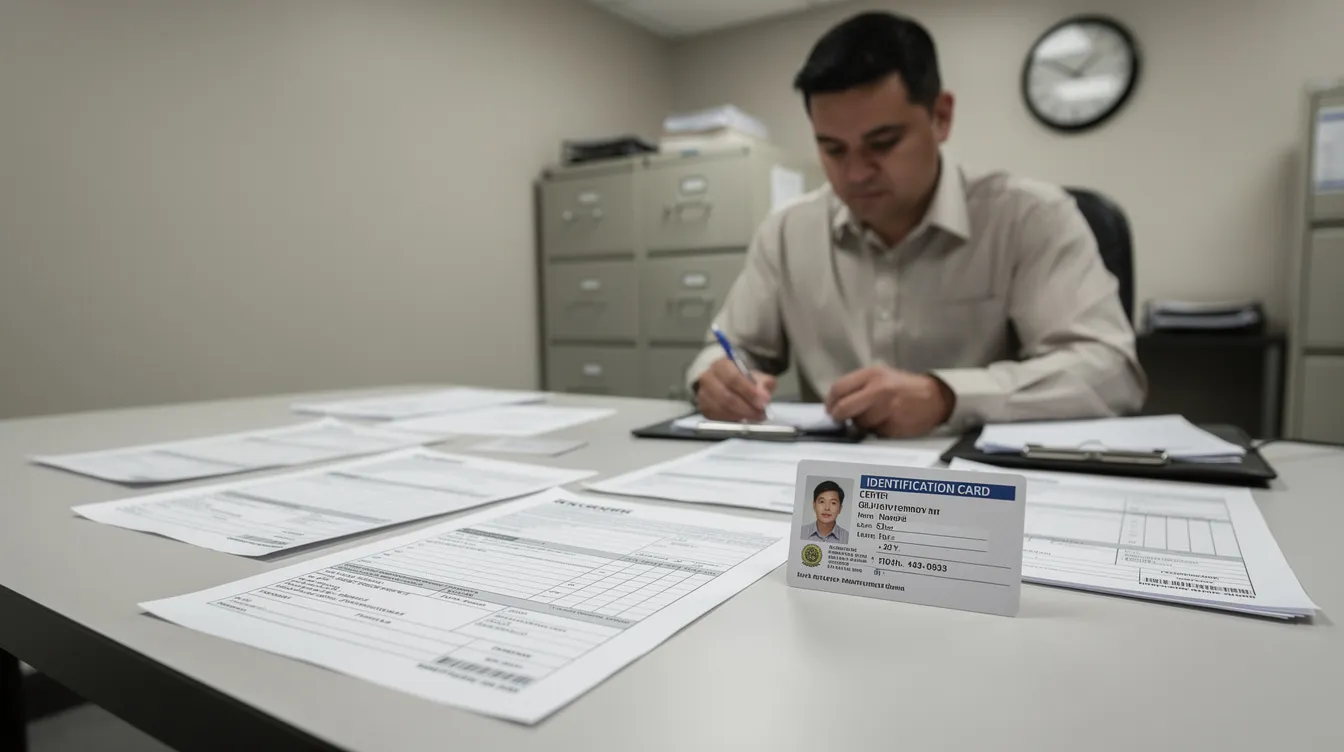
Who Can Lawfully Possess Firearms in Washington D.C.?
Possession in D.C. is tightly regulated and depends on two factors: your personal eligibility status and whether each specific firearm is properly registered under D.C. law.
Possession at Home
Once a firearm is registered, the owner may keep it loaded and operable in their home for self-defense. This applies to houses, apartments, and condominiums within the district. This right was the central holding of Heller and remains the legal ground for home possession.
However, firearms must be stored unloaded and secured in Washington D.C. when not in immediate use, particularly in households with minors. D.C.’s safe storage laws impose criminal liability-including misdemeanor fines and potential imprisonment-if a minor gains access to a firearm that wasn’t properly secured.
Outside the Home
D.C. does not recognize constitutional carry or permitless carry in any form. A person who holds a registered gun but no concealed carry license is limited to:
-
Their home or dwelling
-
Their own place of business
-
Transport under specific, narrow rules (unloaded, locked, direct route)
-
A few other limited circumstances defined by statute
Simply stepping outside your front door with a loaded, registered handgun-without a D.C. concealed carry license-is illegal and can result in felony charges.
Out-of-State Owners
Out-of-state gun owners cannot rely on their home-state permits or registration. To lawfully possess a functioning firearm in D.C. outside of tightly controlled federal transport scenarios, the firearm must be registered with MPD under D.C. law. No other jurisdictions’ paperwork satisfies D.C.’s requirements.
Prohibited locations-schools, government buildings, public transportation, secured federal facilities-often forbid possession entirely, even for otherwise lawful owners. This is a significant risk for visitors who may not realize how many restricted zones exist in a city that functions as both the nation’s capital and a dense urban center.
Concealed Carry Permits and Licenses in the District of Columbia
D.C. issues a concealed carry license for handguns through MPD on a shall-issue basis. This became the law after the D.C. Circuit Court decided Wrenn v. District of Columbia (2017), which struck down the previous “good reason” requirement that had forced applicants to demonstrate a special threat or need for self-defense. A license is required for concealed carry in D.C.-there is no alternative.
Who Can Apply
Both residents and non-residents may apply for a D.C. concealed carry permit. However, D.C. does not recognize concealed carry permits from other jurisdictions-not from Virginia, not from Maryland, not from any state in the country.
Eligibility Criteria
To obtain a concealed carry license, applicants must meet the following requirements:
-
Be at least 21 years old
-
Complete an MPD-approved firearms safety and concealed carry course, typically including live-fire qualification and range time
-
Pass background and fingerprint checks
-
Hold a valid registration certificate for the specific handgun intended for carry
-
Not be a prohibited person under D.C. or federal law
-
Not be legally blind
The application fee for a concealed carry pistol license is $75.
What the License Covers
The license is for concealed carry of handguns only. Long guns cannot be carried concealed and are generally barred from public carry, subject to narrow exceptions and evolving enforcement policies.
Conditions of the License
|
Condition |
Detail |
|---|---|
|
Duration |
Multi-year terms (typically 2 years), renewable |
|
Required documents while armed |
Must carry both the CCL and registration certificate |
|
Duty to inform |
Must inform law enforcement of armed status during any stop when requested |
|
Loss/theft notification |
Must notify MPD if firearm or license is lost or stolen |
|
Manner of carry |
Handgun must be holstered and fully concealed at all times |
Failure to comply with any of these conditions can result in license revocation and potential criminal charges.
Open Carry, Public Carry, and Sensitive Locations
Open carry is prohibited in Washington D.C. for private citizens. There is no exception for handguns, and public carry of long guns-rifles and shotguns-is heavily restricted. While enforcement policies have shifted in recent years (and long guns can be carried in public under new enforcement policy changes announced by the U.S. Attorney’s office), the underlying statutory prohibitions remain on the books.
Concealed Means Concealed
Even with a valid concealed carry license, handguns must remain fully concealed. Printing-where the outline of a firearm is visible through clothing-or intentional display can lead to legal issues. Civilians are not permitted to carry openly the way law enforcement or on-duty security professionals can.
Sensitive Locations
D.C. law designates numerous sensitive locations where firearms are prohibited, even for concealed carry license holders:
-
Federal and D.C. government buildings
-
The U.S. Capitol complex and surrounding grounds
-
Schools and childcare facilities
-
Public transportation (Metro trains, buses, and stations)
-
Polling places
-
Stadiums, arenas, and large event venues
-
Many locations during permitted demonstrations and public gatherings
Firearms are prohibited in sensitive locations such as schools and government buildings in D.C.-this applies regardless of license status.
D.C. has broader location bans for firearms due to its status as the federal capital. The sheer density of federal property, embassies, monuments, and government offices means that a person carrying legally on one block may be committing a felony on the next.
Enhanced Penalty Zones
D.C. maintains enhanced penalty zones within 1,000 feet of schools, playgrounds, youth centers, libraries, and certain public buildings. Gun-related offenses committed in these zones can carry heightened penalties-including increased statutory maximums-even though merely passing through while lawfully licensed is not necessarily a crime.
Because boundaries and sensitive-place designations can change-and may be affected by ongoing litigation after Bruen-gun owners should check MPD’s latest guidance before carrying anywhere in the city.

Penalties and Enforcement of D.C. Gun Laws
D.C. aggressively enforces firearms offenses. Gun law enforcement in the district frequently results in felony charges, and prosecutors regularly stack multiple counts in serious cases. The consequences extend far beyond fines-a conviction can mean years in prison and a permanent criminal record.
Carrying a Pistol Without a License (CPWL)
Carrying a pistol without a license is a felony under D.C. Code § 22-4504. Carrying a firearm without a license can result in heavy fines and up to five years imprisonment for a first offense. Repeat offenders may face up to ten years in prison for gun violations, with fines climbing to $12,500 or more.
Data from D.C.’s Criminal Code Reform Commission shows that even at sentencing, the 97.5th percentile sentence for a first CPWL offense was approximately three years-well short of the statutory maximum but still devastating in practice.
Unregistered Firearms and Ammunition
Possession of an unregistered firearm is typically charged as a misdemeanor for a first offense, carrying up to one year in jail and fines up to $2,500. A second offense, however, can escalate to up to five years imprisonment. All firearms must be registered with D.C. police-there is no grace period or exception for new arrivals.
High-capacity magazines holding more than 10 rounds are prohibited in D.C. under § 7-2506.01(b). However, it’s worth noting that the D.C. Court of Appeals struck down this ban in Benson v. United States (2026), finding it unconstitutional. Enforcement of magazine-capacity charges has effectively ceased, and pending cases may be dismissed. This is a rapidly evolving area-save any assumptions and verify current status before relying on this change.
Firearms Used in Violent Crime
Possessing a firearm during a violent crime mandates a minimum five-year sentence without the possibility of parole. This enhancement applies on top of whatever sentence the underlying crime carries, dramatically increasing a person’s total exposure.
Ghost Guns
Possession of ghost guns is illegal in Washington D.C. These unserialized, privately manufactured firearms-including 3D-printed weapons-cannot be registered and cannot be lawfully possessed. Charges for ghost gun possession are treated seriously and can serve as an aggravating factor in broader firearms prosecutions.
Special Rules for Out-of-State Gun Owners and Travelers
D.C. has no reciprocity with any state’s concealed carry license or registration system. This makes the district especially risky for travelers who assume their home-state paperwork is valid here. It isn’t.
Interstate Transport Under Federal Law
Federal law (18 U.S.C. § 926A) provides limited protection for individuals transporting firearms through jurisdictions where local law would otherwise prohibit possession. To qualify:
-
The firearm must be unloaded
-
Transporting firearms in a vehicle requires the firearm to be unloaded and locked away, separate from ammunition
-
The person must be traveling between two locations where they may lawfully possess the firearm
-
The travel must be continuous-no unnecessary stops
Stopping in D.C. for sightseeing, checking into a hotel, or staying overnight can destroy this federal safe-passage protection and expose the traveler to D.C.’s local laws.
Visitors Who Want to Stay
Visitors who intend to stay in Washington D.C. and keep a firearm must comply with MPD registration requirements. If they want to carry concealed, they must separately obtain a D.C. concealed carry license as a non-resident-a process that includes training, background checks, and fees identical to those for residents.
Common Enforcement Scenarios
Out-of-state gun owners should be aware of how enforcement typically plays out:
-
Traffic stops: Presenting an out-of-state permit to a D.C. officer does not protect you. You will likely be arrested.
-
Hotel stays: Keeping firearms purchased elsewhere in your hotel room without D.C. registration is illegal.
-
Sightseeing near federal monuments: Many popular tourist areas are either federal property or designated sensitive locations. Carrying near these locations-even with a valid out-of-state license-can result in arrest.
“I didn’t know the law” is not a defense in D.C. Travelers facing charges typically need a local attorney familiar with the interplay between D.C. Code, federal law, and recent second amendment litigation. Seek up-to-date legal advice before bringing any gun into the district.
Recent Legal Developments and Court Decisions Affecting D.C. Gun Laws
D.C. gun laws have been reshaped by major court decisions over the past two decades, and ongoing litigation may continue to alter registration, licensing, and sensitive-place rules. Understanding this legal history isn’t just academic-it directly affects what’s legal today and what may change tomorrow.
District of Columbia v. Heller (2008)
The supreme court held that the second amendment protects an individual right to keep and bear arms, striking down D.C.’s ban on operable handguns in the home. The court also invalidated the requirement that all firearms be kept unloaded and disassembled. Heller is the reason residents of the district can today possess a loaded handgun at home for self-defense.
Wrenn v. District of Columbia (2017)
The D.C. Circuit struck down the district’s “good reason” requirement for concealed carry permits. Before Wrenn, applicants had to demonstrate a specific, articulable threat to their safety-a standard that effectively denied licenses to most applicants. The court decided this was unconstitutional, and D.C. was forced to adopt a shall-issue framework.
New York State Rifle & Pistol Ass’n v. Bruen (2022)
Bruen introduced the “history and tradition” test: any law restricting public carry must be consistent with the historical tradition of firearm regulation in America. In response, D.C. has adjusted some rules-particularly around sensitive places and training standards-while other restrictions, such as certain long-gun carry prohibitions, face future challenges on these grounds.
Benson v. United States (2026)
In one of the most significant recent developments, the D.C. Court of Appeals struck down the district’s ban on magazines holding more than 10 rounds, finding it unconstitutional. This case has immediate implications-charges based on that statute are being dismissed, and enforcement has ceased. The weight of this decision may extend to other ammunition-related restrictions in the coming months.
Shifting Enforcement Practices
Prosecutors and policymakers in D.C. have recently adjusted enforcement practices in response to constitutional concerns. For example, the U.S. Attorney’s office announced in mid-2025 that it would stop pursuing felony charges for carrying registered rifles or shotguns in some circumstances. But the statutes themselves remain unchanged, meaning a future policy shift could reverse this approach without any new legislation being enacted.
Practical Compliance Tips for Gun Owners in Washington D.C.
This section is intended as a concise checklist to help lawful gun owners avoid common mistakes and protect themselves from criminal exposure in the district.
Before You Buy or Transport
-
Complete MPD’s free online firearms safety course before purchasing or transporting any firearm into D.C.
-
Read MPD’s latest firearms registration and concealed carry instructions on their official page
-
Confirm that the firearm you intend to register is not on D.C.’s prohibited weapons list
While Carrying
-
Keep copies of your firearm registration certificate and concealed carry license on your person at all times when armed
-
Store scanned copies securely (cloud storage, encrypted phone) in case of loss or theft
-
Carry your handgun in a holster, fully concealed, with no printing or visibility
Route Planning
-
Map out sensitive locations-schools, federal buildings, Metro stations, stadiums, protest areas-along your normal routes
-
Avoid carrying in gray-area zones where rules may be evolving or heavily enforced
-
Remember that D.C.’s dense concentration of federal property means restricted zones can appear on almost any block
Staying Current
-
Review MPD updates and the washington post or other local news outlets for changes in D.C. firearm legislation
-
Monitor recent court decisions-especially in the D.C. Circuit and D.C. Court of Appeals-that may alter what’s legal
-
Consider a periodic check-in with a D.C. firearms attorney, particularly if you carry regularly in the district
Gun laws in D.C. shift more frequently than in most other jurisdictions. What was illegal last march may be legal today, and what’s currently tolerated by prosecutors may become aggressively enforced next august. Staying informed isn’t a suggestion-it’s a duty if you choose to exercise your rights in this jurisdiction.

Frequently Asked Questions about Washington D.C. Gun Laws
Does Washington D.C. recognize my concealed carry permit from another state?
No. D.C. does not recognize any out-of-state concealed carry permit or concealed carry license, including permits from neighboring Maryland, Virginia, or any other jurisdiction in the country. Only a D.C.-issued license allows concealed carry within the district. Carrying a handgun in D.C. using only an out-of-state permit can lead to arrest and prosecution for carrying a pistol without a license-a serious felony that can result in up to five years in prison.
Can I keep a gun in my D.C. hotel room while visiting as a tourist?
To lawfully possess a functional firearm in a D.C. hotel room, the gun generally must be registered with MPD and the owner must be eligible under D.C. law. Simply having legal ownership in your home state does not satisfy D.C.’s registration requirements. If you haven’t completed D.C. registration, avoid bringing firearms into the city for overnight stays. Consider secure storage options outside D.C. or travel without firearms when visiting the district as a tourist.
Is it legal to transport my firearm through D.C. if I am just passing by on the highway?
Under federal law (18 U.S.C. § 926A), individuals may transport unloaded firearms locked in a container, with ammunition stored separately, between two places where they may lawfully possess them. This protection is narrow and applies only when passing through without unnecessary stops. Stopping in D.C. for sightseeing, checking into a hotel, or otherwise interrupting continuous travel can undermine this federal safe-passage protection and expose you to D.C.’s local gun laws-including potential felony charges.
Are “ghost guns” or 3D-printed firearms allowed in Washington D.C.?
D.C. bans ghost guns-firearms without serial numbers or made from unfinished receivers-completely. These weapons cannot be registered or lawfully possessed in the district of columbia. Possession, sale, or manufacture of a ghost gun in D.C. can result in separate felony charges, and prosecutors often treat ghost gun cases as an aggravating factor in broader firearms investigations.
Where can I find the most current information on D.C. gun laws?
The best starting point is the metropolitan police department’s official website, specifically the Firearms Registration and Concealed Carry sections, where you’ll find up-to-date forms, training standards, and policy notices. You should also review the current D.C. Code provisions on firearms (Title 7, Chapter 25). When facing a specific situation or if you’re unsure about any aspect of compliance, contact a qualified D.C. firearms attorney for tailored legal advice. Court decisions and enforcement policies can change rapidly, and relying on outdated information carries real legal risk.
Meta tags
title
Understanding Washington D.C. Gun Laws: What You Need to Know
61/70
description
Explore the essential aspects of Washington D.C. gun laws, their implications, and what you need to know to navigate them effectively. Read the article now.
156/156