Tennessee Gun Laws: Permitless Carry, Restricted Areas, and Legal Responsibilities
Tennessee Gun Laws: Permitless Carry, Restricted Areas, and Legal Responsibilities
Tennessee has become one of the most permissive states in the country for handgun carry, but that freedom comes with layers of rules that can trip up even experienced gun owners. Whether you are a lifelong Tennessean, a new resident, or just passing through, this guide breaks down what you actually need to know about tennessee gun laws in 2025-from permitless carry and background checks to restricted locations, vehicle transport, and self-defense rules.
Key Takeaways
-
Since July 1, 2021, most adults 21 and older can carry handguns without a permit in Tennessee, openly or concealed, but numerous restrictions and criminal penalties still apply to specific locations, behaviors, and prohibited persons.
-
Background checks are still required for all commercial firearm sales from licensed dealers, and people barred from owning guns-such as many felons and those with domestic violence convictions-cannot legally possess or carry firearms under state or federal law.
-
Tennessee law strictly limits handgun carry on school property, in courthouses, civic centers, federal buildings, and properly posted private businesses, with violations ranging from misdemeanors to felonies.
-
Lawful vehicle carry rules are broader than on-foot carry, but problems frequently arise when drivers exit their vehicles armed and enter restricted locations.
-
Understanding deadly force and self-defense rules is essential to avoid serious criminal charges related to gun violence, even when someone believes they acted lawfully.

Overview of Tennessee Gun Laws
Tennessee has a long tradition of protecting a law abiding citizen’s rights to keep and bear arms. The state’s approach to gun laws has shifted significantly in recent years, moving toward fewer barriers to carry while keeping targeted restrictions for certain people and places. At the same time, debates about gun violence, gun deaths, and the state’s gun death rate have intensified, especially after high-profile tragedies that drew national attention.
Article I, Section 26 of the Tennessee Constitution protects the right to bear arms for common defense, but it also grants the legislature authority to regulate the wearing of weapons with a view to prevent crime. This balance-broad rights, with specific guardrails-shapes every aspect of tennessee law on firearms.
The most significant recent change took effect on July 1, 2021, when the permitless carry law (HB 2671) went into effect. This law allows eligible adults to carry handguns in most public places without obtaining a handgun carry permit. But it did not eliminate background check requirements, prohibited-person restrictions, or location-based bans.
It is important to understand that Tennesseans must follow both state law and federal gun laws simultaneously. Federal rules-like those banning firearm possession by certain convicted felons or users of a controlled substance-apply on top of state statutes. Later sections will cover handgun carry, background checks, restricted locations, vehicle carry, deadly force, and potential criminal penalties in detail.
Who Can Legally Own and Possess Firearms in Tennessee?
Even with Tennessee’s relatively permissive approach, not everyone may legally own or possess firearms. State and federal prohibitions create clear lines, and crossing those lines carries harsh penalties.
Under Tennessee Code Annotated § 39-17-1307, the following categories of people are prohibited from firearm possession:
-
Persons convicted of a felony crime of violence, a felony involving a deadly weapon, or a felony drug offense
-
Individuals adjudicated mentally defective or involuntarily committed to a mental institution
-
Persons subject to qualifying court orders of protection
-
Those with certain stalking convictions
-
People with specific DUI history (two or more in the past ten years, or one in the past five years)
-
Certain juvenile offenders under age 25 who were adjudicated delinquent for serious offenses on or after July 1, 2024
Federal law separately bars possession by anyone convicted of certain domestic violence misdemeanors, unlawful users of a controlled substance, persons under certain restraining orders, and others under 18 U.S.C. § 922(g). These federal prohibitions still apply in Tennessee regardless of state-level rules.
Restoring gun rights after a felony or domestic violence conviction typically requires a formal process-such as expungement, pardon, or civil rights restoration under Title 40, Chapter 29 of the Tennessee code ann. This process is complex. Unless a restoration order explicitly removes the firearms prohibition, possession remains illegal. Legal help is strongly recommended for anyone pursuing this path.
Keep in mind: merely being eligible to own a firearm does not automatically mean a person may lawfully carry it everywhere. Location-specific restrictions, covered below, add another layer.
Permitless Carry and Handgun Carry Rules in Tennessee
As of July 1, 2021, the permitless carry law took effect in Tennessee. Under Tennessee Code Ann. § 39-17-1307(g), many adults may carry a handgun openly or concealed without a carry permit. No training requirement exists under the permitless carry law.
Here is who qualifies:
-
Residents must be at least 18 years old to carry handguns (the original age threshold of 21 was lowered after the Beeler v. Long decision by a three judge panel in the 6th Circuit in 2024, which struck down the age restriction on constitutional grounds)
-
The person must lawfully possess the handgun
-
The person must not be prohibited under state or federal law
-
The person must be in a place where they are lawfully present
-
Individuals must meet specific legal criteria to carry without a permit, including not having disqualifying convictions, mental health adjudications, or protective orders
Permitless carry applies only to handguns, not long guns such as rifles or shotguns. People otherwise prohibited from possessing firearms do not gain any new rights under this law and can still face serious charges.
Permits are still issued to residents 18 years or older. Tennessee no longer requires a permit for handgun carry, but there are good reasons to obtain one.
Enhanced vs. Concealed Handgun Carry Permit
|
Feature |
Enhanced Handgun Carry Permit |
Concealed Carry Only Permit |
|---|---|---|
|
Carry type |
Open and concealed |
Concealed only |
|
Training |
Classroom + live fire |
Classroom (less rigorous) |
|
Fee |
~$100 |
~$65 |
|
Validity |
8 years |
8 years |
|
Reciprocity |
Recognized by 30+ states |
Fewer states |
|
Location access |
Broader (some parks, trails, etc.) |
More limited |
Handgun permits are valid for eight years if renewed properly. The enhanced handgun carry permit is the stronger option for anyone planning to travel to other states, as it carries wider reciprocity. It requires completion of a state-approved handgun safety course with live-fire qualification, fingerprinting, and a photo ID.
Tennessee recognizes valid out-of-state handgun permits. Nonresidents with a license issued by their home state may carry handguns in Tennessee so long as they follow Tennessee’s location and conduct rules and keep the permit on their person.
Handgun Carry in Public Places
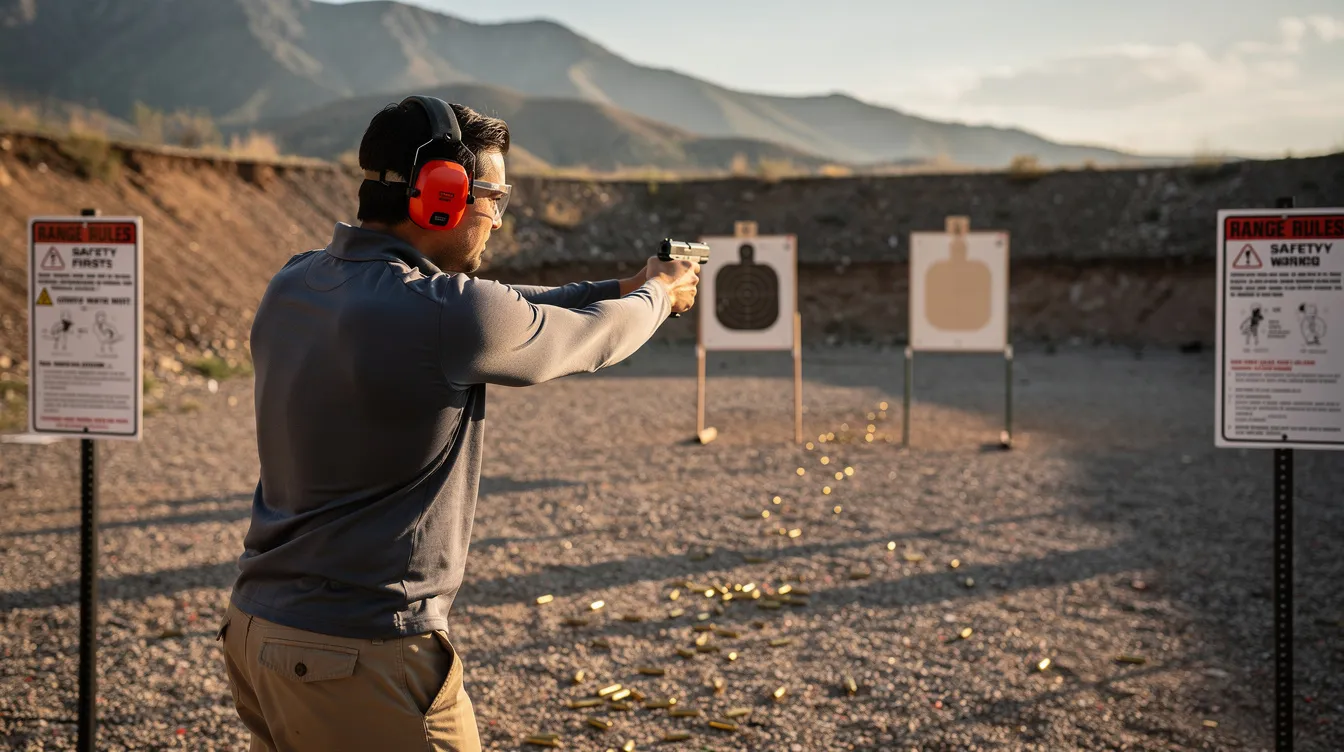
Tennessee handgun carry laws focus heavily on where a person is located and how they behave. Under permitless carry, eligible adults may generally carry a handgun for personal defense on most public streets, sidewalks, and parks, subject to specific statutory exceptions and local park rules. The right to carry a handgun in Tennessee is broad, but not absolute.
Reckless display or brandishing of a handgun can lead to separate charges. Aggravated assault, reckless endangerment, or threatening behavior charges can result even if the person has a carry permit or is otherwise allowed to carry. Pointing a weapon at an innocent bystander, even accidentally, may trigger serious legal consequences.
Alcohol and drugs heavily affect handgun carry legality. Tennessee law makes it a criminal offense to possess a firearm while under the influence of alcohol or a controlled substance under § 39-17-1321. Mixing handgun carry with bar or nightclub visits creates substantial legal risk-especially if the establishment is not posted but the carrier is intoxicated.
Some cities and counties may attempt to regulate handgun carry in specific local facilities, but Tennessee has strong state preemption under § 39-17-1314. Local governments generally cannot enact rules that conflict with state gun laws. However, they may control carry on their own private property or within facilities they operate, similar to how traffic laws operate at the local level-within limits set by the state.
Where Carrying a Gun Is Prohibited in Tennessee
Tennessee law strictly limits carry in certain locations, regardless of whether a person has a permit or is carrying under the permitless carry law. Carrying a firearm is prohibited in specified locations in Tennessee, and violating these restrictions can result in arrest, charges, and confiscation of the weapon.
Common prohibited locations include:
-
K-12 schools and school buses: Firearms are prohibited in K-12 schools and public colleges in Tennessee. Carrying on school property-including buildings, athletic fields, recreation areas, and grounds-is a Class E felony under T.C.A. § 39-17-1309. Schools must post signs at entrances warning that violations are felonies punishable by up to six years in prison and fines up to $3,000.
-
Courthouses and judicial proceedings: Weapons are prohibited inside any building where a judicial proceeding is in progress, regardless of permit status, under § 39-17-1306.
-
Federal buildings and secure areas of airports: Federal law controls these zones.
-
Civic centers and colleges: Carrying handguns is prohibited in civic centers and colleges, subject to posted rules and institutional policies.
-
Posted college and university campuses: Higher education institutions may adopt carry policies; property is subject to posted rules and campus authority.
Some government offices and facilities have broad bans on firearms, while others may allow limited carry for a permit holder with an enhanced permit. Always check posted signage and local policies before entering.
Certain public meetings or events-particularly those held in buildings with security screening-may have additional restrictions that apply even to permit holders. Violating location-based restrictions can result in penalties ranging from a Class A misdemeanor to a felony, depending on the location and circumstances.
Private Property and Business Firearm Bans
Tennessee allows private property owners and businesses to control whether firearms are allowed on their premises. Private businesses can prohibit firearms by posting signage that meets statutory requirements.
Under Tennessee Code Ann. § 39-17-1359, property owners may post signs that ban firearms or handgun carry. The signs must meet general size, visibility, and wording requirements specified in the statute. If a business has properly posted signage, carrying a firearm inside can be a criminal offense-even for a permit holder or someone carrying under the permitless carry law.
This commonly affects:
-
Bars and restaurants that serve alcohol
-
Concert venues and sports arenas
-
Workplaces and office buildings
-
Apartment complexes
-
Any sport shooting range, retail store, or other business that chooses to restrict carry
Each property owner may adopt different rules. Watch for posted signs at entrances. If you are unsure whether a business allows firearms, ask management before entering armed. Misunderstanding or overlooking signage is one of the most frequent causes of weapons charges in Tennessee.
Firearms in Vehicles and Tennessee Travel Rules
Tennessee law is comparatively generous about having firearms in vehicles, but problems often arise during traffic stops or when a driver leaves the vehicle armed.
Under § 39-17-1313, a person who may lawfully possess a firearm is generally allowed to carry or transport it in a private vehicle or boat, whether loaded or unloaded, and whether or not they have a handgun permit. The key requirements:
-
The vehicle must be parked lawfully
-
The gun or ammunition must be kept out of ordinary observation if in the vehicle
-
If the owner is not present, the firearm must be locked in a trunk, glove box, or other container
A gun stored out of sight in a locked or unlocked vehicle on private property-such as a parking lot-is usually lawful. Employers may have separate policies about guns in employee vehicles, but those policies operate outside the scope of the criminal statute.
Conflicts often occur when someone exits a vehicle with a handgun and walks into a prohibited location such as a school, courthouse, or posted business. At that point, otherwise lawful vehicle carry becomes a crime.
Best practices for traffic stops with a firearm in the vehicle:
-
Keep hands visible on the steering wheel
-
Calmly inform the officer you have a firearm in the vehicle and its location
-
If you have a handgun carry permit, present it with your driver’s license
-
Follow all officer instructions without argument
-
Address any legal disputes later through an attorney or the courts

Transporting Firearms Across State Lines
Interstate travel with firearms involves both Tennessee and other states’ gun laws, plus federal rules. Travelers must research each jurisdiction they will pass through.
Some neighboring states have different rules on permitless carry, magazine restrictions, or vehicle transport. A handgun carried legally in Tennessee may not be lawful in another state. Enhanced carry permits generally provide broader reciprocity, which is one of the main reasons to obtain a permit even in a permitless carry state.
Federal safe-passage rules (under FOPA, 18 U.S.C. § 926A) may protect travelers transporting unloaded, locked firearms through states where they would otherwise be prohibited, but relying on these provisions can still lead to legal trouble if misunderstood or improperly applied.
Before crossing state lines with firearms-especially loaded weapons for self-defense-check official state government resources or consult an attorney. Airline travel involves separate rules: guns must be unloaded, placed in locked hard cases, declared to the airline, and handled in compliance with TSA regulations. State permitless carry does not override these federal requirements.
Background Checks, Purchases, and Transfers
The right to buy firearms in Tennessee is subject to both federal background check laws and the state’s Tennessee Instant Check System (TICS). Tennessee requires background checks for all commercial firearm sales.
Here is how it works:
-
Licensed gun dealers (FFLs) must run a background check through the National Instant Criminal Background Check System (NICS) and TICS before completing most sales. The check screens for disqualifying records such as felony convictions, domestic violence convictions, certain mental health commitments, and other prohibited categories.
-
Tennessee no longer requires a separate handgun purchase permit, but handgun purchases from federally licensed dealers still go through the instant background check process.
-
Federal law sets a minimum age of 21 to purchase a handgun from an FFL.
For private, person-to-person sales between Tennessee residents, federal law does not currently require a background check in every case. However, knowingly selling to a prohibited person is a serious crime under both state and federal law.
The state has regulations to ensure firearm components cannot be sold without serial numbers, adding another layer of compliance for dealers and manufacturers.
Tennessee does not impose:
-
Waiting periods beyond federal NICS processing
-
Magazine capacity limits
-
A state assault weapons ban
-
Registration requirements for standard firearm purchases
Recent public debates about gun violence in Tennessee have included proposals for expanded background checks, red-flag-style court orders, and stronger reporting requirements. As of mid-2026, none of these measures have been enacted, but the law may change. Stay informed after each legislative session.
Deadly Force, Self-Defense, and Gun Violence Consequences
Carrying a firearm brings serious responsibility, especially when it comes to using deadly force. Misunderstanding self-defense rules can lead to homicide or assault charges, even when someone believed they were acting to protect themselves or others.
Tennessee’s general self-defense framework allows the use of force-including deadly force-when a person reasonably believes it is necessary to prevent imminent death or serious bodily injury. The belief must be both subjectively held and objectively reasonable. The person must be lawfully present and must not be the initial aggressor.
Tennessee’s gun laws include a castle doctrine and stand your ground protections. Under the castle doctrine, there is no duty to retreat when a person is inside their own home, place of business, or occupied vehicle. Outside those protected spaces, Tennessee law includes stand-your-ground elements that generally remove the duty to retreat when a person is lawfully present, but the nuances are fact-specific and courts evaluate cases individually.
The right to use deadly force is never a blank check. Even successful self-defense claims can lead to grand jury proceedings, civil lawsuits, and months of legal uncertainty.
The real-world consequences of gun violence in Tennessee are severe:
-
Criminal charges ranging from manslaughter to murder if force is found excessive or unjustified
-
Civil lawsuits from victims or families
-
Long prison sentences for convictions
-
Permanent loss of the right to possess firearms
-
Lasting affect on employment, housing, and voting rights
Gun deaths in Tennessee-and the state’s gun death rate-remain part of ongoing policy debates. Whether the legislature will act on additional measures to address gun violence remains to be seen, but understanding current self-defense law is essential for any person who chooses to carry.
Common Gun-Related Criminal Charges in Tennessee
Many weapons cases arise from misunderstandings about carry locations, prohibited status, or improper firearm handling. Here are the most common charges:
|
Charge |
Classification |
Potential Penalty |
|---|---|---|
|
Unlawful possession by convicted felon |
Felony (Class B, C, or E) |
1–30 years prison |
|
Carrying on school property |
Class E felony |
Up to 6 years, $3,000 fine |
|
Carrying in posted/prohibited location |
Misdemeanor or felony |
Up to 11 months 29 days or more |
|
Possession during commission of felony |
Enhanced felony |
Additional years added to sentence |
|
Reckless endangerment with firearm |
Misdemeanor or felony |
Varies by circumstances |
A conviction for any of these can permanently change a person’s life. Beyond prison time, it can affect future employment, housing, voting rights, and the ability to own or carry firearms.
Defenses in gun cases often focus on whether the location was truly restricted, whether the firearm was actually in the person’s possession, whether required signage was properly posted, and whether officers correctly interpreted Tennessee gun laws at the scene. Exceptions to certain location bans may apply depending on permit status and circumstances.

Handgun Safety and Responsible Firearm Ownership
Legal rights must be paired with handgun safety to reduce accidental shootings and unintentional gun violence. Even though no training requirement exists for permitless carry in Tennessee, voluntary training is one of the most responsible steps a gun owner can take.
Tennessee offers free handgun safety classes through the Sheriff’s Office. In one early example following the permitless carry law, four three-hour training classes were held in May and June 2021 to help citizens understand the new rules. Classes teach safe weapons handling and state firearm laws, led by certified instructors. These programs continue in various counties and are worth seeking out.
Best practices for safe storage include:
-
Using gun safes, lockboxes, or cable locks
-
Keeping firearms unloaded and locked away from children or unauthorized adults when not in use
-
Storing ammunition separately from firearms when practical
-
Meeting vehicle storage requirements under § 39-17-1313 when leaving a gun in a car
Regular practice at a licensed sport shooting range helps maintain proficiency and familiarity with the specific handgun carried for personal defense. Many ranges in Tennessee also offer structured training courses for all skill levels.
Gun owners should review Tennessee gun laws periodically, especially after legislative sessions (typically in the spring). The tennessee department of Safety and Homeland Security maintains current information on permit requirements, reciprocity, and handgun carry rules. Consulting a qualified attorney is recommended for any specific legal questions-particularly those involving prohibited status, restoration of rights, or use-of-force incidents.
FAQ About Tennessee Gun Laws
Do I need a permit to carry a handgun in Tennessee in 2025?
For most adults who are legally allowed to possess firearms, Tennessee no longer requires a permit to carry handguns. Under the permitless carry law, eligible adults 18 and older may carry a handgun openly or concealed without a permit. However, enhanced or concealed-only carry permits still offer real benefits: broader access to certain locations (like state parks and some government facilities), reciprocity with other states, and a documented credential during interactions with law enforcement. Specific age, military service, and prohibited-person restrictions still apply-confirm your eligibility before you lawfully carry.
Can I carry a gun into a Tennessee bar or restaurant that serves alcohol?
Tennessee law has complex rules here. If a bar or restaurant has properly posted signage under § 39-17-1359 banning firearms, carrying inside is a criminal offense regardless of your permit status. Even where signage is absent, carrying while consuming alcohol is both legally risky and practically dangerous. Under § 39-17-1321, possessing a firearm while under the influence of alcohol is an offense. Many establishments that serve alcohol do post signs-always check before entering armed.
What should I do if I am stopped by police while carrying a handgun?
Keep your hands visible, avoid sudden movements, and calmly inform the officer that you are carrying a firearm and whether you have a handgun carry permit. If you possess a permit, present it alongside your driver’s license. Follow all officer instructions. Do not argue on the roadside-address any legal disputes later through an attorney or the courts. Clear, calm communication is the best way to protect yourself and the officer during the stop.
Are there special rules for carrying guns at Tennessee state parks or wildlife areas?
Tennessee generally allows handgun carry in many state parks and wildlife management areas, but specific facilities, buildings, or posted areas within those parks may still be off-limits. Enhanced handgun carry permit holders typically have fewer restrictions in parks than permitless carriers. Before visiting, check current regulations from Tennessee State Parks and the Tennessee Wildlife Resources Agency, as rules and signage can change seasonally or by location.
How can I stay up to date on changes to Tennessee gun laws?
Tennessee Gun Laws: Permitless Carry, Restricted Areas, and Legal Responsibilities
Tennessee has become one of the most permissive states in the country for handgun carry, but that freedom comes with layers of rules that can trip up even experienced gun owners. Whether you are a lifelong Tennessean, a new resident, or just passing through, this guide breaks down what you actually need to know about tennessee gun laws in 2025-from permitless carry and background checks to restricted locations, vehicle transport, and self-defense rules.
Key Takeaways
-
Since July 1, 2021, most adults 21 and older can carry handguns without a permit in Tennessee, openly or concealed, but numerous restrictions and criminal penalties still apply to specific locations, behaviors, and prohibited persons.
-
Background checks are still required for all commercial firearm sales from licensed dealers, and people barred from owning guns-such as many felons and those with domestic violence convictions-cannot legally possess or carry firearms under state or federal law.
-
Tennessee law strictly limits handgun carry on school property, in courthouses, civic centers, federal buildings, and properly posted private businesses, with violations ranging from misdemeanors to felonies.
-
Lawful vehicle carry rules are broader than on-foot carry, but problems frequently arise when drivers exit their vehicles armed and enter restricted locations.
-
Understanding deadly force and self-defense rules is essential to avoid serious criminal charges related to gun violence, even when someone believes they acted lawfully.
Overview of Tennessee Gun Laws
Tennessee has a long tradition of protecting a law abiding citizen’s rights to keep and bear arms. The state’s approach to gun laws has shifted significantly in recent years, moving toward fewer barriers to carry while keeping targeted restrictions for certain people and places. At the same time, debates about gun violence, gun deaths, and the state’s gun death rate have intensified, especially after high-profile tragedies that drew national attention.
Article I, Section 26 of the Tennessee Constitution protects the right to bear arms for common defense, but it also grants the legislature authority to regulate the wearing of weapons with a view to prevent crime. This balance-broad rights, with specific guardrails-shapes every aspect of tennessee law on firearms.
The most significant recent change took effect on July 1, 2021, when the permitless carry law (HB 2671) went into effect. This law allows eligible adults to carry handguns in most public places without obtaining a handgun carry permit. But it did not eliminate background check requirements, prohibited-person restrictions, or location-based bans.
It is important to understand that Tennesseans must follow both state law and federal gun laws simultaneously. Federal rules-like those banning firearm possession by certain convicted felons or users of a controlled substance-apply on top of state statutes. Later sections will cover handgun carry, background checks, restricted locations, vehicle carry, deadly force, and potential criminal penalties in detail.
Who Can Legally Own and Possess Firearms in Tennessee?
Even with Tennessee’s relatively permissive approach, not everyone may legally own or possess firearms. State and federal prohibitions create clear lines, and crossing those lines carries harsh penalties.
Under Tennessee Code Annotated § 39-17-1307, the following categories of people are prohibited from firearm possession:
-
Persons convicted of a felony crime of violence, a felony involving a deadly weapon, or a felony drug offense
-
Individuals adjudicated mentally defective or involuntarily committed to a mental institution
-
Persons subject to qualifying court orders of protection
-
Those with certain stalking convictions
-
People with specific DUI history (two or more in the past ten years, or one in the past five years)
-
Certain juvenile offenders under age 25 who were adjudicated delinquent for serious offenses on or after July 1, 2024
Federal law separately bars possession by anyone convicted of certain domestic violence misdemeanors, unlawful users of a controlled substance, persons under certain restraining orders, and others under 18 U.S.C. § 922(g). These federal prohibitions still apply in Tennessee regardless of state-level rules.
Restoring gun rights after a felony or domestic violence conviction typically requires a formal process-such as expungement, pardon, or civil rights restoration under Title 40, Chapter 29 of the Tennessee code ann. This process is complex. Unless a restoration order explicitly removes the firearms prohibition, possession remains illegal. Legal help is strongly recommended for anyone pursuing this path.
Keep in mind: merely being eligible to own a firearm does not automatically mean a person may lawfully carry it everywhere. Location-specific restrictions, covered below, add another layer.
Permitless Carry and Handgun Carry Rules in Tennessee
As of July 1, 2021, the permitless carry law took effect in Tennessee. Under Tennessee Code Ann. § 39-17-1307(g), many adults may carry a handgun openly or concealed without a carry permit. No training requirement exists under the permitless carry law.
Here is who qualifies:
-
Residents must be at least 18 years old to carry handguns (the original age threshold of 21 was lowered after the Beeler v. Long decision by a three judge panel in the 6th Circuit in 2024, which struck down the age restriction on constitutional grounds)
-
The person must lawfully possess the handgun
-
The person must not be prohibited under state or federal law
-
The person must be in a place where they are lawfully present
-
Individuals must meet specific legal criteria to carry without a permit, including not having disqualifying convictions, mental health adjudications, or protective orders
Permitless carry applies only to handguns, not long guns such as rifles or shotguns. People otherwise prohibited from possessing firearms do not gain any new rights under this law and can still face serious charges.
Permits are still issued to residents 18 years or older. Tennessee no longer requires a permit for handgun carry, but there are good reasons to obtain one.
Enhanced vs. Concealed Handgun Carry Permit
|
Feature |
Enhanced Handgun Carry Permit |
Concealed Carry Only Permit |
|---|---|---|
|
Carry type |
Open and concealed |
Concealed only |
|
Training |
Classroom + live fire |
Classroom (less rigorous) |
|
Fee |
~$100 |
~$65 |
|
Validity |
8 years |
8 years |
|
Reciprocity |
Recognized by 30+ states |
Fewer states |
|
Location access |
Broader (some parks, trails, etc.) |
More limited |
Handgun permits are valid for eight years if renewed properly. The enhanced handgun carry permit is the stronger option for anyone planning to travel to other states, as it carries wider reciprocity. It requires completion of a state-approved handgun safety course with live-fire qualification, fingerprinting, and a photo ID.
Tennessee recognizes valid out-of-state handgun permits. Nonresidents with a license issued by their home state may carry handguns in Tennessee so long as they follow Tennessee’s location and conduct rules and keep the permit on their person.
Handgun Carry in Public Places
Tennessee handgun carry laws focus heavily on where a person is located and how they behave. Under permitless carry, eligible adults may generally carry a handgun for personal defense on most public streets, sidewalks, and parks, subject to specific statutory exceptions and local park rules. The right to carry a handgun in Tennessee is broad, but not absolute.
Reckless display or brandishing of a handgun can lead to separate charges. Aggravated assault, reckless endangerment, or threatening behavior charges can result even if the person has a carry permit or is otherwise allowed to carry. Pointing a weapon at an innocent bystander, even accidentally, may trigger serious legal consequences.
Alcohol and drugs heavily affect handgun carry legality. Tennessee law makes it a criminal offense to possess a firearm while under the influence of alcohol or a controlled substance under § 39-17-1321. Mixing handgun carry with bar or nightclub visits creates substantial legal risk-especially if the establishment is not posted but the carrier is intoxicated.
Some cities and counties may attempt to regulate handgun carry in specific local facilities, but Tennessee has strong state preemption under § 39-17-1314. Local governments generally cannot enact rules that conflict with state gun laws. However, they may control carry on their own private property or within facilities they operate, similar to how traffic laws operate at the local level-within limits set by the state.
Where Carrying a Gun Is Prohibited in Tennessee
Tennessee law strictly limits carry in certain locations, regardless of whether a person has a permit or is carrying under the permitless carry law. Carrying a firearm is prohibited in specified locations in Tennessee, and violating these restrictions can result in arrest, charges, and confiscation of the weapon.
Common prohibited locations include:
-
K-12 schools and school buses: Firearms are prohibited in K-12 schools and public colleges in Tennessee. Carrying on school property-including buildings, athletic fields, recreation areas, and grounds-is a Class E felony under T.C.A. § 39-17-1309. Schools must post signs at entrances warning that violations are felonies punishable by up to six years in prison and fines up to $3,000.
-
Courthouses and judicial proceedings: Weapons are prohibited inside any building where a judicial proceeding is in progress, regardless of permit status, under § 39-17-1306.
-
Federal buildings and secure areas of airports: Federal law controls these zones.
-
Civic centers and colleges: Carrying handguns is prohibited in civic centers and colleges, subject to posted rules and institutional policies.
-
Posted college and university campuses: Higher education institutions may adopt carry policies; property is subject to posted rules and campus authority.
Some government offices and facilities have broad bans on firearms, while others may allow limited carry for a permit holder with an enhanced permit. Always check posted signage and local policies before entering.
Certain public meetings or events-particularly those held in buildings with security screening-may have additional restrictions that apply even to permit holders. Violating location-based restrictions can result in penalties ranging from a Class A misdemeanor to a felony, depending on the location and circumstances.
Private Property and Business Firearm Bans
Tennessee allows private property owners and businesses to control whether firearms are allowed on their premises. Private businesses can prohibit firearms by posting signage that meets statutory requirements.
Under Tennessee Code Ann. § 39-17-1359, property owners may post signs that ban firearms or handgun carry. The signs must meet general size, visibility, and wording requirements specified in the statute. If a business has properly posted signage, carrying a firearm inside can be a criminal offense-even for a permit holder or someone carrying under the permitless carry law.
This commonly affects:
-
Bars and restaurants that serve alcohol
-
Concert venues and sports arenas
-
Workplaces and office buildings
-
Apartment complexes
-
Any sport shooting range, retail store, or other business that chooses to restrict carry
Each property owner may adopt different rules. Watch for posted signs at entrances. If you are unsure whether a business allows firearms, ask management before entering armed. Misunderstanding or overlooking signage is one of the most frequent causes of weapons charges in Tennessee.
Firearms in Vehicles and Tennessee Travel Rules
Tennessee law is comparatively generous about having firearms in vehicles, but problems often arise during traffic stops or when a driver leaves the vehicle armed.
Under § 39-17-1313, a person who may lawfully possess a firearm is generally allowed to carry or transport it in a private vehicle or boat, whether loaded or unloaded, and whether or not they have a handgun permit. The key requirements:
-
The vehicle must be parked lawfully
-
The gun or ammunition must be kept out of ordinary observation if in the vehicle
-
If the owner is not present, the firearm must be locked in a trunk, glove box, or other container
A gun stored out of sight in a locked or unlocked vehicle on private property-such as a parking lot-is usually lawful. Employers may have separate policies about guns in employee vehicles, but those policies operate outside the scope of the criminal statute.
Conflicts often occur when someone exits a vehicle with a handgun and walks into a prohibited location such as a school, courthouse, or posted business. At that point, otherwise lawful vehicle carry becomes a crime.
Best practices for traffic stops with a firearm in the vehicle:
-
Keep hands visible on the steering wheel
-
Calmly inform the officer you have a firearm in the vehicle and its location
-
If you have a handgun carry permit, present it with your driver’s license
-
Follow all officer instructions without argument
-
Address any legal disputes later through an attorney or the courts
Transporting Firearms Across State Lines
Interstate travel with firearms involves both Tennessee and other states’ gun laws, plus federal rules. Travelers must research each jurisdiction they will pass through.
Some neighboring states have different rules on permitless carry, magazine restrictions, or vehicle transport. A handgun carried legally in Tennessee may not be lawful in another state. Enhanced carry permits generally provide broader reciprocity, which is one of the main reasons to obtain a permit even in a permitless carry state.
Federal safe-passage rules (under FOPA, 18 U.S.C. § 926A) may protect travelers transporting unloaded, locked firearms through states where they would otherwise be prohibited, but relying on these provisions can still lead to legal trouble if misunderstood or improperly applied.
Before crossing state lines with firearms-especially loaded weapons for self-defense-check official state government resources or consult an attorney. Airline travel involves separate rules: guns must be unloaded, placed in locked hard cases, declared to the airline, and handled in compliance with TSA regulations. State permitless carry does not override these federal requirements.
Background Checks, Purchases, and Transfers
The right to buy firearms in Tennessee is subject to both federal background check laws and the state’s Tennessee Instant Check System (TICS). Tennessee requires background checks for all commercial firearm sales.
Here is how it works:
-
Licensed gun dealers (FFLs) must run a background check through the National Instant Criminal Background Check System (NICS) and TICS before completing most sales. The check screens for disqualifying records such as felony convictions, domestic violence convictions, certain mental health commitments, and other prohibited categories.
-
Tennessee no longer requires a separate handgun purchase permit, but handgun purchases from federally licensed dealers still go through the instant background check process.
-
Federal law sets a minimum age of 21 to purchase a handgun from an FFL.
For private, person-to-person sales between Tennessee residents, federal law does not currently require a background check in every case. However, knowingly selling to a prohibited person is a serious crime under both state and federal law.
The state has regulations to ensure firearm components cannot be sold without serial numbers, adding another layer of compliance for dealers and manufacturers.
Tennessee does not impose:
-
Waiting periods beyond federal NICS processing
-
Magazine capacity limits
-
A state assault weapons ban
-
Registration requirements for standard firearm purchases
Recent public debates about gun violence in Tennessee have included proposals for expanded background checks, red-flag-style court orders, and stronger reporting requirements. As of mid-2026, none of these measures have been enacted, but the law may change. Stay informed after each legislative session.
Deadly Force, Self-Defense, and Gun Violence Consequences
Carrying a firearm brings serious responsibility, especially when it comes to using deadly force. Misunderstanding self-defense rules can lead to homicide or assault charges, even when someone believed they were acting to protect themselves or others.
Tennessee’s general self-defense framework allows the use of force-including deadly force-when a person reasonably believes it is necessary to prevent imminent death or serious bodily injury. The belief must be both subjectively held and objectively reasonable. The person must be lawfully present and must not be the initial aggressor.
Tennessee’s gun laws include a castle doctrine and stand your ground protections. Under the castle doctrine, there is no duty to retreat when a person is inside their own home, place of business, or occupied vehicle. Outside those protected spaces, Tennessee law includes stand-your-ground elements that generally remove the duty to retreat when a person is lawfully present, but the nuances are fact-specific and courts evaluate cases individually.
The right to use deadly force is never a blank check. Even successful self-defense claims can lead to grand jury proceedings, civil lawsuits, and months of legal uncertainty.
The real-world consequences of gun violence in Tennessee are severe:
-
Criminal charges ranging from manslaughter to murder if force is found excessive or unjustified
-
Civil lawsuits from victims or families
-
Long prison sentences for convictions
-
Permanent loss of the right to possess firearms
-
Lasting affect on employment, housing, and voting rights
Gun deaths in Tennessee-and the state’s gun death rate-remain part of ongoing policy debates. Whether the legislature will act on additional measures to address gun violence remains to be seen, but understanding current self-defense law is essential for any person who chooses to carry.
Common Gun-Related Criminal Charges in Tennessee
Many weapons cases arise from misunderstandings about carry locations, prohibited status, or improper firearm handling. Here are the most common charges:
|
Charge |
Classification |
Potential Penalty |
|---|---|---|
|
Unlawful possession by convicted felon |
Felony (Class B, C, or E) |
1–30 years prison |
|
Carrying on school property |
Class E felony |
Up to 6 years, $3,000 fine |
|
Carrying in posted/prohibited location |
Misdemeanor or felony |
Up to 11 months 29 days or more |
|
Possession during commission of felony |
Enhanced felony |
Additional years added to sentence |
|
Reckless endangerment with firearm |
Misdemeanor or felony |
Varies by circumstances |
A conviction for any of these can permanently change a person’s life. Beyond prison time, it can affect future employment, housing, voting rights, and the ability to own or carry firearms.
Defenses in gun cases often focus on whether the location was truly restricted, whether the firearm was actually in the person’s possession, whether required signage was properly posted, and whether officers correctly interpreted Tennessee gun laws at the scene. Exceptions to certain location bans may apply depending on permit status and circumstances.
Handgun Safety and Responsible Firearm Ownership
Legal rights must be paired with handgun safety to reduce accidental shootings and unintentional gun violence. Even though no training requirement exists for permitless carry in Tennessee, voluntary training is one of the most responsible steps a gun owner can take.
Tennessee offers free handgun safety classes through the Sheriff’s Office. In one early example following the permitless carry law, four three-hour training classes were held in May and June 2021 to help citizens understand the new rules. Classes teach safe weapons handling and state firearm laws, led by certified instructors. These programs continue in various counties and are worth seeking out.
Best practices for safe storage include:
-
Using gun safes, lockboxes, or cable locks
-
Keeping firearms unloaded and locked away from children or unauthorized adults when not in use
-
Storing ammunition separately from firearms when practical
-
Meeting vehicle storage requirements under § 39-17-1313 when leaving a gun in a car
Regular practice at a licensed sport shooting range helps maintain proficiency and familiarity with the specific handgun carried for personal defense. Many ranges in Tennessee also offer structured training courses for all skill levels.
Gun owners should review Tennessee gun laws periodically, especially after legislative sessions (typically in the spring). The tennessee department of Safety and Homeland Security maintains current information on permit requirements, reciprocity, and handgun carry rules. Consulting a qualified attorney is recommended for any specific legal questions-particularly those involving prohibited status, restoration of rights, or use-of-force incidents.
FAQ About Tennessee Gun Laws
Do I need a permit to carry a handgun in Tennessee in 2025?
For most adults who are legally allowed to possess firearms, Tennessee no longer requires a permit to carry handguns. Under the permitless carry law, eligible adults 18 and older may carry a handgun openly or concealed without a permit. However, enhanced or concealed-only carry permits still offer real benefits: broader access to certain locations (like state parks and some government facilities), reciprocity with other states, and a documented credential during interactions with law enforcement. Specific age, military service, and prohibited-person restrictions still apply-confirm your eligibility before you lawfully carry.
Can I carry a gun into a Tennessee bar or restaurant that serves alcohol?
Tennessee law has complex rules here. If a bar or restaurant has properly posted signage under § 39-17-1359 banning firearms, carrying inside is a criminal offense regardless of your permit status. Even where signage is absent, carrying while consuming alcohol is both legally risky and practically dangerous. Under § 39-17-1321, possessing a firearm while under the influence of alcohol is an offense. Many establishments that serve alcohol do post signs-always check before entering armed.
What should I do if I am stopped by police while carrying a handgun?
Keep your hands visible, avoid sudden movements, and calmly inform the officer that you are carrying a firearm and whether you have a handgun carry permit. If you possess a permit, present it alongside your driver’s license. Follow all officer instructions. Do not argue on the roadside-address any legal disputes later through an attorney or the courts. Clear, calm communication is the best way to protect yourself and the officer during the stop.
Are there special rules for carrying guns at Tennessee state parks or wildlife areas?
Tennessee generally allows handgun carry in many state parks and wildlife management areas, but specific facilities, buildings, or posted areas within those parks may still be off-limits. Enhanced handgun carry permit holders typically have fewer restrictions in parks than permitless carriers. Before visiting, check current regulations from Tennessee State Parks and the Tennessee Wildlife Resources Agency, as rules and signage can change seasonally or by location.
How can I stay up to date on changes to Tennessee gun laws?
Review official Tennessee government websites after each legislative session, including the Tennessee General Assembly and the Tennessee Department of Safety and homeland security pages. Follow reputable local news outlets and firearms training organizations for coverage of new bills and court rulings. For specific legal questions-especially involving compliance, prohibited status, or charges-consult a Tennessee criminal defense or firearms law attorney who stays current on similar common sense requirements and statutory changes.
Meta tags
title
Understanding Tennessee Gun Laws: Your Guide to Carrying Firearms
65/70
description
Navigate Tennessee’s gun laws with confidence. This guide covers essential rules for carrying firearms safely and legally. Read more to stay informed.
150/156